Most Oklahoma mental health employees affected by privatization have employment offers
Sep 21, 2026 | 3:11 pm ET
Description
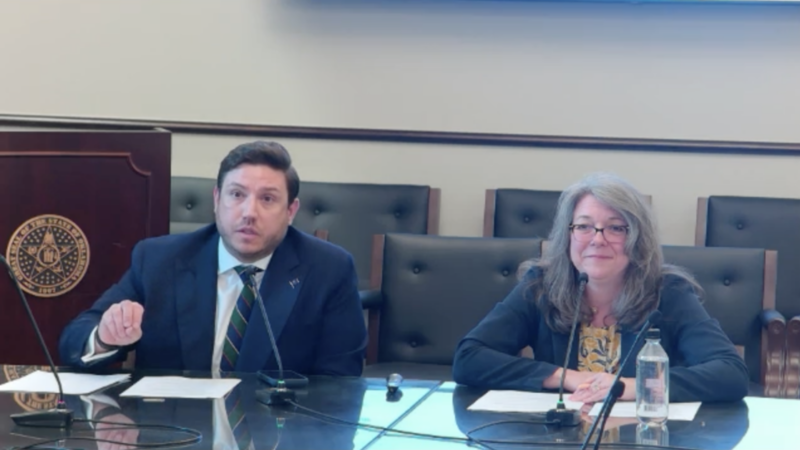
Interim Commissioner Josh Anderson, left, and Communications Director Jennifer Hogan of the Oklahoma Department of Mental Health and Substance Abuse Services discuss privatization of state facilities with lawmakers at the state Capitol in Oklahoma City on Aug. 25, 2026. (Screenshot)
OKLAHOMA CITY — As the state’s mental health department works to privatize four mental health clinics, nearly all of the state employees affected have already been offered alternative employment.
Over 90% of those employed by the state-run certified community behavioral health clinics have received job offers, leaders with the the Oklahoma Department of Mental Health and Substance Abuse Services said.
The agency did not give a specific number of how many people work at the state-run centers, but a spokesperson said a “few hundred.”
The remaining 10% have yet to accept offers. Some may be retiring, moving to other positions with the agency or still making decisions about their employment, said Maria Chaverri, an agency spokesperson.
She said the agency was still trying to help those workers find other employment and that no final decisions had been made about whether the agency would be offering them severance.
The agency is in the process of finalizing the privatization of its clinics in an effort to save taxpayer dollars and to strengthen the sustainability of the behavioral healthcare system.
Four existing certified community behavioral health clinic providers — Family and Children’s Services in Tulsa, Grand Mental Health in northwest Oklahoma, CREOKS Health Services in eastern Oklahoma, and Lighthouse Behavioral Wellness Centers in southern Oklahoma — were selected to operate the existing state clinics once the transition is finalized.
Those four private providers will expand their current service areas to cover more than 30 additional counties across Oklahoma.
Certified community behavioral health clinics provide an array of crisis, mental health and substance abuse services to anyone, regardless of their ability to pay.
State officials have been working on the transition since officials first announced which providers were awarded contracts in July.
Last week, Reps. Jim Grego, R-Wilburton, and Rick West, R-Heavener, raised concerns that the mental health department had sent some employees a “fill-in-the-blank” resignation letter.
“Employees are questioning whether they are now being required to resign from state employment as part of this transition and, if so, what effect a resignation could have on any compensation, benefits, leave balances, retirement considerations or other transition package they were previously told they would receive,” the lawmakers wrote in the news release.
The agency confirmed they sent the email, but said it was meant to help employees who have already accepted other jobs to resign. That is a procedural step to close out their employment with the agency, Chaverri said.
The agency will pay out any required annual leave or sick time, she said.
Interim Commissioner Josh Anderson told lawmakers at an interim study in August that the agency has been working with the affected state employees to find employment with private providers or other state agencies.
“Our goal was to make sure that every employee had a job at the end of this transition, and I think we’re getting really close to accomplishing that,” Anderson said.
He said the private providers “showed up day one” with benefit packages and salary schedules.
Anderson said there were some employees who are close to their retirement who the agency has worked with to help stay employed with the state so they can get their pensions and state benefits.
The main focus, though, has been to provide continuity of care to the people receiving services, Anderson said.
At the same interim study, Jennifer Hogan, the agency’s communications director, said the goal is to complete privatization by this fall.
Ethan Wood, communications manager for Grand Mental Health, said in a statement that 54 employees from the Mental Health Department have accepted positions and some are already going through the new hire orientation process.
Grand Mental Health will cover 12 additional counties. Wood said they have been working with the state agency for several months to make the transition process “smooth and seamless” for employees and the people served.
Oklahoma City, OK