Helena tables decision about federal grant program with new immigration strings attached
Sep 21, 2026 | 2:08 pm ET

Description
The City-County Building in Helena is pictured on Friday, Sept. 18, 2026. (Jordan Hansen / Daily Montanan)
A routine $53,000 grant for the city of Helena led to an uproar after citizens discovered new requirements to cooperate with federal immigration officials.
The grant would have funded cameras around city buildings with federal dollars administered through Montana Disaster and Emergency Services.
But the Helena City Commission tabled the contract last week after immigration advocates uncovered new provisions by the U.S. Department of Homeland Security.
“This appears to be an attempt to use federal funding to pressure our local government into participating in federal immigration enforcement,” said Valerie Hellerman, director of the Helena Area Refugee Resettlement Team and one of the city’s consistent voices for humane treatment of immigrants. “It seems to me this is an underhanded attempt to bring ICE further into our community through the back door.”
The contract is one of many similar agreements across the state.
Montana Disaster and Emergency Services has distributed more than $31 million to cities and towns through the Department of Homeland Security program since 2019.
Terms and conditions of the Helena contract obtained in a public records request by the Daily Montanan show significantly different requirements between a 2020 grant award and the most recent version.
A Helena city spokesperson said all grants have obligations, and they can change over time.
“It’s not unusual for grant terms and conditions to fluctuate cycle to cycle and change under different state or federal administrations,” said Helena spokesperson Amanda Opitz.
Program funds security upgrades
The State Homeland Security Program has been around since 2003 as an initiative to beef up security around possible targets in towns and cities throughout the country.
In the 2025 fiscal year, the program doled out about $373.5 million in federal funding to states, which could divide it as they saw fit, according to the Congressional record.
Cities across the country have long accepted the funds as a way to get needed upgrades using sources outside of normal municipal budgets.
Helena city officials discussed this during a meeting last week, pointing to worrisome trends in the city’s budget.
“These grants are super critical for us to be able to get various things done,” said Helena Mayor Emily Dean. “We really try to be aggressive in going after grant money so that we can allocate general fund dollars to other projects.”
But cities must agree to certain stipulations set forth by the federal government.
A 2020 version of the grant award referenced foundational American laws, including Title IX, the Age Discrimination Act, and the 1968 Civil Rights Act.
The current version of the grant award is more complex and adds provisions related to immigration and prohibitions on diversity, equity and inclusion.
It includes a stipulation that a city accepting the money from the Department of Homeland Security cannot be a “sanctuary city” and asks the city to agree that it will respect “prohibitions on harboring, concealing, or shielding from detection of (people living in the country without permission).”
Other compliance includes local law enforcement providing access to those who have been detained by local law enforcement, “such as when an immigration officer seeks to interview a person who might be a removable (person)” and also states cities cannot “leak or otherwise publicize the existence of an immigration enforcement operation.”
Another provision tells municipalities they must comply with every presidential executive order.
Multiple lawsuits have been filed against some of the grant award agreement terms that include a ban on diversity, equity and inclusion initiatives. These are specifically noted in the grant award Helena is considering.
One of those, a case playing out in Illinois including almost two dozen states, alleges the federal government is “holding critical emergency preparedness and response funding hostage unless states promise to devote their scarce criminal enforcement resources, and other state agency resources, to the federal government’s own task of civil immigration enforcement beyond what state law allows (in some states) or requires (in others).”
In other recent grant awards through Montana Disaster and Emergency Services to other municipalities, including one approved by the Missoula County Commission on Sept. 8, the grant award language is identical to the one tabled by Helena.
Residents react
Immigration discussions have been tense during the past year-and-a-half in Helena, as many members of the public have expressed to the commission they want as little to do with federal immigration enforcement as possible.
Helena citizens pushed back against federal immigration policies after the arrest last year of a resident who had tried to gain U.S. citizenship for years but whose identity was mistaken.
U.S. Immigration and Customs Enforcement called for the arrest.
“I honestly can’t believe we’re still here,” said Helena resident Ashley Fisher at a commission meeting last Monday about the grant. “You promised us no cooperation with ICE … and here you are stabbing us in the back.”
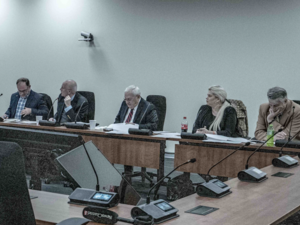
Meetings in Helena regarding immigration have drawn large crowds, and this week’s meeting did as well, with the commission chambers full and overflow rooms with TVs broadcasting the proceedings.
About 60 people spoke against Helena accepting the DHS money.
The city’s governing body eventually voted to table the decision on whether to accept the $53,000 as city commissioners questioned staff about the award.
But the tabled item can be brought back to the city commission.
At the meeting, city attorney Rebecca Dockter said citizen concerns about immigration compliance were unfounded in her legal opinion.
The agreement with DHS also requires local law enforcement help with immigration operations if asked to do so by federal officials, which already happens to some degree, unless local resources are not available.
“I think the legal argument is that this language does not apply,” Dockter said during the meeting. “Even if it does, we don’t have the resources to do the work that it’s requesting.”
A previous attempt to address ICE activities in Helena brought threats from the state attorney general and governor unless the city withdrew an immigration proclamation. With the threat of losing state funding, the city withdrew the proclamation.
Attorney and Helena resident Andres Haladay told the Daily Montanan there were serious concerns with the grant award, adding that it should be expected, at some point, that Helena comply with the terms if city officials sign the contract.
Haladay is with Upper Seven Law and has been working on a number of immigration cases but said he was not representing the firm with his remarks.
“You better assume you’re going to have to follow contract provisions,” Haladay said, pointing to his work with state contracts in the Department of Corrections. “Otherwise, you’re going to court at some point fighting over this.”
Dockter maintained, both in the meeting and in a memo circulated to city staff and commissioners, that some provisions in the contract canceled out others, specifically around language about coordination with homeland security and potential anti-DEI rules.
Dockter also wrote in her memo that she had reached that conclusion after conversation with state Disaster and Emergency Services. The city directed questions from the Daily Montanan about the legal conclusion to the state, which said it sends out the grant awards in accordance with federal law.
But some commissioners were not convinced.
“I have more questions than I have answers,” Commissioner Melinda Reed said. “And that makes me uncomfortable.”
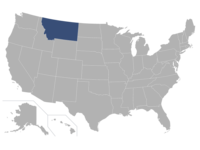
Helena, MT