Federal change threatens Medicaid coverage for 25K legal immigrants in NJ
Sep 21, 2026 | 7:02 am ET
Description
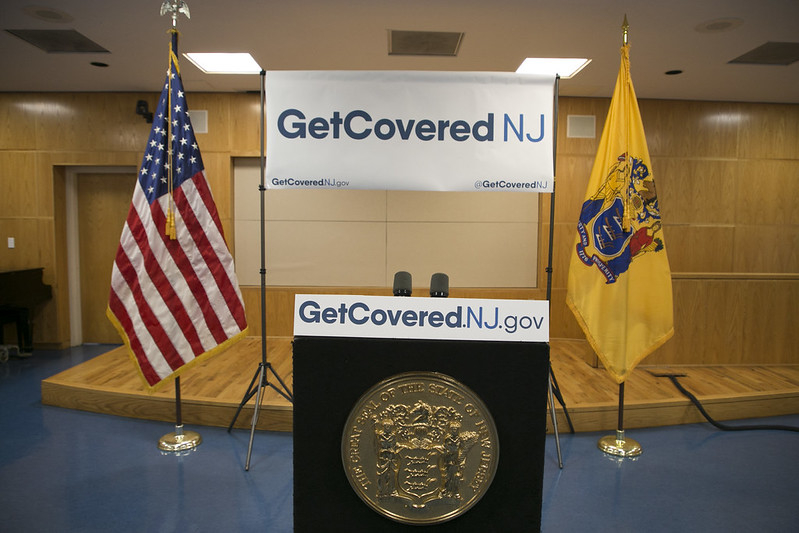
Healthcare coverage for some immigrants may be at risk starting Oct. 1, when a federal policy change limits which noncitizen groups can access Medicaid. The change endangers coverage for some 25,000 legal immigrants in New Jersey, state officials said. (Photo courtesy of Elizabeth Public Schools)
Immigrants who came to the United States as victims of domestic violence, for humanitarian reasons, or to escape human trafficking are among the thousands of legal, noncitizen residents in New Jersey who may soon be without health insurance.
State officials estimate as many as 25,000 noncitizens could lose access to their Medicaid coverage on Oct. 1 under a federal regulatory change that is part of President Trump’s efforts to reduce government spending on social service programs and slow U.S. immigration. The changes are contained in a law Trump signed last summer that strips Medicaid coverage from some noncitizens, imposes new eligibility requirements on other Medicaid members, and cuts federal funding for healthcare.
State Department of Human Services Commissioner Stephen Cha stressed that those targeted for removal from the program, known in the Garden State as NJ Family Care, are legal residents of this country.
“We’re talking about victims of trafficking. We’re talking about the husbands, wives, and children of lawfully residing veterans. We’re talking about refugees who have fled persecution in their own country,” Cha told the New Jersey Monitor.
But Cha said noncitizens on Medicaid should not assume they are losing their coverage. He urges all NJ Family Care members to watch the mail for updates from the state.
“The most important thing is that it is not a loss of Medicaid for all immigrants or even all noncitizens. There are multiple categories of noncitizens that will continue to remain eligible,” Cha said, including all children and pregnant women, among others.
The eligibility changes for certain immigrants are among the first publicly visible impacts of Trump’s landmark tax and spending law. Come January, some 540,000 NJ Family Care members will face new requirements to document that they are working, in school, or volunteering for at least 20 hours every week to continue to receive benefits.
State officials predict the work rules could force more than 300,000 people from the Medicaid rolls in New Jersey, a shift that would also result in $669 million a year in unpaid hospital bills, according to a new report from New Jersey Policy Perspective, a left-leaning think tank. Other changes prompted by the law will reduce federal funding for hospitals, a loss that could top $3 billion annually in the years to come, state experts have said.
Nationwide, the changes are expected to eventually save taxpayers around $1 billion a year. Cha said the cuts impacting noncitizens don’t amount to much money.
“It can’t be more than a fraction, a tiny fraction of the overall spending, and each of these eligibility determinations is a person, is a family,” he said.
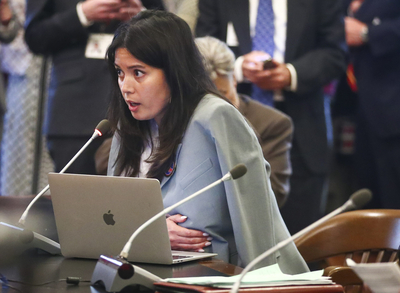
Amy Torres, executive director of the New Jersey Alliance for Immigrant Justice, said families the group works with are facing multiple federal policy changes likely to limit their access to government services. Changes to the country’s “public charge” rule that took effect on Sept. 18 mean people seeking certain visas can now be penalized if they or other family members receive publicly subsidized healthcare through Medicaid, food assistance, or other benefits.
Together these policy changes create a “one-two punch” to immigrant families, Torres told the New Jersey Monitor.
“There are multiple intersecting layers where families are forced effectively into the shadows just to do what is quote unquote the right thing, which is to maintain their immigration status. It’s really placing an impossible choice on people and putting them into this maze that you can’t navigate,” she said.
Torres’ group and other immigrant advocacy organizations like Make the Road New Jersey have teamed up with advocates from New Jersey Citizen Action and other nonprofits to raise awareness about the pending Medicaid changes. They held a webinar in July to help noncitizens prepare for these shifts and have shared detailed information about who is impacted.
“It hasn’t been good news that we’re delivering, but it’s important that people be aware,” said Laura Waddell, who leads health care programs at New Jersey Citizen Action.
Waddell said some lawful noncitizens who have Medicare coverage will also face eligibility changes starting in early 2027, a result of the same bill Trump signed last year. Federal officials are now alerting certain lawful refugees, immigrants with Temporary Protected Status visas, victims of human trafficking or domestic violence, and recent humanitarian parolees that their healthcare coverage through the federally funded plan will end come February, according to the Center for Medicare Advocacy, a national group.
“These are all issues, and they are all linked,” Waddell told the New Jersey Monitor.
New Jersey Policy Perspective is also planning a free, in-person event to discuss the work requirements on Sept. 24 in Moorestown in Burlington County, while New Jersey Citizen Action will host another webinar to talk about these broader changes on Sept. 30. Advocates have developed a database with details on where people can get free or low-cost healthcare services, regardless of their citizenship status.
New Jersey officials have also pledged to do what they can to keep eligible people covered through Medicaid. Gov. Mikie Sherrill included more than $10 million in the current budget to shore up the state’s enrollment systems in advance of the pending shifts. The state tried to verify the Medicaid eligibility status of as many noncitizens as possible before Oct. 1, officials said, and mailed other immigrant households requests for more information.
“It’s getting late because we’re coming to October 1st, but people absolutely should still send back their responses,” said Greg Woods, who runs New Jersey’s Medicaid system. He said many of the noncitizens currently covered through NJ Family Care may still be eligible, but the state needs their help to secure the documents to prove it.
Waddell said some immigrants who lose Medicaid in October may be able to purchase plans through the state’s Affordable Care Act marketplace, Get Covered NJ, which are subsidized to cost as little as $10 a month for most participants. The state has agreed to offer a special enrollment period for this group — allowing them access to low-cost coverage in October, November, and December — although not all eligible immigrants will qualify for funding subsidies in 2027, according to the state Department of Banking and Insurance.
Torres urged immigrant families to seek help from trusted community organizations and to avoid a growing surge of offers from brokers, notaries, or lawyers who promise to secure citizenship or enrollment in government programs in exchange for a fee. The past year has brought an “explosion” of people taking advantage of overwhelmed immigrant families, she said.
The shift in federal policy has led to a “mass withdrawal” of immigrants from mainstream society, Torres said, something that could have a “devastating” impact on the state and its people.
“It places extreme burdens on emergency services that have long-term public health and public education consequences. This is really a move by the federal administration to forcibly segregate society into U.S. citizens and those who aren’t,” she said.
Trenton, NJ