High costs, dwindling enrollment: Is Houston ISD’s playbook under takeover sustainable?
Sep 21, 2026 | 6:00 am ET
Description
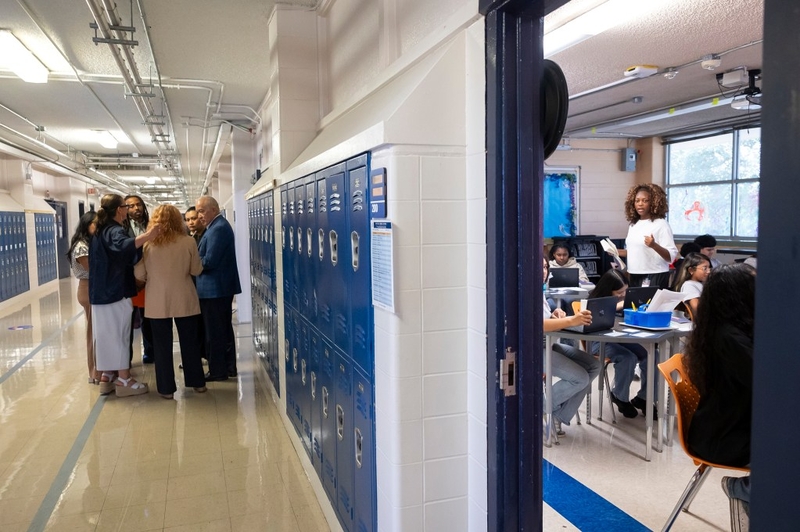
State-appointed HISD Superintendent Mike Miles huddles with Fonville Middle School administrators after observing seventh grade teacher Ashlie Flores teach her students on Wednesday, Aug. 26, 2026. Texas’ top officials want to use Miles’ school reform effort as a blueprint for Texas public schools. (Annie Mulligan for The Texas Tribune)
Reporting Highlights
- Increase in costs: Houston ISD is spending millions to pay for academic reforms, including more staff, higher salaries and new equipment. At half of the district’s schools, HISD spent an extra $700,000 per campus and about $2,200 more per student.
- Dropping enrollment: HISD lost 21,000 students since the start of the takeover, an enrollment decline that’s at a rate faster than its urban peer districts. That translates into about $190 million in less state funding.
- District cuts: Houston ISD pulled nearly $450 million dollars from its rainy day reserves in the first two years of the takeover. It laid off roughly 1,500 central-office staff, more than 200 wraparound specialists and eliminated 85 bus routes.
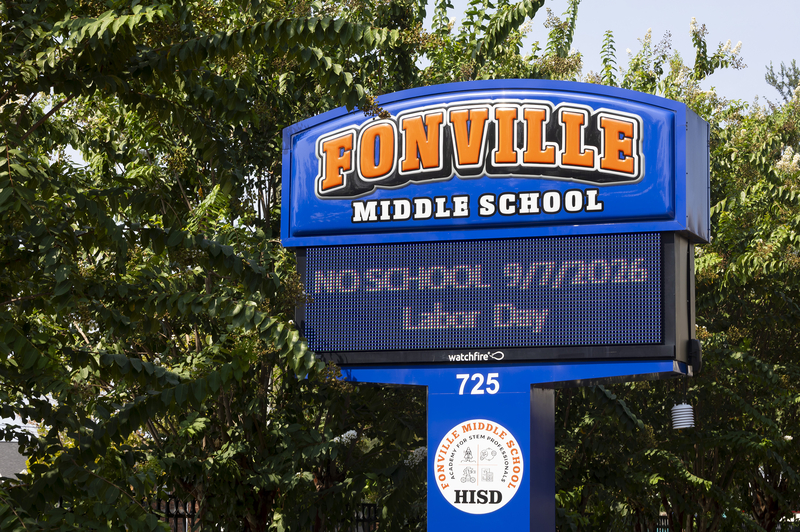
HOUSTON — Fonville Middle School hired learning coaches to help students falling behind in the classroom. It bought new state-of-the-art technology, such as webcams and smart boards. The school days are longer.
All that aggressive change earned the north Houston school its first ever A rating, a coveted stamp of approval from the state. It has been a dramatic climb since the state seized control of the district three years ago, when students were so behind in math and reading that the campus received the scarlet F.
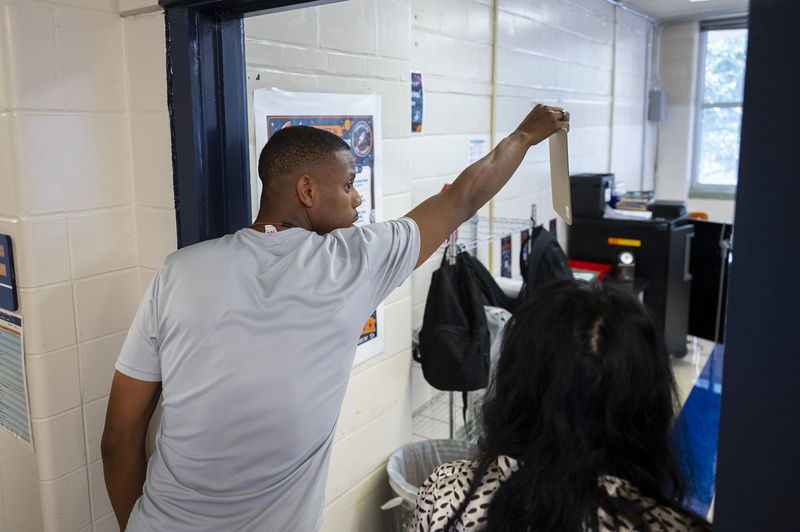
“Here’s my bar,” Mike Miles, the Houston ISD superintendent and architect of the academic transformation, said to Principal Yvonne Hernandez at an August visit to the campus, raising his hand up to his ear. “Where’s yours?”
Hernandez, who shepherds his vision at this campus that enrolls nearly all low-income students, was quick to stack her hand on top of his.
Victories like that have state leaders touting Miles’ sweeping school reform in Houston as a blueprint for public schools, in Texas and around the country, that are struggling with academic performance.

Annie Mulligan for The Texas Tribune

But Fonville’s example also shows how expanding on Houston’s successes could come with a high price tag, raising questions about whether other districts can afford to follow. At Fonville, nearly 1 in 5 students have left the school since the takeover started, taking with them about a million dollars in state funding.
About half of Houston ISD schools are like Fonville, adopting Miles’ expensive reform effort in a takeover where the state ousted the locally elected board and superintendent for appointees over chronic academic underperformance.
Miles has poured tens of millions of dollars into the New Education System, or NES, to supercharge standardized test scores with extra support staff, higher teacher salaries, longer school days and new equipment. HISD budget documents reveal the estimated additional cost to adopt the reforms is about $700,000 per NES school in the first year and about $2,200 more per student at those campuses in the years after.
At the same time, Houston ISD has lost tens of thousands of students since the takeover began in 2023 as enrollment declines at a rate faster than any of its urban peer districts, translating into roughly $190 million in less state funding in that time, according to a Texas Tribune analysis.
Texas didn’t give Houston public schools extra dollars for the state intervention. Since the start of the takeover, HISD leaders quickly drained much of its massive rainy day reserves and put up dozens of district-owned buildings and land for sale. School finance experts have sounded alarms because such cost saving measures can be easily exhausted.
“That’s just a gamble,” Jonathan Travers, the CEO of Education Resource Strategies, said of districts dipping heavily into reserves for ongoing costs. “You’re just gambling that you’re going to somehow be able to raise revenue — ongoing revenue from taxpayers, from the state — in a few years to cover the gap that you’re using up your reserves to cover.”
HISD officials also shed hundreds of central office jobs and slashed transportation and social work services to curtail the shortfall in the district’s $2 billion budget. Those spending decisions were made amid parent protest, which later came to a head when voters rejected a $4.4 billion bond for building and technology updates HISD had advertised for the district’s most urgent needs.
As the state readies to end the takeover and relinquish control back to the local school board, HISD must confront how to keep its academic gains from unraveling in the face of another major transition.
“He will have stripped us of our resources,” Heather Golden, a parent whose kids graduated from HISD schools, said. “It will be almost impossible to even maintain these results because we don’t have a financial cushion anymore, especially with all the students leaving.”
The stakes of the financial strain go beyond Houston as Texas leads the nation in takeovers over poor academic performance. Since 2023, seven districts had their elected school trustees and superintendent replaced with state appointees, a pair of whom were former HISD administrators under Miles.
About a dozen more districts are at risk of the same fate. Some districts in a takeover are already changing their classrooms to mimic Miles’ strategy but without the war chest of savings that HISD had to absorb the costs.
Believers of Miles’ reform, like Eric Hanushek, an economist who studies education policy at Stanford University, say the impressive test gains justify the spending — and cutting.
Three years ago, HISD had 56 F campuses, and this year it had five. In 2025 and 2026, eight times more of NES campuses received As or Bs on the state’s grading system than they did in 2023 before the takeover.
“Not that libraries and librarians and reading and so forth weren’t valuable,” Hanushek said, but “you can’t just add on a new system and do everything you’re doing before.”
To Texas Education Commissioner Mike Morath, HISD is proof any district can adopt the reforms because Houston “is operating under the same finance system as anyone else.”

Miles told the Tribune he’s confident that Houston’s successes can last beyond the state takeover, and he believes other takeover districts are similarly well positioned. Comparing managing school finances to running a business, Miles said officials must be willing to make difficult cuts, like he said he did by right-sizing the central office. He also said he is reshaping teacher pay in ways he believes will be difficult to undo after he leaves.
“It is expensive, but we already know we can fund it,” Miles said. “We’ve been able to raise teacher salaries, to do this model. … You have to be willing to prioritize. We get a lot of pushback when we prioritize.”
Enrollment plunges
There are about 21,000 fewer students enrolled in HISD since the state seized control.
Houston faces the same stressors that cause enrollment declines as other urban public schools: lower birth rates, more competition and an exodus of immigrant students. But there are significant signs that the takeover itself worsened HISD’s enrollment crisis.
The share of students disappearing here has accelerated every year since the takeover started, at a rate unmatched by HISD’s peers. About 5,800 students left during the first year, about 7,400 the second and nearly 8,000 last year.
For Brooke Longoria, pulling her two children out of HISD last school year was painful. But she felt the NES model had taken the joy out of learning and left her with little choice. She enrolled them at a private Montessori school that emphasizes hands-on, project-based learning.
“It was the constant testing for me that pushed me over the edge,” Longoria said. “We do want to learn this, but … any test score increase that you’ve gained by destroying a school community, by banning books, by firing beloved principals, that’s too high a cost.”
The steepest enrollment declines were at the roughly 130 campuses that adopted Miles’ New Education System, which experience the most intense intervention, according to a Tribune analysis. While schools were already losing students prior to the takeover, enrollment decline has accelerated since.
Charter school enrollment in the Houston area rose at the same time, which experts say is an indicator that some exits reflect parent dissatisfaction with the traditional public schools.
Houston had the highest enrollment decline when the district is stacked up against comparable urban districts across the state.
A majority of students who left HISD for other public options chose charters, such as YES Prep Public Schools and KIPP Texas Schools, both of which have a longtime presence in Houston.
“They’re not moving across the state. … They may not have even moved homes at all. They’re going to a very nearby school that’s not part of HISD,” said Toni Templeton, a researcher at the University of Houston, who has analyzed the district’s enrollment. “That would lead us to believe … you’ve just made a decision to change the school.”
Angie Kemp withdrew her daughter from Browning Elementary one year after the school adopted NES. Now, she’s in the Klein school district in the northwest suburbs of Houston.
Dominika, then 6, would shut down in the middle of timed lessons, refusing to finish her schoolwork, her mom said. She would talk in her sleep about the quizzes that were 45 minutes into class so teachers could monitor students’ understanding of lessons.
“She’s a rule follower. She loves getting good grades, so it was not good seeing her like this. We knew something was wrong,” Kemp said. “We didn’t want to leave initially, but we saw the effect it was having on her.”



Less students, less money
Texas funds public schools primarily based on student attendance. So every student that leaves translates to a loss in state dollars, shrinking the resources HISD has to provide for the children who stay.
“What we’re seeing in Houston with enrollment loss is staggering and will have a really big impact on what we can do for any of our students,” said Eileen Hairel, a parent on the community advisory council that advises the board and the superintendent. “Because, unfortunately, enrollment is money.”
The Tribune analyzed the money Houston ISD is losing based on the state’s school funding formula. The district had to adjust for a total of $190 million in losses in the first three years of the takeover.
In an interview, Miles acknowledged the financial stakes of the district’s enrollment slide. He also agreed the takeover had a part in it, though he characterized it as a “very little” factor in the drop.
“Budgets are tough and going to remain tough when you have declining enrollment,” Miles told the Tribune. “We will have declining enrollment. The question is how big. That’s a lot of money.”
As students leave, Miles and state officials said they accordingly shrink their costs by closing campuses, consolidating classes and reducing staff to match the needs of fewer students.
“When there’s declining enrollment, administrators, the board should look at ‘okay, what are we going to cut?,’” Miles said. “Whether it’s programs, whether it’s schools, whether it’s staff, … it’s in the DNA of every effective organization.”
But fewer students doesn’t automatically translate into one-for-one savings for the schools because of overhead costs they need to pay to keep the lights on and a class running, said Travers, the school finance expert from Education Resource Strategies.
“If we’ve got a first grade class with 22 kids, and we lose one student, the cost savings that we get there is maybe a little bit of food services … maybe some construction paper,” Travers said. “There’s very limited incremental change in cost until you collapse that classroom.”
As the enrollment losses force Miles to make cuts, he believes the academic gains he’s brought HISD will convince families to return.
“Parents don’t want to send their kids to a D and F school if they can help it. Now, some people are trapped, but we don’t have as many anymore, and we won’t in the future,” Miles said. “We’re bringing the pride back.”

But families such as the Holmes illustrate why it might be more complicated for the district to get enrollment to bounce back. Eric Holmes bought a house in Klein, 20 miles away from the HISD campus he withdrew his two daughters from over the focus on test-taking during the takeover.
“Because of NES, we’ve now set roots up here,” Holmes said of his family’s move. “How are you going to get them back? … I don’t see this as a sustainable model.”
Expensive to run
As an exodus of families drains revenue, HISD is spending millions on the salaries and equipment that are the engine behind Miles’ campus overhaul.
And the superintendent had an extraordinary task: Every extra dollar he directed toward the about 130 campuses for ambitious reform would mean cuts to other parts of the district’s budget.
“I think intervention districts should get a little extra money, but we haven’t,” Miles said. “What we had to do is cut back.”
The clearest public cost estimate of Miles’ signature reforms came when Houston ISD expanded the NES model to 45 additional schools in the 2024-25 school year. District officials projected an additional $31.7 million was needed to operate those campuses during their first year, according to budget documents. That amounts to a price tag of $704,000 per campus.
Then in 2026, the district set aside about $8,500 per pupil for about 63,000 students at an NES school, compared to $6,300 for their peers at other HISD campuses. Miles said that roughly reflects a cost he expects to run “well into the future.”
In the first year of the takeover, HISD budgeted more than $96 million for technology, furniture and equipment, which primarily went to 85 NES schools. These classroom furnishings make up the physical infrastructure of Miles’ reform and are typically one-time costs.
But Miles said the largest expenses by far are adults in the classroom, including learning coaches and teacher apprentices. And those bills must be paid every year.
Teachers at NES schools also get a higher starting salary compared to the rest of the district, which accounts for working longer days. NES teachers are awarded an extra $3,000 or $9,000, depending on the subject they teach.
HISD also had to spend heavily for recruiting, hiring and training after the takeover prompted higher teacher turnover, which is nearly double the state average at 33% in the 2025-26 school year. Research from the Learning Policy Institute estimates that replacing a teacher costs about $25,000 in a large district.
As these costs add up, Miles has worked to close the gap between higher spending and lower revenue. The district still ended 2024-25, the most recently audited school year with a $311 million budget shortfall. It was the first budget shortfall the district had incurred in a decade, and every year since, the district has continued to project budget gaps.
Miles heavily dipped into the unusually large operating reserves he inherited, drawing down nearly $450 million dollars in his first years at the helm. He depleted those savings at a rate faster than HISD’s district peers.
Houston’s savings previously covered seven months of spending, but after 2024-25 were enough for three months, a notch above what the state considers a healthy buffer. Reserves provide a district a financial cushion to launch a new initiative or absorb a temporary budget shortfall during unforeseen emergencies such as the pandemic or a hurricane. They are not intended to support recurring expenses.
“Drawing down reserves is typically a very short-run strategy, unless the pool of reserves is very, very deep,” said Lori Taylor, a school finance researcher at Texas A&M University. “Once those reserves are gone, they’re gone.”
School finance experts said districts built up reserves by 2023 in anticipation of federal pandemic relief funds expiring, a position districts entering a takeover today may not be in.
Miles said his administration dipped so heavily into reserves because of the financial position his predecessors left the district in, particularly with their spending of pandemic-relief funds on “bloated” administration.
He defended using reserves for salaries and didn’t rule out leaning on it in the coming years.
“Drawing down the fund balance a little bit to pay for [recurring expenses] is not crazy behavior. It’s actually smart,” he said, adding that the district has been able to stay above the recommended reserve limit.
Meanwhile, HISD is selling property to raise money. Nearly 30 buildings or land owned by the district has been put on the market since 2025. It is not publicly available how many of these properties have sold, though Miles said revenue from that did not make a big enough difference to close the budget shortfall.
There’s a ceiling to how much school systems can lean on such sales for liquidated cash, experts said. Districts have a finite amount of real estate — and not all of them have valuable surplus to sell.
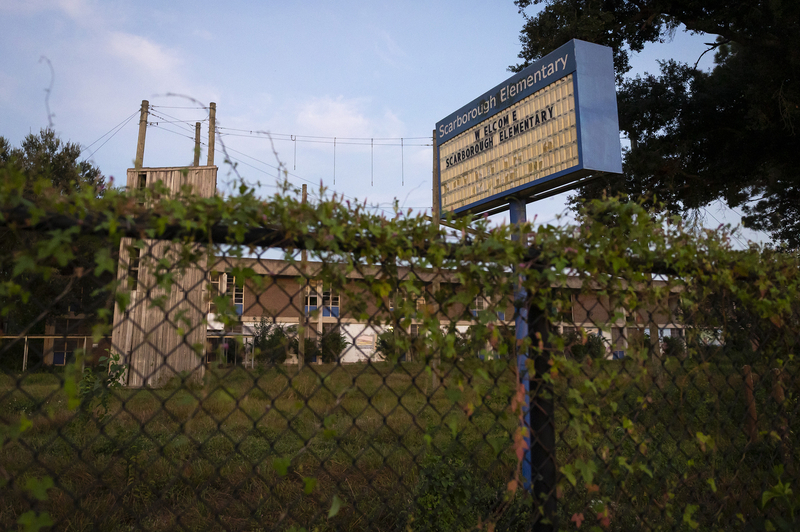
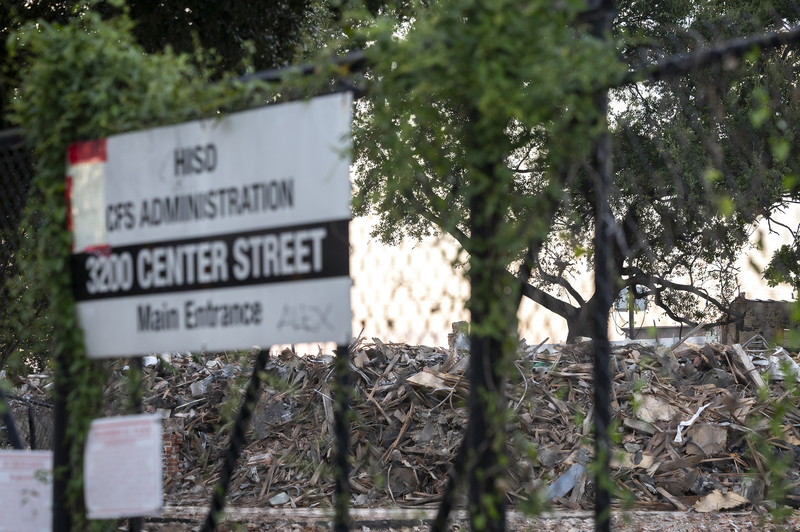
HISD has freed up recurring dollars by cutting elsewhere. Miles eliminated roughly 1,500 central-office positions as one of his first moves to save money, saying the prior administration put an excess into. In one year, he laid off more than 200 wraparound specialists who connected students in poverty with food and healthcare. In another, the district eliminated 85 bus routes.
“They’re having kids’ bus routes pick up three miles from their house. Not everybody has a car,” Liz Silva, an HISD parent who switched her kids from an NES school to a non-NES school, through a lottery system that allows families to apply to any school they are not zoned for. “You can’t talk about what you’re doing for people who are less advantaged in life, and then also do all of these things that in no way help them.”
The lack of community backing around his spending culminated in 2024 when Miles asked voters to approve a $4.4 billion school bond to pay for upgrading school buildings and technology. Its overwhelming defeat at the polls was seen as a rejection referendum on his leadership and the reform he blazed through. It was also the largest Texas school bond in history to have failed.
Miles said he’s trying to put in place policies that are “sticky” and hard to undo after he leaves. For example, this year he changed how all teachers are paid to tap into a state-funded incentive system. That brought in just under $30 million in revenue.
Texas lawmakers could ease HISD’s financial strain by committing more state dollars for the academic transformation. That’s a move that community members such as Ann Eagleton have called for.
“Money is so tight,” said Eagleton, a member of Community Voices for Public Education, a group opposed to the takeover. “If TEA wants to do the experiment, they need to pony up the money for the experiment.”
Scaling without sustainability
At the Capitol, Morath and state lawmakers who drive education policy in the state praise Miles in a way they rarely offer up to public school superintendents. To them, Houston’s jump in academic ratings — which hinges on how students do on STAAR tests — is proof Miles’ vision is key to student learning.
“If I were any superintendent, even if I had all A’s and B’s under the A-F accountability system, I would be calling [you] for the playbook,” former Sen. Brandon Creighton, a Conroe Republican who led a Senate education committee, told Miles during the last legislative session.
Now, Texas is exporting former Houston ISD leadership from Miles’ administration to lead in other takeovers, another indicator the state is betting big on Miles’ style of reform.
Morath tapped former HISD administrators Sandi Massey to oversee the state intervention in Beaumont and Ena Meyers to oversee Lake Worth’s. In Fort Worth, a former top Houston deputy, Daniel Soliz, is assisting in that district’s takeover as deputy superintendent and chief of schools.
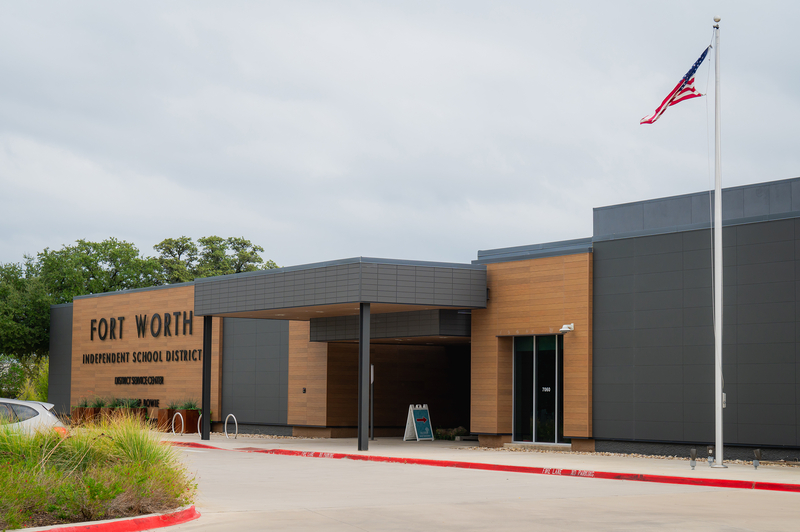
Fort Worth ISD is in its first year of the takeover with costly practices of NES rebranded as ELEVATE. About 24 ELEVATE campuses pay teachers more, test students more frequently and standardize their lessons. The district allocated $25 million for the reform to make it happen — money that will have to be either drawn from reserves or cut from spending.
And already, the North Texas urban district saw an historic exodus of 800 teachers in the first three months of takeover. Now enrollment is well below projections, forcing state appointees to confront a budget squeeze.
“We are still spending more money than we get in, which is not a good place to be,” Peter Licata, the district’s superintendent told the Fort Worth Report. “It’s just bad math.”
Licata, like Miles, must stretch the money his district has without extra funding from the state.

As other takeover districts jump to copy Miles’ playbook, financial experts noted that smaller districts with fewer assets and leaner administrations may have to cut classroom and student services much sooner.
“One thing that Houston has going for it is it’s a very large district that can exploit economies of scale,” Taylor said. “Houston is able to move resources around within the district in a way that other school systems could only dream about.”
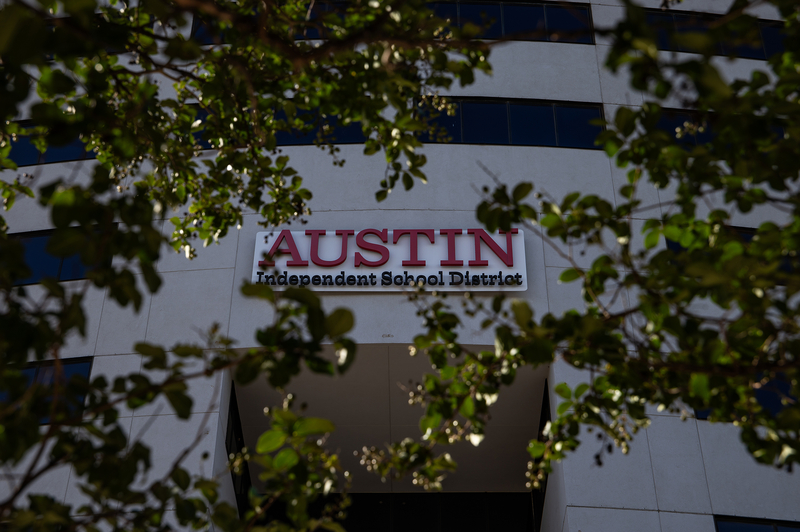
Austin ISD, which is on the brink of a state takeover, doesn’t have the financial buffer Houston had to absorb new expenditures incurred from intervention. The district had just over three months of reserves at the close of the 2024-25 school year. And the district’s financial state has worsened as they faced a $105 million deficit last year.
A look at other cases of school turnaround across the country offer cautionary tales. Early academic wins do not always lead to long-term sustainability, experts said.
For example, a Tennessee reform effort led to impressive test-score gains among middle schoolers. But those gains stalled when funding became hard to sustain and leadership left. The benefits for the students at the center of the reform also faded when they went on to high schools that did not offer the same intensive support.
Advocates were also quick to celebrate a reform effort out of Denver public schools — built around school choice and the closure of low-performing campuses — after graduation rates rose from 43% to 71%. But a decade later, after superintendent and school board turnover, those policies were rolled back in part over community pushback. The rapid expansion of schools also became difficult to maintain as enrollment declined, eventually forcing the district to close or consolidate campuses.
“This is not a one-shot and done,” Lam Pham, an education policy researcher at North Carolina State University, said of intervention. “There does need to be a lot of careful thinking about how we’re going to sustain this. Or else, [as] we’ve seen in many places, it just dissipates after the intense focus goes away.”
Miles’ time in the district could be ticking as the state weighs beginning the yearslong process of returning control to elected trustees.
It will be up to the elected trustees whether to keep Miles and his costly reforms.
“It is going to take years to dig out of the financial hole he’s creating, unless the Legislature makes some huge investments,” Golden, the HISD parent, said. “It feels a little bit like a death spiral right now.”
Methodology for our analysis
To assess the financial sustainability of Mike Miles’ New Education System, The Texas Tribune reviewed thousands of pages of budget documents, interviewed more than 60 sources and analyzed publicly available state data to compare Houston ISD losses to district peers.
The Tribune shared findings with 12 of the most renowned school finance experts in the country. Reporters also visited a middle school to observe the New Education System in action, met with 13 parents and two children, and interviewed Miles twice.
We used the Texas Education Agency’s classifications to identify peer systems and compare HISD against others considered “major urban districts” by the state.
How we calculate reserves runways
Reserves ratio is used to show how many months a district could operate if their revenue fell short. We used the same metric as the Financial Integrity Rating System of Texas (FIRST), the agency’s system for evaluating how well districts manage finances.
Our ratio is calculated by adding assigned and unassigned general fund balances and dividing that result by general fund operating expenditures. We then multiply this by 12 to translate into months. TEA defines a healthy balance as 2.5 months of reserves.
To compare districts, the Tribune used the agency’s Public Education Information Management System (PEIMS) financial data, which districts submit each reporting year. We do not adjust for subsequent amendments or adjustments made during the auditing process. To avoid cherry-picking narratives, we looked at a 10-year period from 2015 to 2025.
How we calculate enrollment
We examined student enrollment across three separate cohorts:
- New Education System (NES) includes campuses starting Level I of Miles’ reforms in the 2023-24 or 2024-25 school years.
- Non-NES schools include all other campuses overseen by HISD.
- Charters include campuses within HISD’s attendance zone that are operated by charter districts, excluding HISD’s authorized charters. We identified the location of charters using TEA’s GIS site, Google Maps and operator websites. We then performed a point-in-polygon analysis that identified which schools are within HISD’s boundaries.
Enrollment figures are from the Texas Education Agency’s Student Enrollment Reports. We also gathered District Transfer Reports to count how many students residing within HISD attended other public school systems, such as KIPP and YES Prep.
How we estimate state funding losses due to enrollment drops
We calculated state funding losses during the HISD takeover using the tier one funding formula, which is the weighted average daily attendance (WADA) multiplied by the basic allotment.
Basic allotment is the base amount schools receive for each student in attendance. The state sets districts’ WADA based on student-specific weights (e.g., special education, bilingual, career and technology) and district characteristics (e.g., size, sparsity).
To estimate state dollars lost due to enrollment drops from 2022-23 to 2025-26, we subtracted tier one funding HISD received over that time from what they would have received if their 2022-23 WADA held flat.
Disclosure: Texas A&M University has been a major financial supporter of The Texas Tribune. University of Houston has been a financial supporter within the past five years. The Texas Tribune is a nonprofit, nonpartisan news organization that is funded in part by donations from members, foundations and corporate sponsors. Financial supporters play no role in our journalism. Find a complete list of them and more information about our financial and disclosure policies here.

Austin, TX