Maryland is closing the gap. Here’s how to boost it.
Sep 20, 2026 | 7:04 pm ET
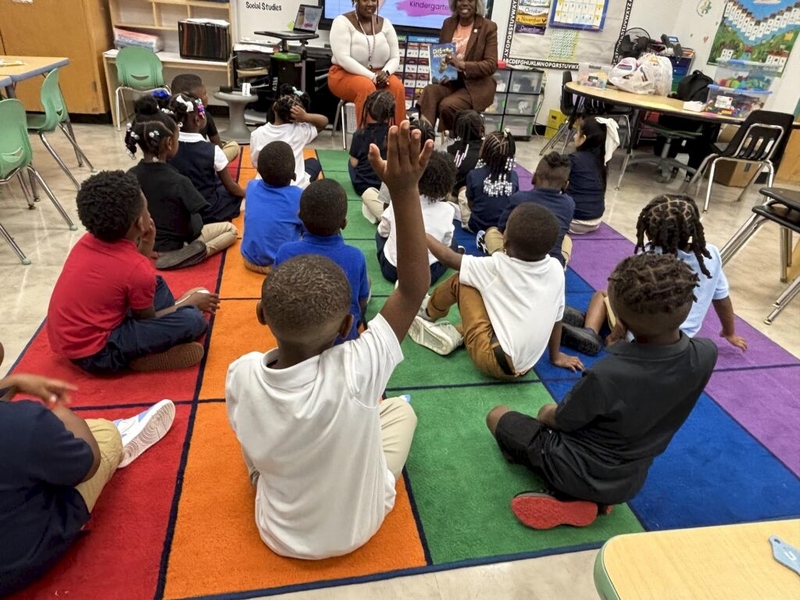
The latest news from Maryland’s classrooms may look promising at first glance, but a closer look paints a far more urgent picture. While academic gains have been real, the pace of change has been far too slow and notably uneven.
Consider Baltimore, where fewer than one in three students read at grade level and multiple schools don’t have a single child doing math at grade level. Statewide, barely half of all students read at grade level, and for Black, Latino and special needs children, the numbers fall even lower. At less than a point of progress a year, Maryland is failing to close achievement gaps fast enough for thousands of kids.
There is a way to speed things up and reach those kids now at no cost to the state: It takes just one decision from Gov. Wes Moore.
Starting in January 2027, the new Federal Scholarship Tax Credit allows Americans to take up to $1,700 of the federal taxes they already pay and redirect those dollars to nonprofits that support K-12 students. The tax credit dollars can pay for tutoring, technology, transportation and special-education services for public school students.
Under this program, a Baltimore student falling behind in math gets a tutor. A Rockville child with dyslexia reaches a specialist her district can’t staff. A Cumberland teenager earns college credits his school is too small to offer.
Contrary to the messaging from its main opponents, the teachers unions, the tax credit is not a voucher program. It does not take a single cent from public education funding and would be entirely additive to the investments the state is already making. But first, Gov. Moore must choose to opt in.
In public statements, the governor has given mixed signals. At a June meeting of the Education Writers Association, when asked about the tax credit program, Moore stated encouragingly that he would “never leave money on the table when it comes to supporting our kids.” By contrast, at the American Federation of Teachers’ national convention last month, he struck a decidedly skeptical tone; tying the program to Republicans and calling it a “tax scheme.”
Moore has stated clearly that he opposes private school vouchers. But that’s not the question this program poses. If Maryland opts out, then $1.8 billion will automatically leave the state and go to the US Treasury. But if the governor opts in, Maryland residents can take advantage of the tax credit and send their money to local organizations that serve K-12 students, including those in public schools. The federal law has already passed and the money will be spent. The only question is whether it will be used in Maryland or elsewhere.
The tax credit program can provide critical resources to help close academic achievement gaps. Affluent families already buy tutoring, test prep and enrichment out of pocket, thousands of dollars a year that compound into a widening advantage. Meanwhile, working families get left behind. This credit puts academic enrichment support within reach of the students who need it most.
In a statewide survey last month, voters backed opting into the program 68% to 21% — Republicans (71%) and Democrats (69%) alike. Support ran highest exactly where the need is greatest: 78% among Black voters, the heart of the coalition Democrats represent.
And here is what every Marylander should know: taxpayers can claim this credit whether or not the state opts in. If Governor Moore opts out, Marylanders can use the tax credit but only by sending their $1700 to organizations supporting students in any of the other 30 states already participating.
Moore has built a national following by positioning himself as a principled, pragmatic leader who puts results over partisanship. That is why this should be an easy decision. Opting into the Federal Scholarship Tax Credit endorses no one in Washington, it simply keeps Maryland’s money in Maryland. A leader willing to do what’s right for Maryland’s children—whatever the source of the idea, whoever lines up against it—is exactly what this moment calls for.
Annapolis, MD