New ‘Kids Count’ data shows drop in college readiness, education participation among young adults
Sep 18, 2026 | 1:34 pm ET
Description
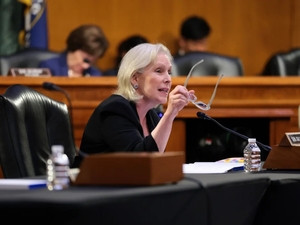
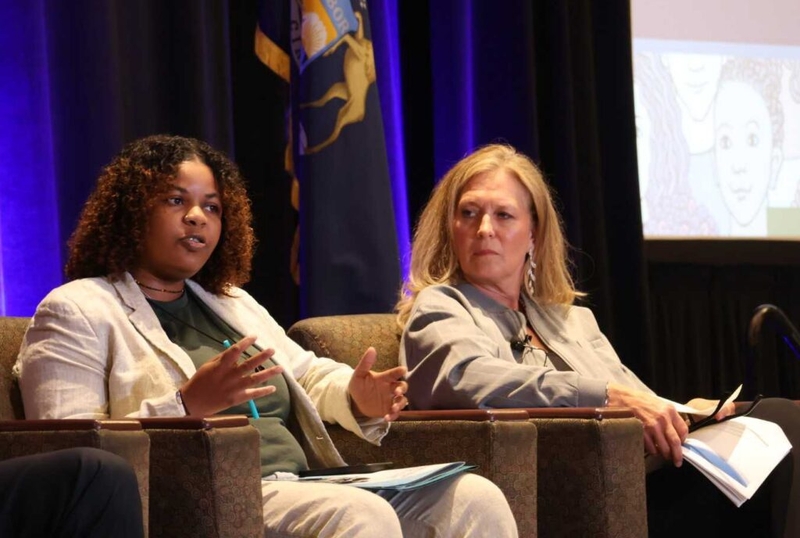
Arabia Simeon, founder and CEO of Politics on the Go discusses youth voter turnout at a panel discussion during the Michigan League for Public Policy's Champions for Kids luncheon on Sept. 17, 2026. (Photo by Kyle Davidson/Michigan Advance)
Advocates for children and young adults from across the state gathered in Lansing on Thursday as the Michigan League for Public Policy released a new report aimed at measuring the health, wealth and education of Michigan youth.
Compared with national data, Michigan’s overall rating for child wellbeing has decreased, Kids Count in Michigan Policy Director Anne Kuhnen told attendees at the league’s annual Champions for Kids Luncheon.
In addition to its annual breakdown of statistics on youth poverty, reading ability and public benefit enrollment, the organization’s 2026 Kids Count In Michigan report included a special look at outcomes for young adults between the ages of 18 and 24.
Kuhnen noted that the state now ranks in the bottom half of the nation for multiple measures, with the state rated at 32nd in the nation for economic wellbeing, 42nd in education and 34th for overall child wellbeing.
However, Michigan’s child health rating has been stable in the top half of the nation, Kuhnen said, ranking 21st overall. The state’s ranking on family community factors also showed improvement, Kuhnen added.
Poverty and social safety net participation
Since 2019, young adult poverty has decreased from 24.5% to 20.2%. Kuhnen said that these levels remain higher than rates for working age adults and children within the state.
“Despite the high poverty rate, most safety net policies are not designed with young people in mind, and some, like the Earned Income Tax Credit for workers without children, exclude them entirely” Kuhnen said.
As part of its report, the league recommended expanding Michigan’s earned income tax credit to include workers who are under 25 without children.
For children 17 and under, 17.7% live in poverty, showing a slight increase over the past five years of data.
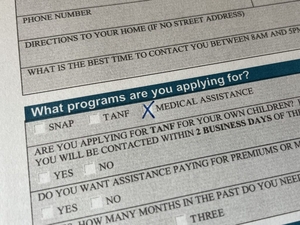
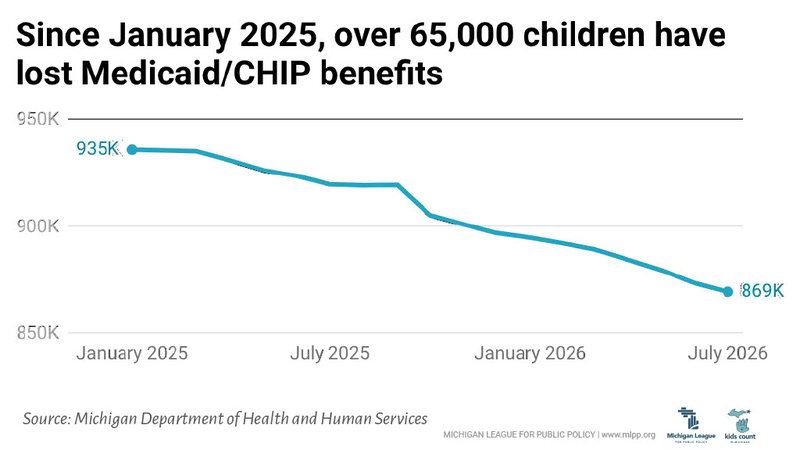
Kuhnen also pointed to the decline of Medicaid enrollment between 2019 and 2025.
Since January 2025, enrollment in the child Medicaid and Children’s Health Insurance Program has dropped by more than 65,000 children, Kuhnen said. While some of these children may be moving to private insurance through their parents’ employer and through the health insurance marketplace, Kuhnen said these declines tend to mean more uninsured kids.
The number of Michigan children under 17 experiencing food insecurity has also increased from 14.2% in 2019 to 19.7% in 2024.
Kuhnen also pointed to a decrease in enrollment in multiple social safety net programs, including the Supplemental Nutrition Program for Women, Infants and Children and the Family Independence Program, which provides cash assistance to pregnant women and families with children under 17.
The league is also monitoring enrollment in the Supplemental Nutrition Assistance Program, or SNAP.
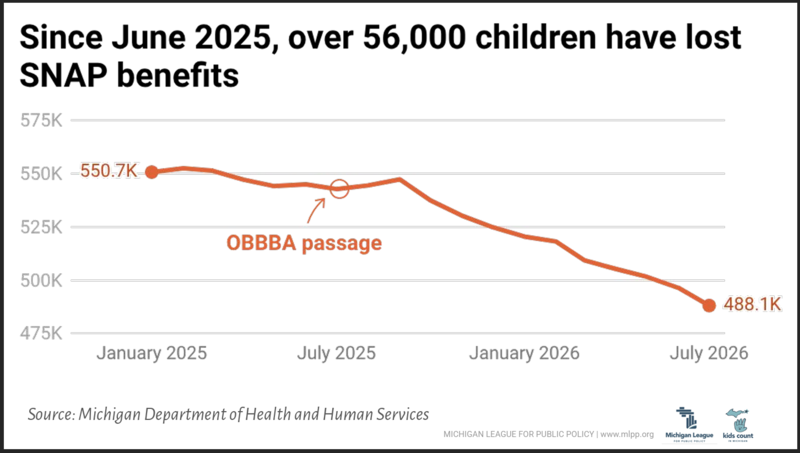
Aside from Medicaid, the SNAP program has been subjected to cuts through President Donald Trump and Washington, D.C. Republicans’ One Big Beautiful Bill Act. Additionally, recipients must meet new work requirements in order to remain eligible.
More than 56,000 children have lost SNAP since June of 2025, Kuhnen said.
While the changes within the One Big Beautiful Bill Act claim to focus on working-age adults, one out of every three Michigan residents who has lost SNAP benefits is a child, Kuhnen said.
Looking at education, Michigan also saw an increase in the number of 3rd graders who were not proficient in reading, rising from 54.9% in 2019 to 61.1% in 2025.
College readiness, enrollment in focus
The state also saw an increase in the number of students who are not college ready, with 73.4% of 11th graders failing to hit benchmarks in evidence-based reading and writing, as well as math.
Those drops cannot be attributed entirely to the COVID-19 pandemic, Kuhnen told Michigan Advance on Thursday. She noted that the trend began prior to the pandemic, and that while other states had also gone through the pandemic, they had not seen the drops in scores that Michigan has.
The state has taken some steps to address these concerns, including offering free Pre-K to eligible four year olds, requiring teachers to be trained in the science of reading and providing funding to schools through its Opportunity Index, a formula focused on ensuring schools with higher concentrations of poverty receive greater levels of funding for students.
However, these programs are so new, it may take time before the state begins to see the impacts, Kuhnen said.
Kuhnen also noted an increased share of 16- to 19-year-olds who are not in school or working as another major concern, accounting for 7.3% of teens in their age group.
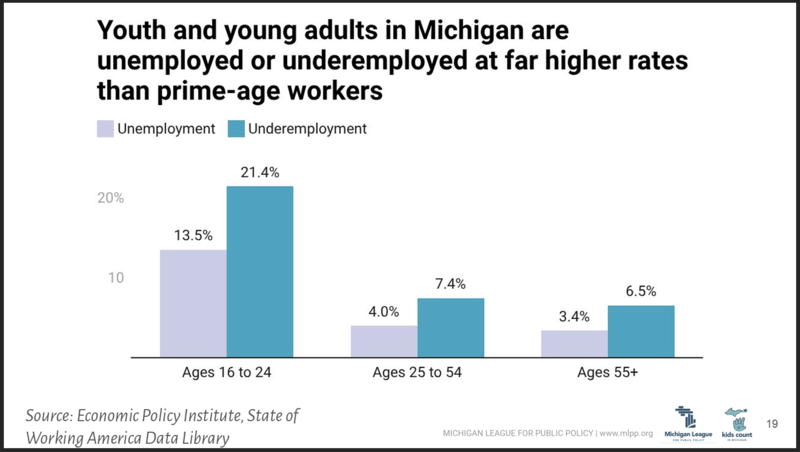
This year’s Kids Count data further noted that 47.7% of young adults are enrolled in or had completed college, while the special report shows that workers ages 16 to 24 were unemployed and underemployed at far higher rates than prime-age workers.
“We know that this is an important transition period,” Kuhnen said. “If a large number of 18 to 19 year olds are not, you know, making that transition, don’t have anything that they’re working towards, that’s very concerning.”
In its policy recommendations included with the report, the league also advised lawmakers to expand the state’s community college guarantee, which provides free community college to students living within a college’s district.
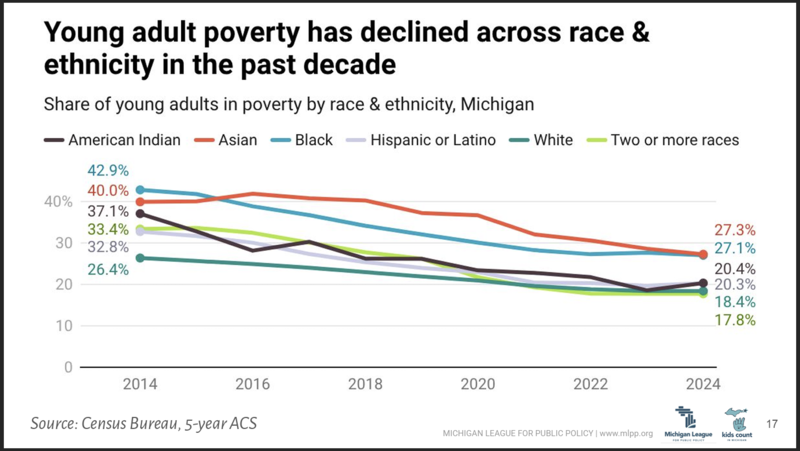
According to the league, 64% of students enrolled in community college live in-district, while much of the state, particularly rural areas, is not covered by any district.
The league also called on the state to improve its enforcement of the Youth Employment Standards Act, with the report noting that 38% of workers in the accommodation and food service sector are ages 16-24, while the industry accounts for 64.2% of child labor violations.
Young adult voter turnout increases
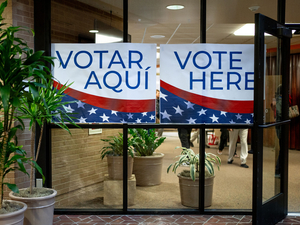
As for one high note, voter turnout among young adults had improved 84% from 2016 to 2024, with 56.9% of young adults in Michigan voting in the 2024 election.
During a panel discussion at the luncheon, Arabia Simeon, the founder and CEO of Politics on the Go, said the increase in youth voter turnout was a testament to the work Michigan has done to improve voter participation, including creating voter centers where young people can participate on their college campuses.
“When young people get access to the right things and the resources, they will show up,” Simeon said.
Lansing, MI