Colorado Springs leaders delay decision on Project Taurus data center
Sep 18, 2026 | 11:59 am ET
Description
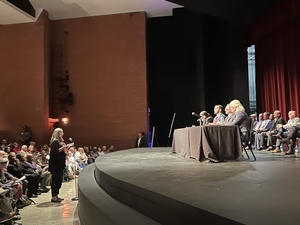
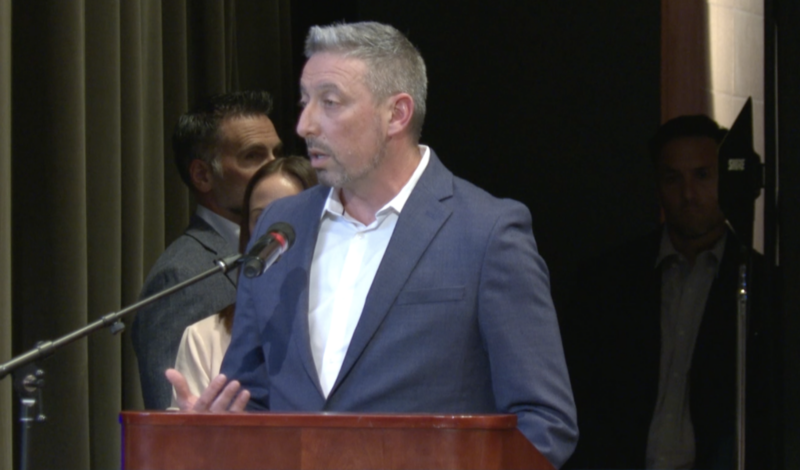
Raeden co-founder Jason Green speaks at a special hearing before the Colorado Springs City Council on Thursday. (Screenshot Colorado Springs City Council Facebook)
Members of the Colorado Springs City Council voted Thursday night to postpone a decision over a controversial data center project near Garden of the Gods.
It came after a daylong hearing with hours of public comment and rebuttal from representatives of Raeden, the California-based company seeking to turn a former microchip factory into a large data center.
Colorado Springs police took three people into custody after a person claimed they were denied a chance to comment and the audience grew rowdy. There were shouts, boos and curses from the audience continually throughout the day.
A final decision on the project was delayed on a 7-2 vote until April.
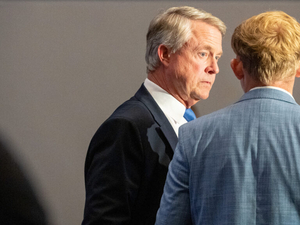
“The one thing I’ve heard today, and it’s abundantly clear to me, is that we’re not ready,” Council member Roland Rainey said before motioning to postpone. “When it comes to accountability, rules and standards … that’s what I heard from a lot of the people who spoke today, that they want some type of standards, not just for this particular applicant, but for data centers in general.”
Raeden wants to retrofit the former Intel chip factory near Garden of the Gods Road and Centennial Boulevard. The city’s planning department approved the proposal, dubbed Project Taurus, in June. After the planning commission upheld that approval, citizens appealed the decision to the City Council. That set the stage for Thursday, when the council was supposed to vote on whether the data center project is legal and meets code.
Council members instead want the time to seek answers about potential noise from the data center and how its energy use could impact everyday residential ratepayers. The developers have said the data center could draw up to 50 megawatts of power from Colorado Springs Utilities.
“This reminds of me of what happened with Ford Amphitheater, when we were promised whatever it took, and then we had no way to help the citizens, who even now years later are struggling to be able to sleep in their own beds (because of the noise),” Council member Dave Donelson said. “We wouldn’t be saying no to data centers. We’d be saying no to this data center at this location.”
Noise and electricity
Caitlin Quander, a land use lawyer representing Raeden, said the proposal is a simple adaptive reuse in a site that already allows data centers.
“We heard public comment and authentic emotion about hyperscale data centers, AI and the importance of the conservation of the environment. These are policy discussions happening nationally and at the state and local level. These are conversations that this city and its citizens can have at a broader level,” she said. “But this review and this project are different and specific. This is not a rezoning with broad criteria. This is not a referendum on data centers.”
Raeden co-founder Jason Green told members of the council that the project is not a hyperscale data center like those in Loudoun County, Virginia, which are the subject of intense community pushback over noise levels, including low frequency humming, and rising electricity demands. Houses sit about 400 feet from the site.
“We’ve answered every question that’s come our way and there have been demonstrable changes to the development plan at the behest of the community,” he said.
He said that includes having fully-enclosed generators and chillers placed as far away from houses as possible, and a 30-foot-tall wall on the perimeter of the property. The development plan also includes noise monitoring.
“We have no interest in there being a noisy data center. That’s not good for anybody,” he said.
Coloradans oppose data centers
But for those opposed, the vote over Project Taurus comes at a fraught political moment over big tech, data centers and the proliferation of artificial intelligence, which data centers support. A recent poll found that 75% of people oppose data centers in Colorado, and Coloradans overwhelmingly dislike tech giants like Jeff Bezos and Mark Zuckerberg.
“Large-load data centers like this one are the physical manifestation of the unchecked corporate power that reigns supreme in America, and the greed and recklessness of tech bro billionaires,” said Steph Vigil, a former Democratic state representative running for the Legislature again this year. “We are living in a second Gilded Age, and much like the first, rampant expansion of technology has come with empty promises to ordinary working people. We work harder, they get richer and the ecosystem is degraded just to serve their bottom line.”
On Sept. 9, Weld County Commission approved a plan from GlobalAI to develop what could be the largest data center in the state.
Denver, CO