Will Lawrence rolls out plan for regulating Big Tech, data centers in Michigan and beyond
Sep 17, 2026 | 4:23 pm ET
Description
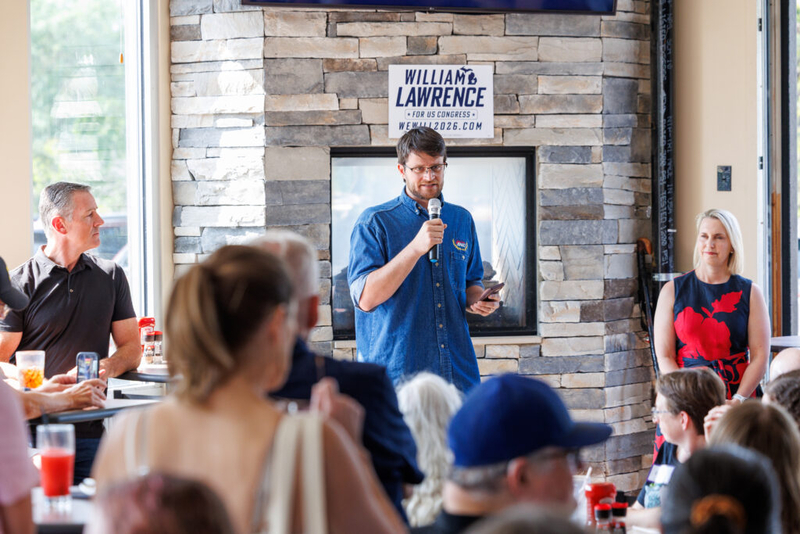
Democratic nominee for U.S. House in Michigan's Seventh Congressional District William Lawrence speaks during a rally in Lansing, Mich., on Aug. 8, 2026. The rally was meant to unite supporters of the three candidates who ran in the primary and was also attended by former Navy SEAL Matt Maasdam and former U.S. Ambassador to Ukraine Bridget Brink. (Photo by Andrew Roth/Michigan Advance)
While campaigning for the politically purple 7th Congressional District, Lansing-area political organizer and Democratic nominee William Lawrence has made his opposition to data centers a key facet of his campaign. On Thursday, Lawrence took that call further, rolling out a plan to “Stop Tech Overreach.”
The plan expands on his promises to push for a federal moratorium on data center development to establish proper guardrails.
“All across this district, everyday Michiganders are standing up and fighting back against the Big Tech companies trying to bulldoze their communities,” Lawrence said in a news release. “These companies are trying to force their way into our towns to build a mass unemployment machine that no one wants and that AI experts worry could wipe out all of humanity. I am proud to stand shoulder to shoulder with my neighbors and fight for Mid-Michigan.”
The Democratic candidate’s plan follows multiple steps: Pausing data center and advanced artificial intelligence development, and establishing a national AI compact; setting environmental protections around data center development; creating safety requirements for new AI models; and creating a national jobs program to offset changes to the job market brought about by AI.
The jobs program would be funded through a tax on AI industry profits, and would look to create jobs caring for the elderly, improving public lands, restoring wetlands, strengthening recreational and community centers and supporting small businesses and farmers, among other possibilities.
Lawrence’s proposed compact would also limit AI use in K-12 schools, expand privacy protections, bar AI from decisionmaking roles at the Social Security Administration, ban deceptive AI generated political media and prevent a taxpayer-funded bailout of the AI industry in the event of a crash.
Lawrence’s campaign has criticized his opponent, U.S. Rep. Tom Barrett (R-Charlotte), for voting in favor of the House version of the One Big Beautiful Bill Act, which included a 10 -year moratorium on state governments regulating limiting, restricting, or otherwise regulating artificial intelligence models, artificial intelligence systems, or automated decision systems entered into interstate commerce.
However, Barrett’s campaign strategist, Jason Roe, said the two candidates are aligned in their concerns about AI.
“Congressman Barrett agrees with Mr. Lawrence on the need to develop an aggressive policy on this rapidly evolving technology that threatens to disrupt our labor force, our communities, education, and potentially threaten national security and human dignity,” Roe said in a statement to Michigan Advance. “The federal government has a significant role to play, creating a regulatory structure that protects privacy and establishes guardrails that protect all individuals.”
Barrett has already put forth legislation regarding AI, Roe said, and the congressman is exploring other mechanisms like international treaty agreements to ensure advanced AI acts as a benefit, rather than a threat.
Barrett has helped introduce legislation barring AI from making determinations on whether a medical treatment is necessary and ensuring human oversight over autonomous and AI-enabled weapon systems. He has also co-sponsored legislation requiring age-verification on AI chatbots, and parental consent for minors to use chatbots.
The two candidates diverge on their view of the federal government’s role in regulating development of data centers at the local level.
“Congressman Barrett believes the federal government should not dictate to local residents their land use and zoning decisions, and has introduced legislation to prevent that from happening,” Roe said.
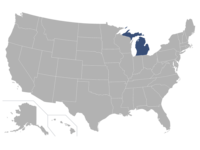
Lansing, MI