Missouri schools to get first look at ‘A’ through ‘F’ grades as public release is delayed
Sep 15, 2026 | 1:13 pm ET
Description
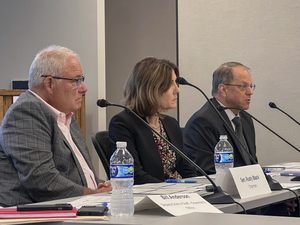
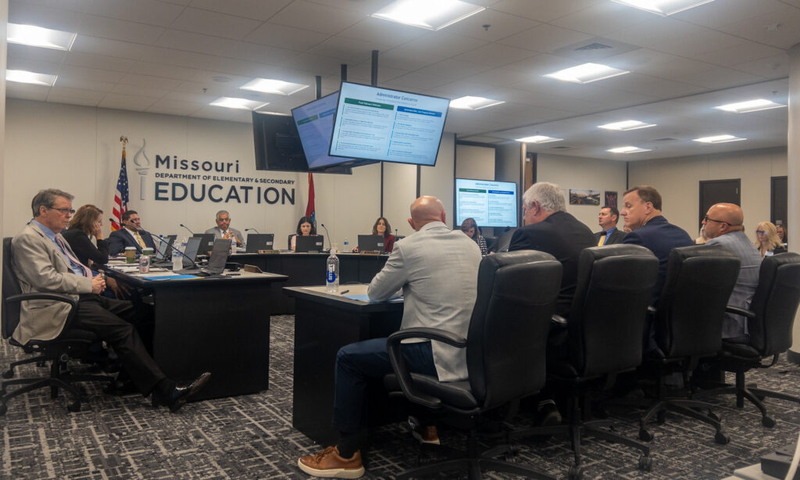
Four Missouri school superintendents share their concerns about an "A" through "F" rating system during the State Board of Education meeting Tuesday, asking for more time to review scores and methodology. (Annelise Hanshaw/Missouri)
Missouri education officials on Tuesday pushed back the release of “A” through “F” grades for public schools until at least mid-November, giving districts a chance to review the ratings first after administrators raised concerns about the system.
“We want to make sure that there’s not a premature release, and that all of a sudden schools and districts are labeled with something that maybe does not line up with what we all consider accurate for our districts,” Joplin Schools Superintendent Kerry Sachetta told the State Board of Education Tuesday. “To publicly assign grades before schools have an opportunity to understand the metrics is problematic.”
During its regular monthly meeting, the board approved a framework for the grade cards while acknowledging that more work remains before the ratings are made public.
“By us approving it today, it does not mean that it is cast in stone,” said Kerry Casey, a board member from Chesterfield. “It allows (the department) to move forward.”
The vote allows the Department of Elementary and Secondary Education to create technical documentation and run a simulation. Those results will be shared with superintendents and used to gather another round of feedback before the system goes public. If any problems are identified, the board will have a chance to make changes.
“A lot of people have been putting a lot of time and effort into this,” said interim Education Commissioner Stacey Preis. “And we just are really trying hard to do it right.”
Last month, leaders with the Department of Elementary and Secondary Education told the board the public could see initial reports by the end of September or October in an attempt to meet a timeline requested by Gov. Mike Kehoe. But Tuesday morning, Deputy Commissioner of Learning Services Lisa Sireno said mid-November would be the earliest the department could publish a report.
Between the two meetings, the department held public feedback sessions, which uncovered concerns with parts of the proposed system, including an arbitrary cap on reading scores that education officials planned to use as a measure of literacy. The last of those forums was Friday. That day, the department sent more information to the board, setting up for Tuesday’s discussion.
“Fundamental questions about this process have come up during this debate. This is not ready for prime time,” said board member Vince Schoemehl, of St. Louis. “I don’t think the program has been put together properly.”
Schoemehl was the only member to vote against the framework, saying he had concerns with the underlying premise.
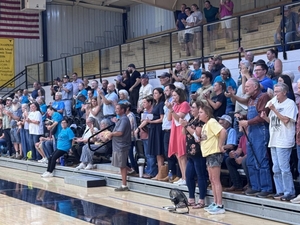
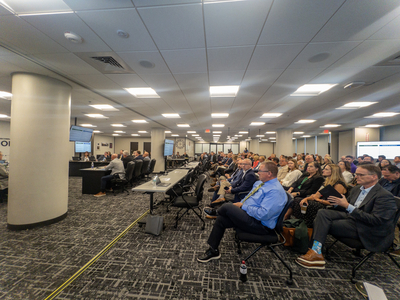
His comments garnered applause from the approximately 100 educators in attendance.
Prior to the board’s discussion, four superintendents urged members to delay public reports until schools have a chance to review the ratings and methodology — a request the board largely accommodated.
They also reiterated two requests the department had already fulfilled: a promise not to shorten standardized testing windows to speed up reports and a delay of the literacy metric until problems could be resolved.
“We think that piloting is not about avoiding accountability, but it’s about the integrity of what we’re trying to launch,” said Pattonville R-III Superintendent Matt Goodman. “We feel like if we do launch an untested model that issues mathematically flawed grades, we’re going to destroy trust across the state.”
The group also asked for the department not to shorten the window of time for districts to appeal and correct data annually.
“We believe moving forward, the best path for us to optimize, for us to achieve the best ‘A’ through ‘F’ framework to serve students has got to be a partnership,” said Adam Friga, superintendent of Oran R-III School District. “It has got to be a partnership between the state board, the department and school districts. We cannot work in silos.”
Superintendents’ concerns were largely separate from the framework up for a vote Tuesday, Sireno said, allowing for ongoing collaboration.
“We may not always agree on the details of every single report, but I think if we come together in that spirit of what’s best for children, we can get it right,” she said.
Preis told the board she “feels good about where the framework is right now,” but “there are some things that we would still like to work through with our colleagues.”
Jefferson City, MO