Amateur sports the latest frontier in NJ independent contractor fight
Sep 14, 2026 | 4:17 pm ET
Description
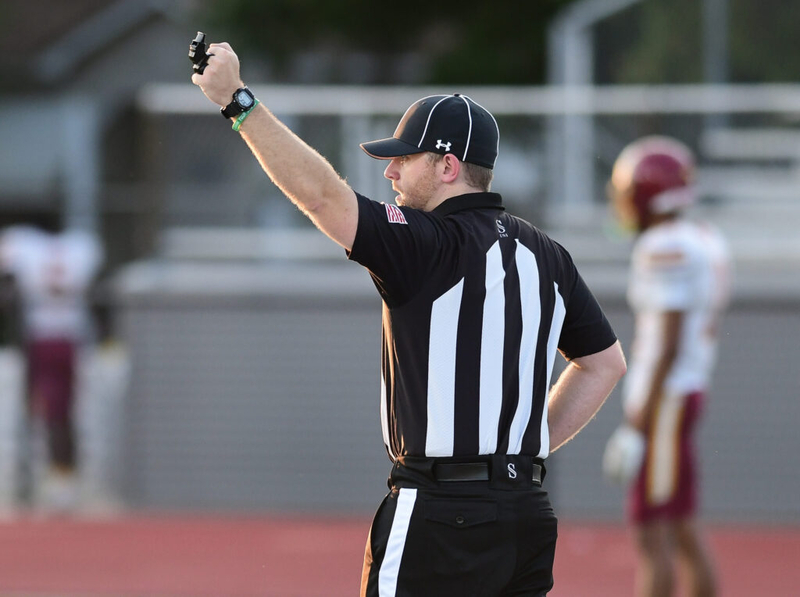
Business groups and sports officials are pushing for a law declaring referees and umpires independent contractors amid a broader worker classification fight. (Photo by Kyle Phillips/Oklahoma Voice)
Umpires, referees, and other amateur sports officials urged Assembly lawmakers to pass legislation that would exclude them from a state test that weighs whether they are employees or independent contractors.
More than one witness told the Assembly Labor Committee, which did not vote on the bill Monday, that labor regulations set to take effect in October would push them out of the industry, raise costs for school districts and sports leagues, and rob workers of flexibility.
“When my wife and the thousands of sports officials across New Jersey take the field, they are not looking for a traditional W-2 job,” said bill co-sponsor Assemblyman Anthony Angelozzi (D-Burlington). “They choose when and where they work, which leagues they serve, and how many games they accept.”
Sports officials’ push for an exception comes amid a broader furor against the state’s move to codify into regulation its interpretation of New Jersey’s independent contractor test, called the ABC test. The test’s three prongs measure whether a worker is free from their employer’s control, performs work outside a firm’s regular course or place of business, and engages in business independent of a given firm. Workers who meet all three prongs are independent contractors.
In New Jersey, amateur sports officials typically work piecemeal, selecting games from lists proffered by sports official associations at their leisure, multiple officials told the panel. They pay dues to join those associations and are paid at rates negotiated beforehand between the associations and the school districts or leagues that hold the events.
Officials argued that arrangement, which the bill’s proponents said allows individual umps and refs to select or reject assignments without consequence, leaves sports officials free from the control of a single employer, a key leg of the ABC test.
John Gallante, president of the New Jersey Umpire Alliance, said the state Department of Labor is moving to classify some sports officials as employees of the associations, though that determination is now the subject of a court challenge.
The nature of the department’s determination is unclear. The agency examines individual employment relationships for misclassification and does not issue industrywide classification rulings, though some of its decisions — like determinations that Uber and Lyft drivers are employees — can be applied that way. It does not comment on individual cases.
Sports officials on Monday questioned how they would even become eligible for some benefits. Classifying sports officials as independent contractors could, for example, require that they pay for unemployment benefits it’s unclear they could ever claim, Gallante said.
“How would the unemployment system realistically apply to someone who officiates one or two games a week and is paid by the game? When does that little league umpire become quote-unquote unemployed? When their Saturday game is canceled? When they choose not to accept an assignment? When their baseball season ends?” he said.
Official associations are also largely staffed by volunteers, lack the infrastructure for payroll withholdings, and would need funds to gain those capabilities, said Gallante, who is president of the Tri-State Elite Umpires Association, which supplies umpires to youth, adult, and little leagues.
Those costs would eventually be passed onto school districts and sports leagues, he said.
Others cautioned a change in their classification would deprive sports officials of the ability to deduct spending on uniforms, trainings, and safety gear from their taxes.
“If we were employees, we wouldn’t be able to file that. That, sometimes, can add up to a lot of money,” said Sam Robinson, an umpire and football referee.
Classing officials as employees would “take away the very autonomy we treasure,” Robinson added.
Though New Jersey in May moved to adopt regulations outlining the state’s interpretation of the ABC test, those regulations’ effective date was delayed until Oct. 1. Senate President Nicholas Scutari (D-Union) has urged Gov. Mikie Sherrill (D) to move the date to July 1, 2027. Spokespeople for the governor did not return a request for comment.
Business groups have echoed Scutari’s call and seized on the push for exceptions to rail against the rule entirely, arguing lawmakers would need to make many more to calm disquiet over worker classification and lack the time for such changes.
“Do we realistically have time in 17 days to deal with every single industry that’s going to be affected?” said New Jersey Business and Industry Association policy analyst Jack Kelly.
Others have urged the administration to maintain its course on the rule, arguing it would ensure workers would receive overtime and sick leave benefits the law entitles them to.
“We need this rule to stop companies from cheating their workers, plain and simple,” said Nedia Morsy, director of immigrant advocacy group Make the Road New Jersey.

Trenton, NJ