Drought leads to ‘unprecedented’ black bear conflicts in Wyoming
Sep 14, 2026 | 6:25 am ET

Description
Photo courtesy of WyoFile
The 5-year-old black bear had a routine. At nightfall, she would climb down out of one of Laramie’s many cottonwood trees, spend the night searching for tasty morsels in city and residential garbage cans, then by 6 a.m. she would find another tree, climb back up, and sleep off all that garbage while 60, 80 or even 100 feet off the ground.
Pictures show her legs free floating on either side of a branch, dangling like a cartoon bear near the city’s historic train depot and across town by baseball fields. Wyoming Game and Fish Department biologists received regular reports of her whereabouts, but she was either 80 feet up a cottonwood tree — too high to dart with no branches to catch her fall — or she’d already moved on, said Lee Knox, Laramie’s Game and Fish’s regional wildlife coordinator.
He’s guessing she spent nearly a month in Laramie before one night in late August she climbed up a spruce tree instead of a cottonwood and someone called Game and Fish in time. Knox requested help from a tree trimming service who arrived with a truck and bucket and hoisted another biologist into the air. The biologist shot the chubby bear with a tranquilizer dart and watched as she tumbled out of the spruce tree like a ball in a game of plinko, the branches slowing her fall before coming to rest in a tarp held slightly off the ground.

He then checked her for injuries, gave her an ear tag to show she’d been captured and drove the sleepy bear to the nearby Snowy Range, where he released her deep in the woods hoping he wouldn’t see her again.
A black bear spending a month loitering in a town of 35,000 people was strange enough. Even weirder was that she wasn’t a young, dumb male bear — she was a 5- to 6-year-old female who had previously reared cubs. Adult females tend to be known more for their caution than recklessness, Knox said. But that’s a reflection of how bad this summer has been for bear and human conflict, not just in southeast Wyoming, but across much of the Mountain West.
“To find a bear in town once or twice a summer wouldn’t be crazy, but this summer was unprecedented,” Knox said. “There’s been an unheard-of number of conflicts. It’s at least three times as bad as the last bad year, and the majority of the conflicts have been more aggressive bear behavior.”
Why, exactly, is anyone’s guess, but one of the biggest drivers is likely an extreme drought causing a decided lack of food. And summer is not over yet.
Black bears in trouble
The Laramie region, which encompasses half of the Sierra Madre range all the way to the Nebraska border, regularly deals with black bear conflict. Several years ago, Game and Fish advised people in the Saratoga Valley and Centennial areas to lock their vehicles because black bears figured out how to open car doors for tasty rewards inside.
This year they’re not only breaking into vehicles but also houses and cabins. Game and Fish has received at least 20 reports of black bear thieves sneaking in through screen doors and sometimes windows. They’ve also wedged themselves through doggy doors, though one bear realized too late it couldn’t get back out the doggy door and ran away with the contraption around its waist.

The issue is even more serious in Colorado, where portions of the state have seen a 219% rise in bear conflicts in the first seven months of the year. And in late August, a black bear broke into a home in Estes Park, Colorado, rooted around in the kitchen and then scratched and knocked over an 80-year-old woman. The woman is recovering from her wounds, according to Denver7, and the bear escaped back through the window.
Northern Wyoming also has been struggling with problem bears, though so far they’ve largely spared houses, opting instead for chicken coops, bird feeders and garbage, said Tim Thomas, Game and Fish’s Sheridan regional wildlife coordinator. In the Bighorn Mountains, a black bear tried climbing in a tent with campers after harassing other campers a few miles away. Game and Fish caught the bear, ran DNA tests to determine it was the same one trying to steal food in campgrounds, and killed it to prevent it from an inevitably more serious conflict.

“We’re seeing issues across both gender and age classes,” Thomas said. “It’s not just young ones getting kicked off mom, they’re all looking for food resources.”
In Muddy Mountain near Casper, the Bureau of Land Management temporarily closed a campground in July after it was visited by a black bear. Because the bear had returned multiple times for food rewards, Wyoming Game and Fish made the decision to euthanize it, an agency spokesperson told Oil City News.
Colorado wildlife officials have killed nearly 300 black bears this year, according to reporting from the Colorado Sun, including an 18-year-old bear whose intestines were completely blocked by plastic garbage bags and “at least 10 nonflushable cleaning wipes.”
Looking for food in all the wrong places
Dan Thompson, Game and Fish’s large carnivore supervisor, figures he’s fielded dozens of calls from journalists this summer wondering why black bear conflict is so much higher than normal.
The simplest answer in regions like Laramie and Sheridan is likely tied to drought and few natural foods. They’re popping up looking for food in places as far away from mountains as Torrington and Pine Bluffs, Knox said, which is not typical bear habitat.
“Hot dry conditions and lower than normal berry abundance and other things like that are contributing factors,” Thompson said.
Berry crops failed in the Sheridan region because of a late frost, and grasses and wildflowers peaked much earlier than normal this year. But lack of food isn’t fully to blame for increased conflict. Fewer bears came into Lander this year, for example, than last year when berry bushes bowed their heads under the weight of their fruit. Last year, Thompson said, bears followed that berry abundance right into the urban-wildland interface.

A larger part of the problem is the combination of scarce wild foods and more readily available human foods. If a hungry bear can’t find anything to eat, it will keep moving. If it discovers trash or other snacks, it will stick around. That’s why Game and Fish asks people year after year to bring bird and dog food into secure places, keep garbage in bear-proof cans and lock down those chicken coops. Because once a bear discovers a cache of easy, tasty food, it won’t forget, Thompson said.
“People should let us know as soon as possible, especially if there’s any conflict activity, if they’re seeing a black bear in an area where they aren’t expecting to,” he said. “People are reluctant to call because they think we will show up and kill a bear.”
And Game and Fish has killed more black bears than normal this year, though Thompson said he wouldn’t know how many exactly until closer to winter when bears are finally in their dens. If people call early, before a bear is habituated to finding human food, Game and Fish has more luck hazing or moving the bear and helping homeowners secure food and other attractants.
“We really need people to give wildlife some grace and be as bear aware as possible,” Knox said. “If you live out of town, especially, anything is possible. It’s Wyoming and it’s a rough year.”
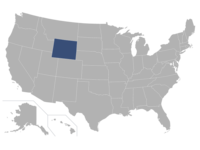
Cheyenne, WY