


Ag Commissioner: KY policies must support cattle farmers facing ‘perfect storm of issues’
Sep 14, 2026 | 5:30 am ET
Description
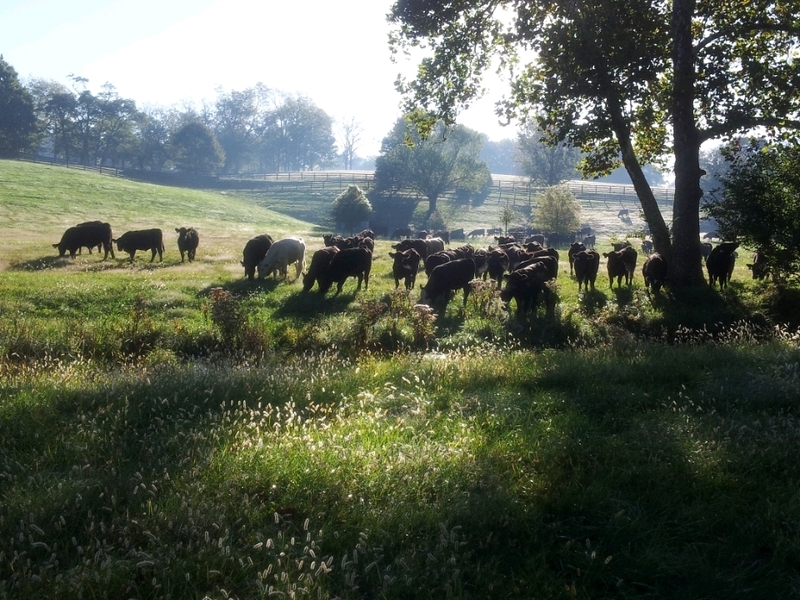
Beef cattle grazing in Jessamine County. (Photo by Robert Pokorny)
While Kentucky cattle farmers are facing challenges like a loss of farmland and a move from the Trump administration to import more foreign beef, agriculture leaders are trying to boost the policies that will help them.
Kentucky Agriculture Commissioner Jonathan Shell told the Kentucky Lantern last week that he is hearing “a frustration from the industry right now,” but it comes from “a perfect storm of issues.” In the last couple of decades, cattle farmers have “barely broke even” and faced “non-monetary tariff barriers that other countries have put in place that have limited our ability to export beef over the years,” he said.
The cattle herd in Kentucky has shrunk in recent years. In 2020, there were more than one million cows in Kentucky. Now it is less than 900,000. Plus, the state is losing acres of farmland and more farmers are retiring from the job.
But, demand for American beef is “at an all-time high,” Shell noted.
“People want that taste, that flavor. They want that marbling,” Shell said. “They want what the American farmer can provide in that beef supply, and if you put it in the grocery store, American-grown beef versus any other country of origin, they’re going to go and get that American-grown beef nine times out of 10.”
Within the last month, the industry has been influx after President Donald Trump signed a proclamation to boost lean beef imports from other countries to lower prices at the grocery store for American consumers. After facing backlash from the farming industry, including agriculture groups in Kentucky, Trump signed an executive order in early September that included a review of country-of-origin labeling for beef products.
Shell said that with the latest order, the market recovered a bit.
“I do believe that we will see a recovery of the market in a meaningful way, but for those farmers that have had to sell cattle in that month span, it really did hurt,” he added.
In a presentation to state lawmakers during a Sept. 3 Agriculture Committee meeting, representatives of the Kentucky Cattlemen’s Association said the state’s beef industry needs policies in place to support farmers’ production. They plan to bring specific ideas to lawmakers ahead of the 2027 legislative session, which begins in January, particularly on labeling products.

Shell said the state already has a marketing campaign around Kentucky Proud products to label items produced in Kentucky. He emphasized the importance of a national country-of-origin label, and referred back to the president’s executive order on that issue.
Kentucky has also taken some steps to support new farmers financially, Shell added. The state has a Kentucky Selling Farmer Tax Credit program to encourage farmers to sell agricultural land to buyers who will continue using the land for farming. The Kentucky Department of Agriculture has a loan program for beginning farmers through tobacco settlement funds under the Kentucky Agricultural Finance Corporation.
As for cattle farmers specifically, Shell said the state is “constantly looking” at ways to increase the ability for them to directly market to consumers and process their own products.
“We’re also looking at how we can create an environment in the state of Kentucky for more large-scale processing to happen,” the commissioner added.
Most American meatpacking companies are in the Midwest. Tyson Foods, the largest meatpacking company in the U.S., said in August it would close two of its facilities in Illinois and Utah, as well as sell a beef facility in Washington.
Shell said it will be key for investment in the agriculture industry in Kentucky to be seen as an economic development issue. The General Assembly created an agricultural economic development fund in 2025 to direct the Economic Development Cabinet to work with Shell’s department to attract agriculture business to Kentucky. Announcements on that front may be coming in the near future, Shell added.
“I want them to look at this in … the way that we incentivize trying to get data centers or solar projects, or the way we incentivize trying to get rural jobs and rural businesses or workforce development,” Shell said.
Frankfort


