New Mexico Election 2026: US Senate
Sep 11, 2026 | 11:00 am ET
Description
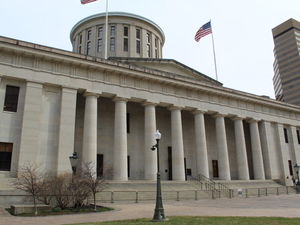
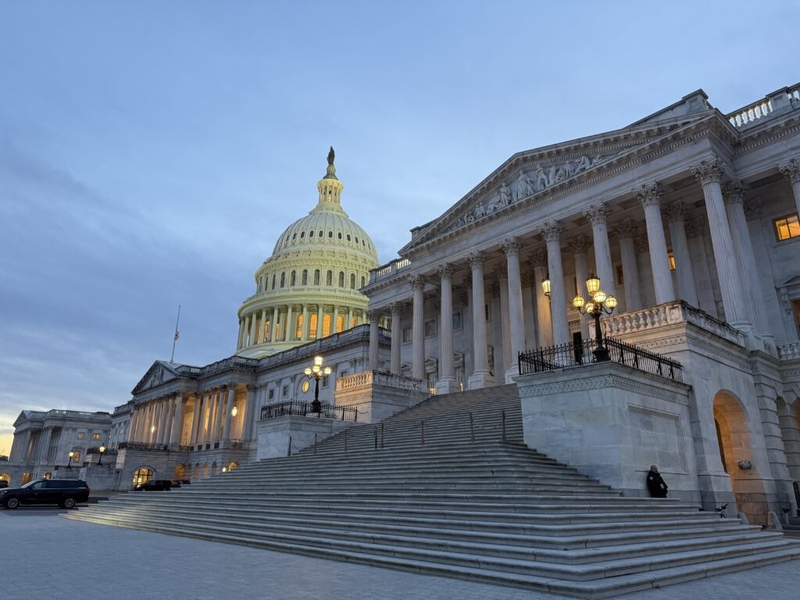
Roswell Republican Larry Marker is challenging U.S. Sen. Ben Ray Luján, a longtime elected official, for one of New Mexico's U.S. Senate seats in the Nov. 3, 2026 general election. Above: The U.S. Capitol building in Washington, D.C. (Photo by Jennifer Shutt/States Newsroom)
The race to represent New Mexico in the U.S. Senate took an unconventional route last spring.
Incumbent U.S. Sen. Ben Ray Luján (D-N.M.) soundly defeated his opponent in the June 2 primary election with an 84%-16% victory. The Republican race, however, appeared blank on the ballot.
While the Republican Party of New Mexico failed to officially field a candidate for the race, Republican Larry Marker of Roswell decided to run as a write-in candidate, meaning his name didn’t appear on the ballot. He still managed to garner nearly as many votes — through voters writing his name in — as Luján’s Democratic primary opponent, Democrat socialist Matt Dodson.
Luján and Marker will face each other on the Nov. 3 general election ballot.
Whoever wins will hold a six-year term with an annual salary of $174,000. Source NM spoke with both candidates about the race, their vision for the state and how they’d navigate the remainder of President Donald Trump’s second term. Their answers have been edited for clarity and concision.
U.S. Sen. Ben Ray Luján
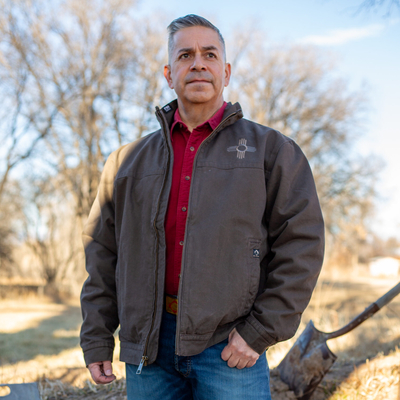
U.S. Sen. Ben Ray Luján, one of five Democrats who make up the state’s congressional delegation, first won this seat in 2020, but has worked in public service in New Mexico for more than 20 years.
He first won election to the New Mexico Public Regulation Commission, which oversees the state’s utilities, in 2004 and later won a seat in the U.S. House of Representatives in 2008. He served as chair of the Democratic Congressional Campaign Committee in 2018 as Democrats sought to regain a House majority during Trump’s first term.
Luján sits on U.S. Senate committees for Agriculture, Nutrition, and Forestry; Budget; Commerce, Science and Transportation; Finance; and Indian Affairs. His late father Ben Ray Luján Sr., served in the state Legislature for nearly 40 years, including more than a decade as House speaker.
He survived a stroke in 2022 and, citing that experience, helped secure $3 million for a new MRI scanner at the University of New Mexico Health Sciences Center, which will enable researchers to more closely study brain chemistry.
Luján told Source NM he’s running for reelection because he believes the office lets him practice the “golden rule” he learned about as a churchgoing child — “Do unto others as you would have them do unto you” — on a statewide scale.
“I grew up on a small farm in northern New Mexico. I still live on that farm today,” he said of his Nambé roots. “I’m very proud of my work ethic and what I learned on that farm — lifting up and helping neighbors and raising food and helping to share that everywhere that we can.”
What is the most important issue currently facing New Mexico?
Right now, I don’t know that there’s just one issue. The two issues at the top of my list after talking to people around New Mexico is the cost of everything and water.
Both of these issues matter so very much, whether I’m down in the southern part of the state, in the Middle Rio Grande Valley or up north.
All of the tariffs and the policies coming out of this administration now are just arbitrarily hurting folks.
If reelected, what piece of legislation would you prioritize sponsoring in the next term?
One of the pieces of legislation that I’ve been working on now with colleagues throughout the country that will make a big difference in a positive way for families back in New Mexico is to provide more support to middle-class families for home healthcare; for caring for a parent, grandparent, a sibling, a child, a grandchild.
Right now, there are so little, if any, programs that provide that kind of support.
This is something that I learned about with a diagnosis with my mom. Myself and my three siblings now stay with mom every night to make sure that she has care and people around her.
How would you describe the impact of the Trump administration on New Mexico and what would your approach be to working with the Trump administration if re-elected?
With the passage of the ‘Big, Beautiful Bill’ and many of the aspects in there, what President Trump’s policies have done…is make families in New Mexico sicker and make families in New Mexico poorer.
When I was serving in the U.S. House under President Trump’s first term, after we were able to win back a majority, there’s still room to work with him. I’m proudly working with Democrats and Republicans on a farm bill. I believe that we could actually get a farm bill across the finish line that will provide more support for food programs, help families in New Mexico and support families and ranchers, especially in western states.
What policies would you support as it relates to border security?
We need to have smart immigration policy and strong border security in America. I’ve advocated for 100% screening — inbound and outbound — of our southern border for some time.
The U.S. Senate has several proposals pending related to data centers, ranging from a moratorium to requiring data centers to foot the bill for their energy use. Where do you stand on these measures?
Whether it’s AI data centers or any other industry, in New Mexico, drinking water needs to be for drinking and agriculture needs to be for agriculture. Plain and simple.
Do you believe the U.S. voting system is secure?
The voting system in the U.S. is a secure voting system. When President Trump and my Republican colleagues in the U.S. Senate say that they’re moving legislation that is simply about voter ID, they are misleading and arguably lying to the American people. What Republicans and President Trump are trying to do right now is end vote by mail for every American across the country, and they’re trying to scare people all across the U.S.
What do you see as the most meaningful accomplishments of your current term?
I’ve been honored to work with my Democratic and Republican colleagues to pass significant pieces of legislation that are making a positive difference for families in New Mexico. The Radiation Exposure Compensation Act was a piece of legislation that most observers suggested would never be done.
I was very proud that I led an initiative to create a fund specific for the victims of the Hermits Peak-Calf Canyon Fire that was very similar to something (former U.S. Sen.) Pete Domenici created after the fire that started in and around Los Alamos National Laboratory in Cerro Grande.
You’ve consistently opposed the current administration’s actions when it comes to policies that acutely affect New Mexico, particularly ICE operations and Medicaid cuts. How would you approach these issues in a second term?
My approach always has been that I’m willing to work with anyone when it comes to helping people in New Mexico. But if you’re going to bully New Mexico, we’re not going to get along.
Your opponent has criticized you for prioritizing what he describes as ‘hand-out’ social programs. How do you respond to that?
I was proud to lead an initiative, working with my Republican colleagues, that required the plugging of all the orphaned and abandoned oil wells in New Mexico and on federal land across America. That was a job creator and that was one that put a lot of people to work and invested millions of dollars in job creation and opportunity throughout New Mexico. If my opponent wants to call that a hand-out, then he’s clearly out of step with people back in New Mexico, especially in one of the fields that he purports to know the best.
Larry Marker
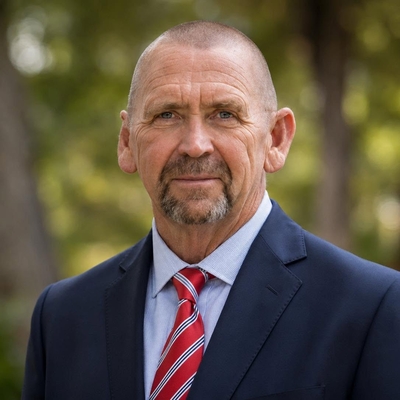
Larry Marker, a self-employed oil and gas businessperson, previously ran unsuccessfully for state land commissioner and the state senate.
Born in Hobbs and raised in Roswell, Marker told Source NM that rural New Mexico needs a senator who will fight for economic development opportunities. He’s vowed to work toward a secure border, support the oil and gas industry and boost New Mexico’s farmers and ranchers.
Marker acknowledges, though, the difficulties of his campaign.
Republicans have not won a statewide race in New Mexico for a decade and he won his party’s nomination with no competition. Now, he faces an incumbent with strong name recognition largely because his party failed to field candidates in the June primary election.
“I definitely can beat Ben Ray Luján,” Marker told Source NM by phone while waiting to board a plane to Dallas, where he planned to seek national funding at the national Republican midterm convention. “I’m just going to have to outwork him.”
What is the most important issue facing New Mexico?
New Mexico has a lot of excess income, you know, they’re just basically drowning in money right now while the federal government isn’t. Where I’m going to be working in Washington, D.C., I believe the biggest issue — and it does affect New Mexico — is the $40 trillion in debt, and then we need to figure out a way to stabilize Social Security.
If elected, what piece of legislation would you prioritize sponsoring in the next term?
The first thing I want to look at when I get there — and I’ve got a pretty solid plan — is how we can stabilize Social Security.
People are concerned about Social Security. They’re worried about the economy, and the economy’s tied directly to the deficit and the debt of the federal government and, of course, taxes. Affordability is a big issue. We could solve a lot of those problems if we solved the debt and the deficit.
How would you describe the impact of the Trump administration on New Mexico and what would your approach be to working with the Trump administration if elected?
His policies have affected New Mexico. Of course in the oil and gas industry, those guys are excited about the price of crude (oil) being up, but they realize that that’s not really good for the economy.
My position on Donald Trump is that I do support most of Trump’s policies. He doesn’t have the constitutional authority to levy tariffs — that’s an issue that I struggle with. And as far as waging war in Iran, I believe the Constitution intended to limit the president’s ability to wage war, but we haven’t done anything about that since 1953…Until Congress and the Senate decide to step in and actually do something and do their job, it’s going to be a mess.
What policies would you support, if elected, as it relates to border security?
We need a very, very strong, secure border, but we do need a way for people to migrate into the U.S. — a legal method that is not real cumbersome and especially not real expensive.
There are several proposals in the U.S. Senate related to data centers, ranging from a moratorium to requiring data centers to foot the bill for their energy use. What is your position on these measures?
We need to treat data centers like you would treat a feedlot. They don’t need to be close to town. They don’t need to be anywhere where they can destroy the resources of the area they’re in. And they need to be someplace where they’re not over a shallow water table or a water table that they can contaminate.
Do you believe the U.S. voting system is secure?
Do I believe that it’s secure and completely hack-proof? No, no.
Do I believe that people need to get out and vote and that they need to quit worrying that their vote won’t count because somebody’s going to steal it or do whatever? We need to get out and vote and say that our county clerks are doing the best they can to provide us a good, stable voting process in New Mexico.
I don’t believe the federal government should be able to control the elections, but what I do believe is people have got to have confidence in our voting system.
What would you do differently than your opponent?
Small-town New Mexico is in serious trouble. What I’m going to be doing differently is my time is going to be focused on providing people opportunities to make a living, to make a good life, to go out there and get something accomplished.
We need to rebuild our mining industry. We need to get a handle on the government putting the independent oil and gas producers out of business. We need to provide opportunities right here in New Mexico.
I believe in helping people by giving them a hand up, but don’t give them a handout.
Republicans have not won a statewide race in New Mexico in a decade. How do you plan to compete with an incumbent who has name recognition?
I would not have done this if I didn’t think that I could win this race.
If you look at the voter registration numbers for the state Republican Party, we’ve got about 55,000 more registered Republicans now than we had in 2020, which is the last time this office was up for election.
For the first time in the history of New Mexico, less than 40% of the registered voters are Democrats. So, that tells you things are swinging.
Santa Fe, NM