A Kentucky county becomes first in state to permanently ban data center construction
Sep 10, 2026 | 2:26 pm ET

Description
Valuable agricultural land is one of the reasons Woodford County has banned data center construction. (Photo courtesy Kentucky Tourism)
Woodford County has approved an ordinance this week to permanently ban data center construction, the first Kentucky county to do so and among a handful of local governments across the country to take such a strict stance against the power-intensive operations.
The ordinance passed by the Woodford County Fiscal Court on Tuesday bans the construction of landfills, data centers and large battery storage systems — which are often paired with hyperscale data centers — within the county.
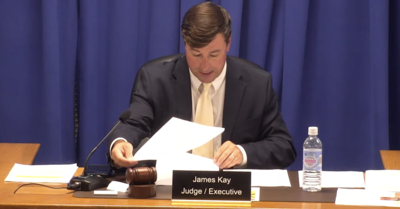
After the ordinance unanimously passed, Democratic Woodford County Judge-Executive James Kay told the fiscal court that the court “made it our clear, proactive commitment to Woodford County to keep us being one of the most special places on earth.”
“We are a tight-knit community with a finite, irreplaceable amount of land. Every single acre matters here. Our rolling pastures, our historic farms, our agriculture, are not just scenic views. They are the backbone of our economy,” Kay said during the meeting. “This isn’t about closing doors or technology. It’s about holding the line on the heritage we treasure.”
A spokesperson for the Kentucky Association of Counties told the Lantern in an email that Woodford County is the first Kentucky county the organization is aware of to pass such a permanent ban on data center construction.
A number of counties and cities throughout the state have taken less strict measures of passing a moratorium, or temporary ban, on data center construction to weigh potential regulations of the operations. The Woodford County seat of Versailles had passed such a temporary moratorium in July.
The Data Center Coalition, an industry group for data center developers, has characterized such moratoriums as anti-business and cutting communities off from economic development opportunities. The coalition did not respond to Thursday emails requesting commentary on Woodford County’s action.
In a phone interview Thursday, Kay told the Lantern the fiscal court passed a permanent ban on data centers instead of a moratorium after hearing universal opposition from local residents. He said developers have not pitched any specific data center proposal within the county but that such developers are “looking at everywhere.”
“We’re going to do what we say, and what we say and what we want is to ban data centers. Not to put in regulations that hopefully they don’t try to find loopholes or try to come — we don’t want them,” Kay said.
Kay pointed to the “divisive” debate happening over a proposed hyperscale data center in the small Mercer County community of Burgin that a permanent ban on data centers avoids. He said the ban on data centers is a part of a larger, years-long effort by the county to try to preserve existing farmland in the county that’s the 14th smallest in the state by geographic area, but has some of its most valuable Thoroughbred horse farms.
“We wanted to get ahead of it in the spirit of knowing that the vast majority of people were against it,” Kay said. “We see the pressure on all of our productive farmland. And so we’re trying to protect that and preserve that and continue to protect against sprawl and urban growth as well.”
According to a tracker of local government actions on data centers published by the National League of Cities, only a dozen local governments in states including California, Colorado, New Jersey and Nevada have enacted permanent bans on data center construction this year. Numerous local communities have opted for enacting moratoriums instead, according to the tracker.
Kay said as data center technology advances, he hopes that the large operations can become more sustainable and less intrusive, mitigating any air pollution impacts and utilizing more renewable energy sources.
“I think the community can come back and look at changing its rules and regulations. Until then, the way that it currently stands, I believe that a lot of people feel that it’s somewhat exploitative,” Kay said.
Frankfort