Louisiana AG returns to 5th Circuit seeking end to telehealth abortion meds
Sep 10, 2026 | 5:00 am ET

Description
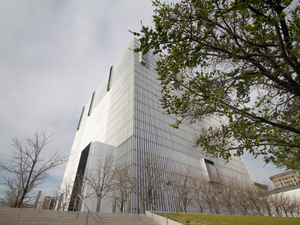
Anti-abortion advocates lined the steps outside the John Minor Wisdom U.S. Court of Appeals Building in New Orleans, where Louisiana Attorney General Liz Murrill asked judges Wednesday, Sept. 9, 2026, to halt federal policy that allows abortion drugs to prescribed without an in-person doctor's visit. (Photo by Greg LaRose/Louisiana Illuminator)
NEW ORLEANS — Louisiana Attorney General Liz Murrill made a return appearance before a federal appellate court Wednesday in her effort to strike down Biden-era health policy that allows abortion drug prescriptions without an in-person doctor’s visit.
The U.S. Supreme Court has already pressed pause on the case Louisiana filed 11 months ago against the U.S. Food and Drug Administration, but Murrill said she wants the Trump administration to take action now rather than wait on justices to decide the matter. The attorney general has framed access to abortion medication through telehealth appointments as a strategy to circumvent state bans against the procedure.
“We continue to think that the FDA should reinstate the pre-Biden era rules, which were good, common sense rules, and that the evidence continues to show that this is dangerous medication for women,” Murrill told reporters after Wednesday’s arguments.
The FDA’s attorney, Daniel Winik of the U.S. Justice Department, was not available for an interview.
Murrill’s case, and two more similar to it involving five states total, targets mifepristone. It is one of two prescription drugs administered for medication abortions as well as to treat miscarriages. The attorney general has repeatedly argued that mifepristone is unsafe, despite repeated research and decades of applied use that contradict her stance.
The three appellate judges presiding over Wednesday’s hearing initially bristled at Louisiana Solicitor General Benjamin Aguiñaga’s request that they repeat an action the Supreme Court has already stymied.
In May, a panel of three different 5th Circuit judges blocked the FDA telehealth policy and halted nationwide one of the leading ways to obtain abortion medication. The Supreme Court lifted that order the next day and has allowed Louisiana’s case to move forward while preserving telehealth access to the drugs.
Murrill wants to erase a January 2023 revision FDA, under Biden, made to its mifepristone policy, setting aside the doctor’s visit requirement to allow the drug to be dispensed via mail through telehealth appointments. The Biden administration said at the time that COVID-19 pandemic precautions justified making the change.
The policy has stayed in place through President Donald Trump’s return to the White House despite strong overtures from anti-abortion groups. The FDA finally yielded to the pressure a bit in June when it began a new study on the safety of mifepristone, which the Supreme Court has cited as one reason to keep Murrill’s case on hold.
The U.S. District Court for Western Louisiana, where Louisiana’s lawsuit originated, has set an October date for the FDA to provide an update on its study, which Murrill said Wednesday she hopes will validate her belief that mifepristone poses a risk to women.
The Trump administration’s resistance to altering its mifepristone stands out as a rare point of contention with a handful of Republican attorney generals who have gone to court to force the FDA’s hand.
Idaho, Kansas and Missouri are coplaintiffs in a case against the agency that originated from a 2022 lawsuit filed in Texas by the Alliance Defending Freedom. It represents a group of anti-abortion doctors who have also called mifepristone’s safety into question.
In 2024, U.S. District Judge Matthew Kascmaryk of Texas, who has an established track record of anti-abortion decisions, revoked the FDA’s approval of mifepristone from 2000. The Supreme Court ruled the plaintiff doctors didn’t have an adequate stake in the outcome to justify filing their lawsuit and tossed Kascmaryk’s revocation. When the out-of-state attorney generals intervened in the case, Kascmaryk moved it to Missouri last year.
Texas Attorney General Ken Paxton and James Uthmeier, his counterpart in Florida, launched their own federal lawsuit last year to revoke the FDA’s approval of mifepristone. They are citing the Comstock Act, a largely defunct law from 1873 that prohibited the mailing of morally obscene materials. A federal judge has paused the Texas-Florida case until at least Dec. 1, saying the FDA should first complete its safety review of mifepristone.
The slow-walking of the mifepristone review is considered a factor in Marty Makary’s exit as FDA administrator in May. President Trump has nominated Dr. Heidi Overton, a former White House domestic policy adviser, to replace him. She has referred to the Biden administration’s move to allow mifepristone prescriptions without a doctor’s visit as “telehealth abortion.”
Murrill said Wednesday she believes Overton, if confirmed, could act immediately to eliminate the need for Louisiana’s lawsuit. Her nomination is currently pending before the U.S. Senate.
Baton Rouge, LA