A decisive victory and a potential new chapter for Rhode Island’s capital city
Sep 09, 2026 | 9:20 pm ET
Description
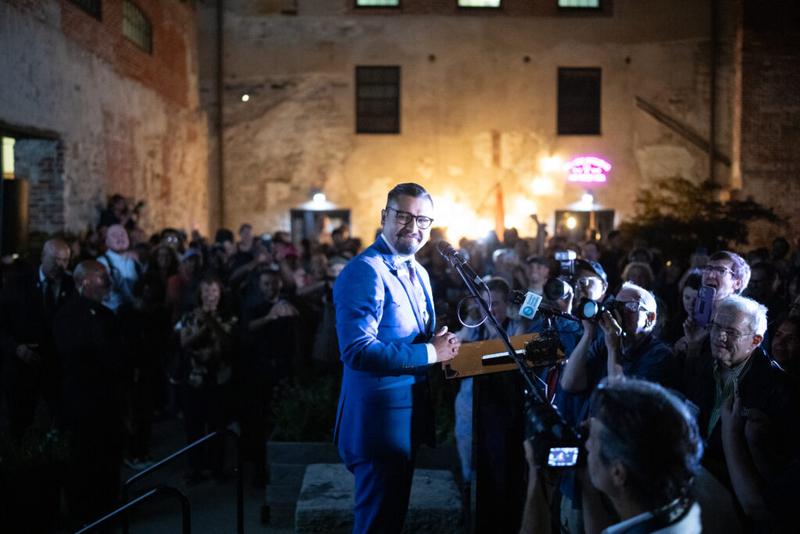
State Rep. David Morales celebrates his victory in the Democratic primary over Providence Mayor Brett Smiley with supporters outside Riffraff bookstore and bar Wednesday night, Sept. 9, 2026. (Photo by Alexander Castro/Rhode Island Current)
Providence voters handed a decisive win to progressive Rep. David Morales over the capital city’s pragmatic incumbent Brett Smiley in Wednesday’s Democratic mayoral primary.
Morales captured 57% of the votes to Smiley’s 43% after polls closed at 8 p.m. according to unofficial results from the Rhode Island Board of Elections.
The 27-year-old democratic socialist will face Republican Dave Talan, 77, in the Nov. 3 general election. The Providence electorate is solidly Democratic, with 55% of the city’s voters registered as Democrats.
Voter turnout in Providence reached 31%, according to the Secretary of State’s voter turnout tracker.
The central theme of Morales’s campaign had been that Providence can no longer endure the status quo when it comes to housing affordability in the capital city. Smiley, 47, campaigned on his record as a calm and steady steward of city management.
The contest unfurled alongside a schism over the Democratic party’s direction and ethos — a similar context which helped propel New York City Mayor Zohran Mamdani to success last November. Morales, as his campaign often noted, was also embracing more fully the leftist strains of Democratic electoral politics, acquiring the endorsements of U.S. Sen. Bernie Sanders and U.S. Rep. Ro Khanna of California. The Morales campaign even held a Brooklyn fundraiser in July to gather the support of well-connected progressives there, some of whom were also in Mamdani’s camp. The New York City mayor never, however, endorsed Morales.
“Few believed that a 27-year-old democratic socialist could ever take on big money, corporate real estate interests and endless attack ads, and we took them on, and we won,” Morales said Wednesday.
Smiley argued Morales’ idealistic approach was ill suited to the intricacies of running the capital city. The mayor has opposed rent control policies, arguing they are impractical and do not address the root causes of the housing shortage. He frequently criticized the Providence City Council’s specific variant of rent pricing regulation as “a bad version of a bad policy.”
Morales’ campaign tried to attract a younger and more diverse voter bloc in response. Providence is a relatively young, diverse and renter-heavy city, per Census Bureau estimates, which put its population of 195,000 at about 45.3% Hispanic or Latino, 33.5% foreign-born, and only 11.6% aged 65 or older. Only 41.4% of occupied housing units are owner-occupied in the city.
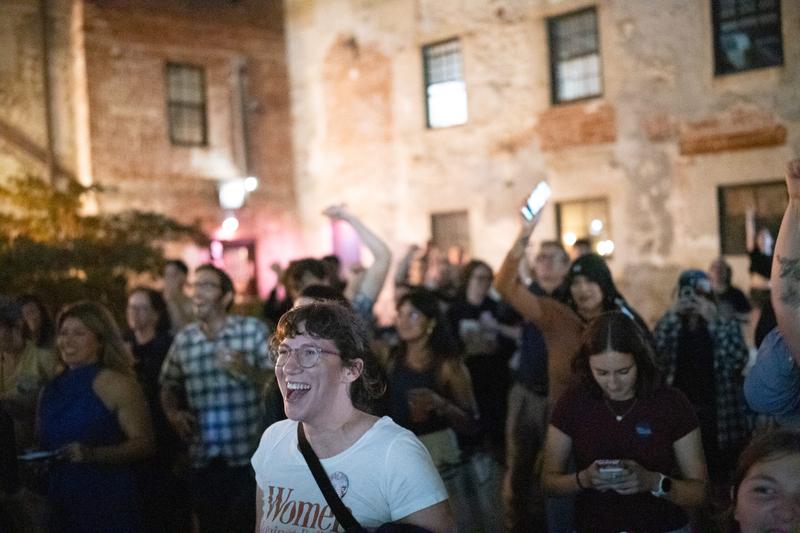
Morales declared the victory a mandate for a housing affordability-focused agenda outside Riffraff Bookstore & Bar Wednesday night, where he addressed a jubilant crowd whose volume had filled the courtyard outside the bookstore for hours as they waited for their candidate to speak.
“We didn’t turn out to just vote for a new mayor,” Morales told his supporters. “We turned out to vote for an agenda around the future of the city we love calling home.
“Tonight, Providence, we delivered a mandate,” Morales added. “We delivered a mandate on this vision, but make no mistake, this wasn’t simply something that was just inevitable.”
Both candidates were optimistic earlier Wednesday as they crisscrossed Providence, chatting and meeting with voters in the final hours of the hotly contested race.
Morales cast his vote bright and early when polls opened at 7 a.m. at Pleasant View Elementary School. He spent the rest of day darting to and from polling places, even those on the East Side — traditionally seen as a stronghold of Smiley supporters, but an area which now had a troop of supporters for Morales and his City Council allies a little over a block away from Smiley’s own polling place.
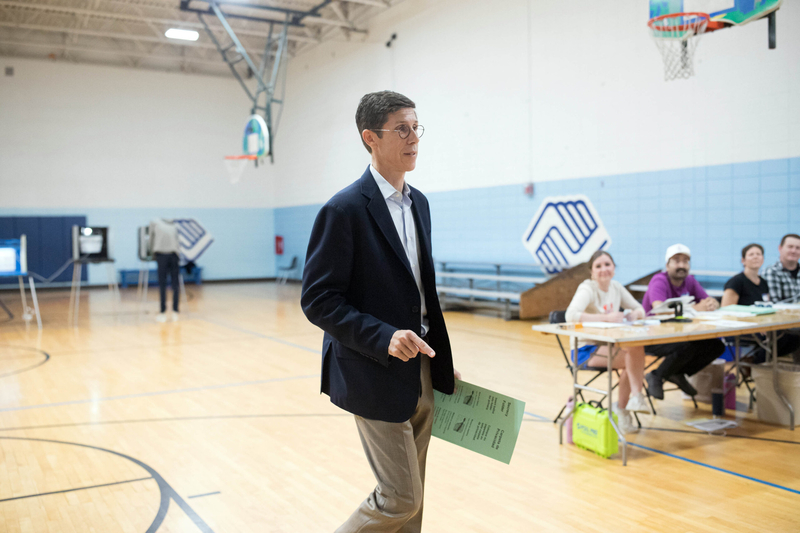
Smiley cast his ballot shortly after 8:30 a.m. at the Fox Point Boys & Girls Club, where he was accompanied by his husband Jim DeRentis. In a pretty much empty gymnasium, the two men fed their ballots into the machine in relative quiet, with reporters and poll workers looking on.
“This has always been in the hands of the voters, and this is not about me. This is about the city,” Smiley said outside his polling place Wednesday morning.
Around noon at Vartan Gregorian Elementary School, right down the street from Smiley’s polling site, Morales donned one of his characteristically colorful suits to meet up with supporters and thank voters for turning out.
After 11 months of campaigning, Morales said he was excited with how voters were responding to him in the election’s final moments.
“What’s at stake is the question of whether or not we can continue to call the city we love home,” Morales said.
Speaking to supporters Wednesday night, Morales reiterated the stakes as not just political but philosophical.
“Together we ignored the cynicism,” he said, addressing a crowd that had waited through a brief and mild spell of rain as results trickled in. “Together we refused to lower our expectations.”
Differences in campaign spending
In the final laps toward the primary, from Aug. 12 through Sept. 1, Smiley’s campaign spent about 7.6 times what Morales’ campaign did.
The mayor’s most recent campaign filing reported spending $652,537 while raising about $159,794 from individuals and political action committees. Smiley entered the campaign’s final week with $61,086 in cash after this spending spree, down from more than $555,000 at the beginning of the reporting period and smaller even than Morales’ campaign coffers in the final stretch.
Morales’ filing for the same period shows he spent $85,789, with about $73,046 incoming contributions from individuals and PACs. He entered the primary’s concluding week with $96,490 on hand.
In addition to differences in political philosophy, Morales and Smiley demonstrated different approaches to campaign spending. Smiley lavished hundreds of thousands of dollars into television advertising while Morales largely relied on digital outreach, mailers and lots of knocking on doors. An August analysis of campaign finance filings by The Providence Post found Morales had received contributions from 3,241 unique donors since June 2025, compared with 1,231 for Smiley. The median contribution to Morales was $27, compared with $500 for Smiley.
Morales also entered Wednesday with a coalition of progressive organizations, labor unions and tenant advocates behind him — a broad progressive front which sought to win not only the mayor’s office but enough City Council seats to advance a shared governing agenda, with housing a shared desire.
In a memo released Wednesday, the Rhode Island Working Families Party called the Providence races its first major push into municipal politics in the state. WFP said it spent $52,000 reaching more than 25,000 Providence voters through digital video advertising in English and Spanish and voter texts, targeting younger voters in particular.
A house divided
Housing’s role in the Providence primary was obvious throughout the election season, largely due to the City Council introducing in January a measure that would have capped annual rent increases at 4% for certain Providence apartments.
In April, Smiley vetoed the measure after it passed an initial Council vote, arguing at the time and throughout the campaign that Providence fundamentally suffers from a housing shortage and that the rental cap increase was the wrong remedy.
That ultimately set the stage for the mayoral contest’s wider political context. Morales and his allies on the City Council have embraced the proposed 4% cap and Morales promises to revive the rent stabilization push if elected.
“Oftentimes the lease renewal takes the form of an eviction notice because these rent hikes are too dramatic for so many working people and families to keep up with,” Morales told Rhode Island Current on Wednesday.
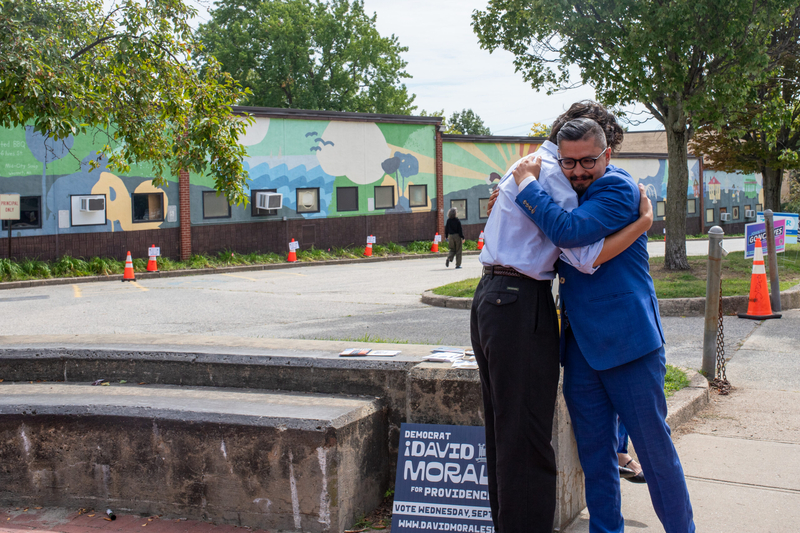
The council attempted an override of Smiley’s veto in May but fell one vote short of the needed supermajority. Councilor John Goncalves — whose possible swing vote may have altered the outcome — was defeated by his primary opponent Miguel Martínez Youngs Wednesday. Outside the Vartan school Wednesday, Martínez Youngs and Morales hugged.
Also on the same progressive slate as Morales were a number of his allies he wished to see installed on the City Council — candidates also backed by the Working Families Party, including Yulyana Torres, Jackie Goldman, and Annajane Yolken, each of whom won their respective primaries. Incumbents Justin Roias and Miguel Sanchez were also leading in their races as of 10:30 p.m. The results give Morales something Smiley lacked when it came to the rent stabilization debate: a council more firmly aligned with the Morales’ housing agenda.
Morales argued hours before polls closed that even a defeat would not erase his campaign’s role in the city’s political tides.
“The first-time voting numbers that we’re seeing, the coalition that we have built throughout the city sends a very clear message regardless of the outcome that our neighbors desire more from their city government, as they should,” Morales said.
Smiley agreed it was about the will of the city.
“This has always been in the hands of the voters, and this is not about me. This is about the city,” Smiley said outside his polling place Wednesday morning.
The mayor conceded the race Wednesday night after calling Morales, then addressed supporters after waiting for his challenger to finish speaking at his own rally on Valley Street.
“Tonight the voters of Providence made their choice, and they chose David Morales as our next mayor in the Democratic primary,” he said. “Now while I’m not happy with that outcome, I’m so happy and proud of the campaign that we ran.”
He concluded his speech with thanks for his husband, who he said was his best supporter — and one who might get to see more of Smiley with his mayorship’s conclusion.
“I haven’t been home for dinner in a while and I haven’t cooked a meal in four years,” Smiley said.
- September 10, 20264:07 pmUpdated to correct the original source of an August analysis of the Morales campaign's finances. The article was originally published in The Providence Post, and republished by The Providence Eye.
- September 9, 202611:34 pmUpdated with quotes and information from both candidates' rallies.
Providence, RI