Proposed Lincoln City Charter amendments must appear on Nov. 3 ballot, Supreme Court says
Sep 09, 2026 | 7:34 pm ET
Description
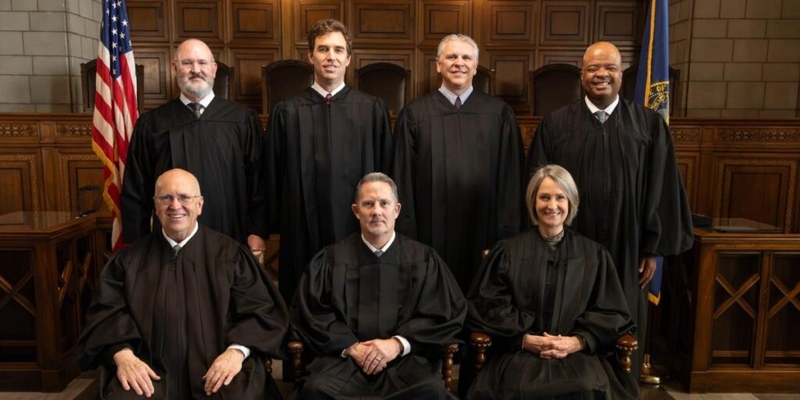
Justices of the Nebraska Supreme Court (and when they were seated), front row from left: William Cassel (2012), Jeffrey Funke (2016, 2024 as chief justice) and Stephanie Stacy (2015). Back row, from left: Jason Bergevin (2025), Jonathan Papik (2018), John Freudenberg (2018) and Derek Vaughn (2026). (Courtesy of the Nebraska Judicial Branch)
LINCOLN — The Nebraska Supreme Court ruled Wednesday that Lincoln voters will see at least three proposed city charter amendments on their ballot this fall
In an unsigned, 20-page ruling, the high court decided 5-2 that Lincoln city officials must place the qualifying three proposals from the Good Government Lincoln campaign on the Nov. 3 ballot. City officials had contended that because they did not have time for at least two meetings prior to a Sept. 1 deadline, the measures would instead appear on the May 4, 2027, ballot.
“We grant the petition … commanding respondents (Lincoln city officials to submit the proposed charter amendments to a vote of the qualified electors at the next general election held on Nov. 3, 2026,” the majority opinion states.
The three petitions seek to limit Lincoln City Council members to two consecutive four-year terms, move the dates of city elections from odd to even years and let certain residents within a 3-mile buffer around Lincoln city limits vote in municipal elections, excluding bond votes.
But there could be more proposals on the Lincoln ballot, as the court unanimously left open the door for the Lincoln City Council to put forward alternatives for Lincoln voters to choose from, an option the Lincoln city attorney hinted remains on the table.
“Nothing in this opinion should be read to impair any constitutional right to submit ‘any alternative article or section’ under Neb. Const. Art. XI, Section 4,” the Supreme Court wrote.
‘Supreme Court has spoken’
Nebraska Attorney General Mike Hilgers filed the case Aug. 27, the same night he asked city officials to confirm whether they would place the measures on the November ballot. All three measures have enough valid signatures this time around — all three fell short in an initial batch of signatures submitted in mid-July, most of those flagged as possibly fraudulent.
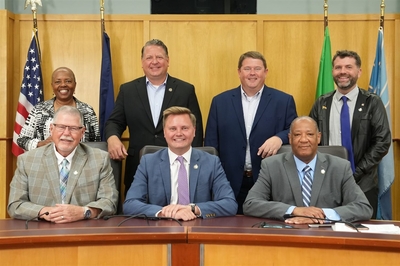
The lawsuit was filed against all seven members of the Lincoln City Council and the city clerk.
Hilgers, who lives outside Lincoln in the 3-mile “extraterritorial zoning jurisdiction,” described Wednesday’s ruling as important not just for Lincoln residents “but for the rule of law in Nebraska.” He has acknowledged he is a supporter of the group’s efforts.
“The Lincoln voters did the hard work of gathering enough signatures to earn a spot on the November ballot. Unfortunately, Lincoln’s elected officials decided to play political games instead of obeying the Constitution,” Hilgers said in a statement.
‘Sad period in Nebraska history’: AG Hilgers speaks on ongoing petition fraud investigations
“I am grateful to the Supreme Court for protecting the right of the people of Lincoln to participate in their government at the ballot box this fall,” Hilgers continued. “City officials do not get to ignore the Constitution. My office will continue to stand up for the rights of Nebraskans whenever local governments try to sideline them.”
Lincoln City Attorney Yohance Christie and the seven-member Lincoln City Council had agreed that they needed to forward the qualifying measure to voters, but they disagreed on when. They interpreted the constitution’s “next general or special election” requirement as the city’s next general election, which is May 4, 2027.
The Supreme Court majority cited past precedent that a “general” election is used “interchangeably and synonymously” with “regular” election, so November is the right date.
Christie said Wednesday the “Supreme Court has spoken, and we will comply with their order.”
“We are disappointed that the review and approval timeline has been shortened due to alleged fraud in the Good Government ballot initiative process,” Yohance said in a statement.
A dissenting opinion
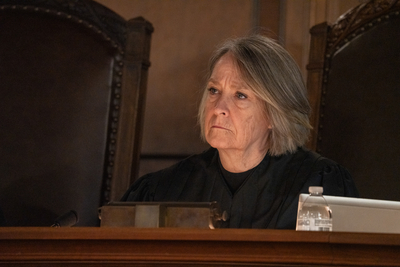
Justice Stephanie Stacy of Lincoln, writing in dissent, said the majority’s conclusion “is not supported by the constitutional text and is contrary to the Lincoln City Charter.”
“Although this court has construed similar language in statutes, we have not, until today, construed the constitutional text,” Stacy wrote in her almost 10-page dissent.
She said submitting a strictly local matter to Lincoln voters at the next statewide general election will require the Lincoln City Council to ignore provisions of its charter and violate established timeframes under state law in the Election Act, a concern Christie echoed Wednesday.
Said Stacy: “Because the city council has no clear legal duty under either Lincoln’s home rule charter or current Nebraska statute to submit the charter amendment petitions to city voters any sooner than May 2027, it should not be compelled to do so.”
Stacy added that she saw nothing that supported a need to expedite the matter or outlined any specific harm that would occur if the charter amendments instead went to voters in May 2027.
“But even assuming some harm could be shown from such a delay, I am not persuaded it would outweigh the consequences of granting the peremptory writ in this case, and the disorder and confusion it is likely to cause to election officials and electors,” Stacy wrote.
Court of Appeals Judge Michael W. Pirtle of Omaha joined Stacy’s dissent. He filled in for Chief Justice Jeffrey Funke, who did not participate in the case.
City opens door to ‘alternatives’
Christie said the city is concerned that “sacrificing steps in the public process undermines public understanding and confidence in the ballot process and does not allow for adequate time to educate the public on the impacts of the charter amendments.”
“Nevertheless, the city will move forward and will place the charter amendments and any alternatives on the November ballot,” Christie said.
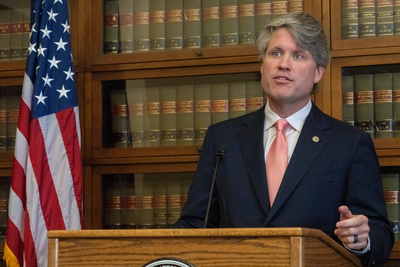
City Council Chair Brodey Weber said in an Aug. 31 affidavit to the Supreme Court that he and other members of the Lincoln City Council had “expressed an interest in considering or offering alternative amendments” to the proposals from Good Government Lincoln.
However, Weber said officials needed “adequate time to constructively engage in the legislative process” as a reason for the delay to next May.
Former state Sen. Tony Fulton, a sponsor of Good Government Lincoln, celebrated Wednesday’s. He said in a statement:
“We are thrilled that the voters of Lincoln will have the final say on term limits, increased voter participation in city elections, and that every citizen who is subject to Lincoln government is able to vote on the officials who are ultimately governing them.”
The general election is Nov. 3.
Lincoln, NE