Employee backlash grows at UD as return-to-office policy advances
Sep 08, 2026 | 6:00 am ET
Description
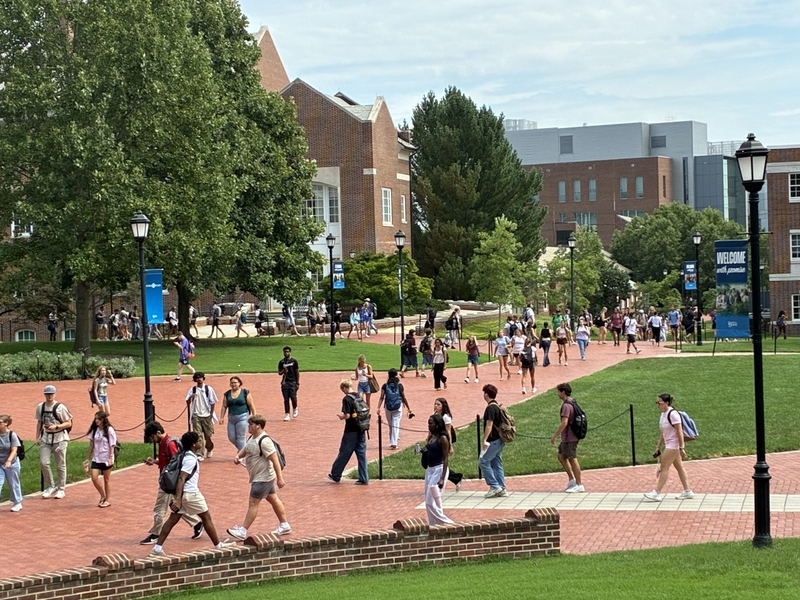
Photo courtesy of Spotlight Delaware
Why Delaware Should Care?
The University of Delaware, one of the state’s largest employers, introduced an expansion of its return-to-work policy this summer, leaving many of the non-union employees feeling confused, betrayed, and questioning whether they will have a future at the university.
The University of Delaware wants its staffers back in the office at least four days a week.
The state’s flagship university has accelerated a return-to-the-office policy for professional and administrative staff, despite backlash from employees who say the decision was made without their involvement and would significantly impact them professionally, personally and financially.
“All of that adds up to more carbon emissions, more strain on local infrastructure, and less time that thousands of people can spend with their actual communities,” one staffer, who requested anonymity, said.
In recent weeks, employees have circulated a petition demanding the university pause the policy and provide more transparency regarding the decision. As of last week, the petition has gathered 492 signatures from students, faculty and staff members.
Departments began notifying employees of the policy changes in July, but the university did not make a formal public announcement until Sept. 1 in the form of a letter emailed to staffers.
In the statement, the university sought to consolidate various messages that had been sent out by individual departments. It laid out a school-wide deadline of June 30, 2027, for the implementation of an “on-campus model in which staff members work on campus at least four days per week.”
The decision will primarily impact non-union, salaried employees, representing about 3,000 of the university’s 4,895 non-faculty workers — the “backbone” of the university, as stated in the petition.
Certain positions at the university have already been brought back to daily work on campus since the COVID-19 pandemic initially forced workers remote, but the employees impacted by the latest shift argue there is no reason for them to work in the office on more days.
The petition asks for the university to pause its return-to-campus expansion, release data it used to make the decision, and explain the school’s assessment of institutional benefits and drawbacks from working in-person. It also asks for more collaboration with professional and administrative staff and additional transition time before implementation.
“We ask for the opportunity to be heard before decisions that materially affect our work, our finances, our health, and our well-being become permanent,” the petition concludes.
Staffers delivered the petition to university leadership earlier this month. There has been no response yet, they said.
A patchwork policy, at first
In late July, university staffers began receiving directives from individual departments that they would have to significantly increase their in-person time.
Employees at the College of Arts & Science were told on July 24 that they would have to work at least four days a week in-person, starting Aug. 23, according to an employee interviewed by Spotlight Delaware. Before that, they were required to be in-person at least once a week.
Others have seemingly been given more transition time — the Office of Communications and Media told employees they should prepare to work at least four days a week on campus starting in the spring semester, along with the university’s overall June 2027 deadline. Still, several staffers called the overall initiative a “mess.” They spoke on the condition of anonymity to avoid professional reprisal.
It has left them confused about their future, scrambling to reorganize their personal lives around a new work schedule and dismayed at the lack of a tangible school-wide dialog before implementation, many said.
One employee estimated that the combination of daily travel, increased childcare costs and the required university parking pass would cost an additional $15,000-$20,000 per year. They said if the university moves forward with the policy, they would be forced to leave their job.
“If it’s four days a week, I just can’t afford it,” they said. “I’m not moving. I love my home, my husband has his job, my kids are established at their schools. I’m not going to uproot my family for a job. Especially if they are just randomly changing policies out of thin air.”
The university did not answer a list of questions sent in late August. Instead, university officials referred Spotlight Delaware to their Sept. 1 letter.
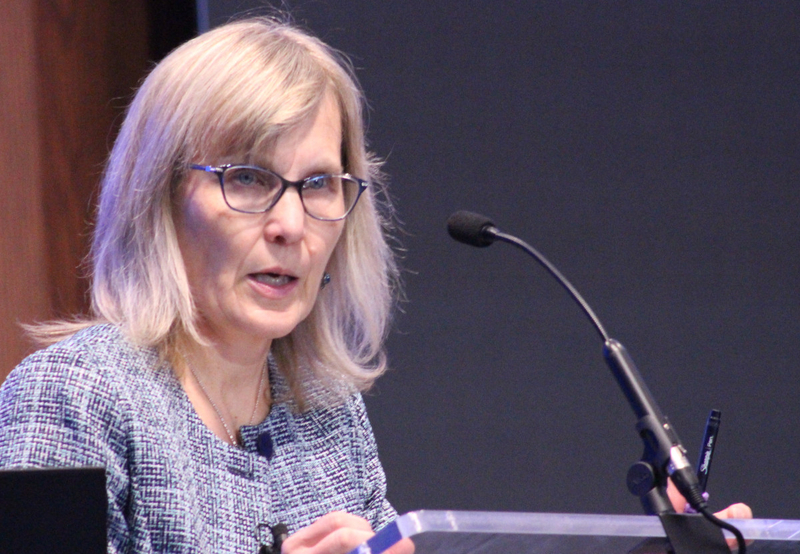
The letter, signed by Vice President and Chief Human Resources officer Melissa Bard, acknowledges the burden the change could have on employees, but says the university is “committed to providing clear timelines, a consistent process for requesting a different work arrangement, and support as units plan for the transition.”
Bard also said facilities staff will help to navigate spacial limitations for each department, with a process that is expected to be complete later this month. Still, some employees said their departments have outgrown their assigned spaces since the pandemic began, and they aren’t sure whether there will be enough space for their teams to work together.
Many who spoke with Spotlight Delaware noted that the staff impacted by the policy change largely do not have student-facing roles. They also asserted that working from home has improved their productivity, and that the school is trying to fix a problem that doesn’t exist.
The back-to-office initiative has also generated concerns that the university is looking to reduce its workforce. The university has not offered any indication that layoffs or workforce reductions are on the horizon, and has avoided significant public layoffs since late 2020 during the height of the COVID pandemic.
But the optics have caused apprehension among staff members — some who believe they will lose colleagues if the decision moves forward.
“Having the pressure taken off of you a little bit a few days a week has been, for me, life-changing,” one employee said of working from home. “And I am unwilling to give that up, and I think many people are [too].”

Dover