Press freedom shouldn’t be a casualty in Arkansas’ data center wars
Sep 06, 2026 | 6:00 am ET

Description
NFTS Logo
There’s no such thing as a slam dunk court case, but the constitutional argument against prior restraint comes close.
For nearly a century, the U.S. Supreme Court has ruled against efforts to prevent news outlets from publishing material. That includes the landmark Pentagon Papers decision that showed the heavy burden the government must meet.
An agreement about an Arkansas data center that doesn’t include any details about national security wouldn’t meet that burden.
So it would have been easy to shrug off Entergy Arkansas’ unsuccessful attempt to block the Arkansas Democrat-Gazette and Arkansas Times from disclosing more details about that agreement.
But the fact that the utility even took such an extraordinary step, and the legal threat news organizations may still face, highlights the threat to a bedrock principle of a free press.
It’s also another sign of how transparency is being sacrificed during an increasingly unpopular nationwide data center boom to meet the growing demand for computing power.
Entergy argued that trade secrets were at risk if the Democrat-Gazette published further details about its agreement with a Google subsidiary for a solar facility needed for a multibillion dollar data center.
The newspaper published a story based on confidential, non-public documents that were released to a central Arkansas woman, Jessica Kivell, through a Freedom of Information Act request. Entergy said those documents were released in error.
Entergy’s lawsuit also targeted Kivell and the Arkansas Times, even though the Times said it has never received the documents. In addition to seeking to block publication, the lawsuit also asked for an order requiring the details be removed from their online stories.
There’s a reason why these kinds of prior restraint efforts are rare. A long line of cases in state and federal courts, including ones from Arkansas, spell out the high bar that must be met.
“In the First Amendment, the Founding Fathers gave the free press the protection it must have to fulfill its essential role in our democracy. The press was to serve the governed, not the governors,” Justice Hugo Black wrote in his concurring opinion in the Pentagon Papers ruling in 1971.
That reasoning is partly why U.S. District Judge Lee Rudofsky denied Entergy’s request for a temporary restraining order. But the risks of further action and legal threats still remain.
A day after his ruling, Rudofsky said in a court docket entry that Entergy would not be pursuing a preliminary injunction. But it’s not clear whether that closes the door on the utility seeking civil damages over the publication.
Even if Entergy doesn’t pursue any further action, the case risks creating a chilling effect on everyday citizens, journalists and news organizations trying to seek more information about data center projects around the state.
The secrecy surrounding these projects has fueled the bipartisan pushback just as much as concerns about the facilities’ energy usage.
Arkansans are being asked to trust policymakers’ decisions about data centers and companies’ assurances about them. But it’s hard to justify that trust when vital information is being kept from them.
It’s even harder to trust those promises when data center supporters ask a court to ignore a core tenet of the First Amendment and when threats loom against citizens seeking more information about the projects.
The battle over press freedom comes at a perilous time for journalism, with reporters facing political attacks, threats of violence and legal intimidation.
But it also comes at a politically fraught moment for data center supporters, who have seen the concerns about the facilities and artificial intelligence become a defining issue in midterm races around the country.
There should be vigorous debate about data centers and how to balance the need for them with the growing concerns that communities have. The First Amendment, however, shouldn’t fall by the wayside during that debate.
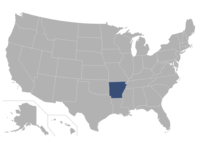
Little Rock