Union seeks more solitary confinement in NJ prisons as answer to assaults on guards
Sep 04, 2026 | 7:11 am ET
Description
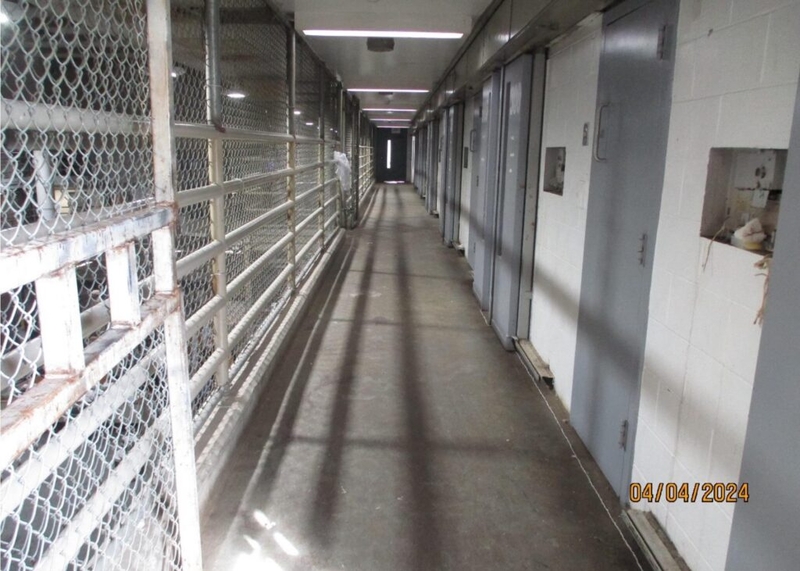
A tier of cells in a restricted housing unit wing at Northern State Prison in Newark. (Photo courtesy of the New Jersey Office of the Corrections Ombudsperson)
The union that represents New Jersey corrections officers wants lawmakers to expand solitary confinement in state prisons, saying changes are needed to reduce inmates’ assaults on guards.
William Sullivan, who heads the officers’ union, is urging lawmakers to introduce a bill this fall that would ease restrictions mandated in a 2019 law that limits how long prisoners can be in solitary confinement. The union wants prisons to regain the ability to place certain inmates in solitary for disciplinary infractions and isolate others deemed repetitively violent for longer periods of time.
Current law now prohibits solitary confinement altogether for vulnerable people, defined as those who are young or elderly, pregnant or postpartum, LGBTQ, mentally ill, developmentally disabled, significantly visually or hearing impaired, or diagnosed with serious medical conditions. It also restricts it for everyone else to no more than 20 hours a day, 20 consecutive days, or 30 days during a 60-day period.
The proposed changes would ensure both that habitually abusive prisoners get serious sanctions for assaulting or hurling bodily waste at officers (an activity known as “splashing”) and that troublemakers don’t dodge punishment by faking a vulnerability, Sullivan said.
“The vulnerable tag means you can’t discipline the inmates, and it’s very easy to be put in the vulnerable category. All you have to do is say you’re LGBQT and you’re vulnerable. All you have to do is say you have a psych history, and they make you vulnerable. The main thing is changing it so that somebody can’t just self-identify as vulnerable to get out of sanctions for bad behavior,” Sullivan said.
Prison justice advocates fear the changes will balloon the number of people held in solitary confinement in a system that a state watchdog found has routinely flouted the 2019 law, called the Isolated Confinement Restriction Act. Corrections ombudsperson Terry Schuster reported in 2023 that about 750 people were living in isolation on any given day, with some held far longer and for flimsier reasons than the law allows.
The department’s most recent legislatively mandated report suggests the state has made progress in reducing its rate of isolated confinement since Schuster’s investigation. That data shows 87 people were being held in solitary at six of the state’s nine adult prisons on June 30. A total of 690 isolated confinement placements were made in all nine prisons between April 1 and June 30.
The Rev. J. Amos Caley, an organizer with New Jersey Prison Justice Watch and pastor at the Reformed Church of Highland Park, opposes any effort to expand solitary confinement, saying prolonged isolation does significant harm to one’s mental and physical health and does not improve prison safety.
“When you treat people like animals, you can expect that their behavior is going to be in accordance with the desperation and recklessness with which they’ve been treated,” Caley said.
A draft of the proposed legislation obtained by the New Jersey Monitor calls for the 2019 law to be amended to:
- Require people who say they’re LGBTQ to be proven so by a medical or mental health examination, or a judicial determination that they’re in imminent danger of being abused or harassed because of their sexual orientation.
- Allow officials to put vulnerable people in solitary if staff believes they will seriously harm an officer, other staffers, or themselves, or if the inmates want to be placed there and provide informed, voluntary, written consent.
- Lower the minimum age of someone eligible for solitary from 21 to 20.
- Create a new definition of “repetitively violent inmate” as someone who’s already served two or more stints in solitary or close custody or who’s believed to pose “substantial risk of serious harm” to themselves or others.
- Remove restrictions on how many days repetitively violent inmates can remain in isolated confinement.
- Expand how many hours anyone can be held in solitary in state prisons from 20 to 22 hours a day.
The bill draft says its intent is to reduce assaults on correctional officers. It cites data from the Department of Corrections and Sullivan’s union that shows attacks on staff rose from 200 in 2021 to 424 in 2022, with nearly half involving bodily fluids. More than 10% of the union’s 4,500 members were out on leave in 2024 due to assaults, the draft legislation notes.
Chris Greeder, a Department of Corrections spokesman, didn’t respond to a request for comment.
According to state budget documents, assaults on correctional staff soared to 964 in the 2025 fiscal year, as chronic staffing shortages strained prison operations.
Officials projected assaults would fall to about 650 in the 2026 fiscal year, which ended on June 30, as they hired more staff to shrink shortages and beefed up staff protections. That work included installing new food ports designed to foil splashings, creating incentives for good behavior, bolstering efforts to prevent and intercept illicit substances (a “frequent driver of volatile behavior”), and removing more items from restricted housing units that could be weaponized, budget documents show.
The department’s strategy in reducing assaults on staff also included cutting the population in disciplinary housing, according to budget documents, suggesting Sullivan might encounter opposition from the department in his bid to ease restrictions on isolated confinement.
“Most of these assaults are taking place in the wings where there is close custody,” Caley said. “When you’re talking about using isolated confinement to treat a problem that is happening mainly in isolated confinement spaces, you’re talking in circles.”
Schuster thinks lawmakers would do well to wait before considering any revisions to the law.
“The Department has some new initiatives in the works aimed at people who have repeatedly assaulted staff,” Schuster said. “I would want more time to track these trends and to observe the new initiatives to play out to see if the problem with assaults can be resolved without revisions to the law.”
Instead of expanding solitary confinement, Caley said state corrections officials should fix the long-simmering problems that torpedo morale and fuel disruptive behavior in prison, including crumbling building conditions, staffing shortages, and the recurring lockdowns and inadequate access to programming and treatment the shortages cause.
Ending the state’s practice of reincarcerating technical parole violators also would free up officers to focus on the most dangerous people in state custody, Caley added. Those are parolees who skip curfew, miss a check-in with their parole officer, or otherwise break the conditions of parole rather than committing new crimes. Former Gov. Phil Murphy unsuccessfully pushed for that policy change last year, and several legislators reintroduced it just before they went on summer recess.
“Until we fix the culture and the implementation problems of these facilities, then any amount of permission to brutalize people and revoke the restrictions of the Isolated Confinement Restriction Act is not even putting a Band-Aid on a bullet wound — it’s like putting a knife inside of a bullet wound,” Caley said.

Trenton, NJ