Judge denies effort to block Arkansas outlets from publishing details about data center agreement
Sep 02, 2026 | 4:57 pm ET
Description
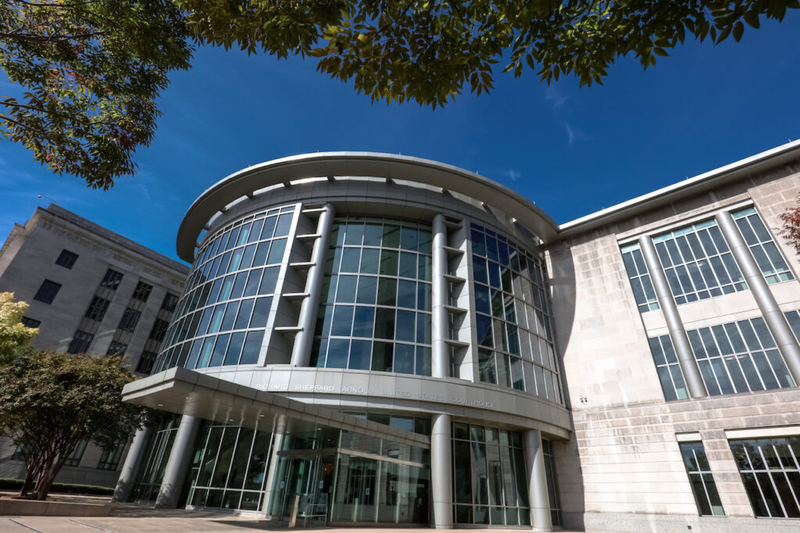
Exterior of the Richard Sheppard Arnold Federal Courthouse in downtown Little Rock. (Photo by John Sykes/Arkansas Advocate)
A federal judge rejected an effort Wednesday to block two Arkansas news outlets from publishing details about an agreement regarding a West Memphis data center, in a case that alarmed free speech groups who say restricting publication would have undermined the First Amendment.
U.S. District Judge Lee Rudofsky on Wednesday denied Entergy Arkansas’ request for a temporary restraining order that would have prohibited the Arkansas Democrat-Gazette and Arkansas Times from disclosing details about Entergy’s agreements with Altitude Capital LLC, a Google subsidiary being used to set up the data center.
The Democrat-Gazette published a story Monday based on non-public and confidential documents that were released through a Freedom of Information Act request. Entergy said those documents were released in error and were trade secrets.
The Democrat-Gazette reported that the documents it received showed that Google will pay Entergy Arkansas $526 million to build Cypress Solar, a solar field and solar facility that will feed the grid powering the data center. That makes up about one-third of the $1.6 billion facility’s cost.
The Democrat-Gazette said the documents were provided by Jessica Kivell, a central Arkansas resident and nurse who received them through an FOIA request with the state Public Service Commission.
Lee Wolverton, the Democrat-Gazette’s executive editor, said the case was “about doing all that we can to inform the public about an issue of high interest.”
“We were able to do that in this case because of a great act of public service on the part of a citizen getting involved in her community,” Wolverton said in a statement. “We are gratified that this decision pays heed to the First Amendment and the critical role it plays in a free society while also recognizing the inherent hazard government censorship would pose to a free society. That is important for all of us in our business and beyond it.”
The Arkansas Times was named as a defendant in the case, though the outlet said it did not have the documents.
Times Editor Austin Gelder said Wednesday’s ruling “affirmed that the courts cannot and will not intervene to protect powerful interests from embarrassing disclosures about their questionable behavior” and praised Kivell.
“While the Arkansas Public Service Commission might have handed over the information by mistake, Kivell made no mistake in recognizing this was important stuff that her fellow citizens deserved to know about,” Gelder said.
Entergy Arkansas on Wednesday did not say what its next legal steps would be, issuing a statement that said the Democrat-Gazette story incorrectly understated how much Google would pay for the solar field and facility. The utility said that, using the figures in the newspaper’s story, under the 20-year term of the contract the total would be about $2.1 billion.
A Google spokesperson said it was “fully committed to covering 100% of the power and infrastructure costs for our West Memphis data center.”
“While upfront payments total $526 million, our ongoing monthly rates over the 20-year agreement will completely fund our operational footprint,” Google spokesperson Jessica Ryan said. Entergy’s regulatory filings demonstrate that this project will actually lower overall system costs, providing more than $1.1 billion in net benefits to Arkansas residents.”
Wolverton said the $526 million figure was cited in documents obtained in the records request and wasn’t based on the paper’s calculations.
“Entergy, in fact, performs calculations in its statement that we have not seen substantiated by the records,” Wolverton said.
Entergy again defended its effort to block publication of the details.
“We will never waver when it comes to protecting our customers’ privacy and confidential information. It is both the right thing to do and required by law,” the utility said Wednesday. “We protect all customer information—whether it involves a household, a local manufacturer, or a global company.”
Rudofsky, who was named to the bench by President Donald Trump, has been nominated for a seat on the 8th U.S. Circuit Court of Appeals. In a docket entry Thursday, the judge said Entergy informed the court it would not pursue a preliminary injunction. The utility also indicated it planned to amend its complaint, the court said.
The legal fight comes as several Arkansas communities have enacted measures blocking data centers or imposing new restrictions. The centers have sparked bipartisan pushback across the country over concerns about energy use and the lack of transparency surrounding such projects.
First Amendment groups had publicly urged Rudofsky to deny Entergy’s request, and said issuing such an order would have gone against decades of court rulings against restrictions on what newspapers can publish.
“It’s a relief that Judge Rudofsky applied basic First Amendment principles to deny this request for a prior restraint on publication of documents released by the government,” said Seth Stern, chief of advocacy for the Freedom of the Press Foundation. “It would be even better if judges would sanction litigants and lawyers who waste the time and resources of both the judiciary and the press with these unconstitutional demands to gag journalists.”
Advocate reporter Ainsley Platt contributed to this report
- September 3, 20261:39 pmThis story has been updated with court saying Entergy does not plan to pursue preliminary injunction.
- September 2, 20264:47 pmThis story has been updated with a comment from Entergy
Little Rock