Lobstermen buoyed by US House passage of Golden bill to pause right whale protections until 2035
Sep 02, 2026 | 4:00 pm ET
Description
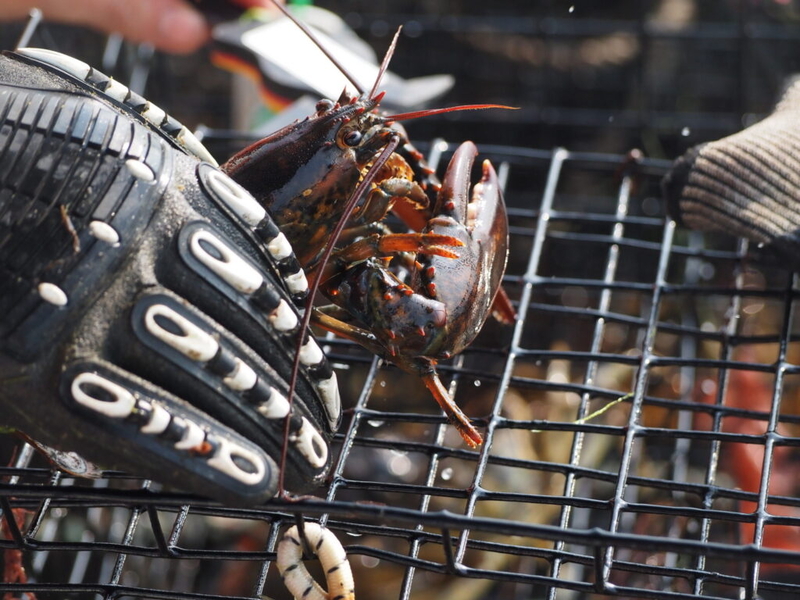
A lobster waits to be thrown back into the waters of Little Bay after researchers evaluate it on Monday, Aug. 10. (Photo by Molly Rains/New Hampshire Bulletin)
The U.S. House of Representatives Tuesday passed a bill to extend the pause on federal lobster rules in a 219-196 vote.
If passed by the Senate, the bill — introduced by Reps. Jared Golden (D-Maine) and Michael Lawler (R-New York) in June — would continue shielding lobstermen from new regulations to protect North Atlantic right whales until 2035.
In a statement, Golden described it as a win not only for the Maine fishing industry, but also for bipartisan work in Congress.
“While the threat of unnecessary, industry-killing regulations is a matter of survival for lobster harvesters in Maine, the issues at play affect fishermen across the Northeast,” Golden said. “Building bridges across party lines is essential for a functional Congress, but unfortunately, it’s a skill that has been lost for far too many members.”
Golden worked with the rest of the Maine delegation to insert a provision in a 2022 federal omnibus funding bill to restrict new whale-related regulations on the lobster industry through the end of 2028. Because of their dwindling population, the government has sought to impose certain regulations to protect right whales, such as fishing restrictions in certain areas of federal waters during seasons when whales are present.
Lawler similarly noted the bipartisan effort, and said he was proud to see the bill pass in the House.
“While this legislation is particularly important to Maine’s fishing communities, the Northeast lobster industry supports small businesses and hardworking families far beyond the coastline, including restaurants here in New York,” Lawler said. “Fishermen have spent years adapting to conservation requirements and deserve regulatory certainty instead of constantly shifting rules that threaten their ability to operate and plan for the future.”
Golden introduced an earlier version of the bill in April, and in May, the Trump administration announced its strong support of the bill and said the president would sign the legislation if Congress sends it to his desk.
The Maine Lobstermen’s Association celebrated the bill’s passage. In a statement on Facebook, Executive Director Patrice McCarron called it a “major step forward for Maine lobstermen.”
“Extending the pause through 2035 will give scientists the time needed to build a meaningful body of data so future whale regulations are based on sound science, not assumptions, while protecting fishing families and coastal communities from needless economic harm,” McCarron said.
But some conservation groups are raising concerns about the legislation. In a statement, Erica Fuller with the Conservation Law Foundation called for the Senate to vote down “this terrible bill.”
The futures of right whales and lobstermen are entangled. Could high-tech gear help save them both?
Found along the East Coast, right whales’ migratory paths overlap with highly productive lobster fishing areas in Maine and Massachusetts, making entanglements in fishing gear one of the major threats for the animals. With a population of less than 400 and even fewer reproductively active females, right whales are approaching extinction with more than half a dozen threats to their existence, according to the National Oceanic and Atmospheric Administration Fisheries.
“Entanglements in fishing gear are a leading cause of death for these critically endangered whales,” Fuller said. ”Punting crucial protections almost a decade down the line will condemn many whales to preventable and painful deaths.”
Fuller said that if the Senate passes this bill, “they will be sacrificing whales’ lives to provide short term economic benefits to an industry that could be participating in solutions that benefit both.”
Supporting Maine’s fishing industry has been a major priority for Golden in the House. The congressman is not running for reelection this year, and will be replaced by either Democrat Matt Dunlap or Republican Paul LePage in November.
Both candidates voiced their support for Golden’s bill after the Tuesday vote.
“Matt supports the extension, in order to protect Maine lobstermen,” Dunlap campaign advisor Matt Herdman said in a statement Wednesday. “Thousands of families in the district rely on the lobster industry for their livelihoods, and Matt will always fight to help them succeed.”
In a post on Facebook, the former governor thanked Golden and Lawler for their work on the bill.
“When I was made aware of the bill and the need to gain more support to get it across the finish line, I was proud to step up and urge Republican leaders to get this to a vote,” LePage said. “This bipartisan legislation will protect Maine fishermen, their families and the coastal communities that depend on the lobster industry.”
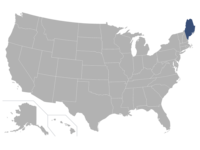
Augusta, ME