Missouri vote on initiative protections now before the state Supreme Court
Sep 02, 2026 | 2:16 pm ET
Description
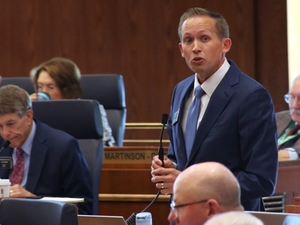
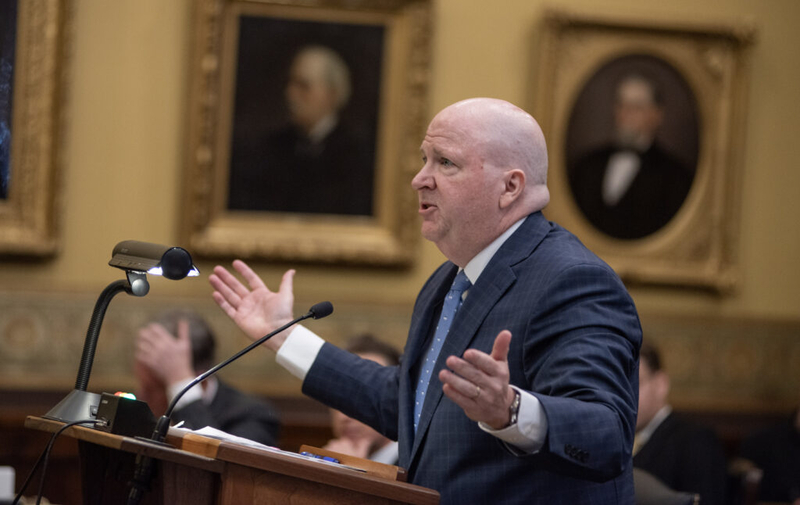
Attorney Chuck Hatfield argues Wednesday, Sept. 2, 2026, for the Missouri Supreme Court to order two measures to be on the November ballot over the objections of Missouri Secretary of State Denny Hoskins (Annelise Hanshaw/Missouri Independent).
Whether Missourians will vote on a measure making voter-initiated laws and constitutional amendments harder to change is in the hands of the Missouri Supreme Court.
The court on Wednesday heard arguments to overturn the decision of Secretary of State Denny Hoskins, who on Aug. 4 declared the initiative that would be Amendment 6 to be insufficient. Hoskins said it improperly covers more than one subject and changes more than one article of the Missouri Constitution, a decision upheld late last month by Cole County Circuit Judge Daniel Green.
The court is being asked to rule that Hoskins was wrong in his analysis and that he lacked the authority to use the final signature certification process to declare that a proposed measure has constitutional flaws.
“This is the first time I can find that a secretary has decided an initiative insufficient on this basis,” said Chuck Hatfield, the attorney for two plaintiffs representing the political action committee Respect MO Voters. WHOEVER THE PLAINTIFFS ARE.“I don’t think the certificate sufficiently explains the reasons.”
The arguments come just about a month after voters buried a measure designed to make initiatives more difficult to pass. If the court agrees that the initiative proposed by the political action committee Respect MO Voters should go on the ballot, voters will be asked if they want to make measures they pass more difficult for lawmakers to change.
The court also must decide whether Hoskins can revise the ballot language he wrote in 2025 before signatures were gathered. In the pre-argument brief prepared by the attorney general’s office, Hoskins said the language was deceptive.
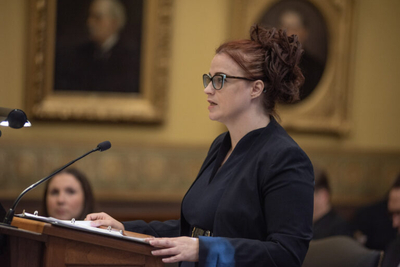
“Frankly, the prior ballot title would have defrauded Missourians and violated the law,” attorney Kathleen Hunker of the attorney general’s office wrote in her pre-argument filing.
Amendment 6, if passed, would put heavy restrictions on the ability of lawmakers to alter state laws and constitutional amendments proposed by initiative and approved by voters. Any changes would have to receive 80% support in the General Assembly and be ratified in a statewide vote.
Currently, there are no restrictions on lawmakers altering or repealing laws passed by initiative. That happened in 2025, when Republicans forced through a bill that repealed paid sick leave for Missouri workers and inflation adjustments to the minimum wage.
A majority of lawmakers in both chambers can propose changes in constitutional amendments but those changes must also pass statewide.
That happened in 2020, when voters approved changes to the terms of a legislative redistricting proposal passed by initiative in 2018. Amendment 3 on the Nov. 3 ballot seeks to overturn the abortion rights measure approved in 2024.
The proposal would apply not only to measures approved in the future but also to laws and constitutional amendments previously enacted through the initiative process.
For example, lawmakers left the $15 per hour minimum wage approved in 2024 in place when they passed the bill repealing sick leave. If Amendment 6 is ultimately approved by voters, changing that minimum wage in the future would require an 80% vote in the General Assembly and statewide voter approval.
To achieve that majority, a bill would have to have broad bipartisan support. Republicans won 111 of 163 seats in the Missouri House in 2024 and hold 24 of 34 seats in the state Senate. An 80% majority would require 131 votes in the Missouri House and 28 in the state Senate.
In arguments before the court, Hatfield defended the initiative from charges it is too broad and said Hoskins’ ballot language shows it. After reading the ballot title — and the one Hoskins has proposed to replace it — Hatfield said the secretary’s language proves his point.
“Every provision of this initiative has to do with initiative and referendum by the secretary’s own document,” Hatfield said. “I just don’t understand how there could be any doubt about it.”
Hunker said the initiative would unconstitutionally limit the power of lawmakers and the people to change state law or the constitution.
“Amendment 6 is a profoundly anti-democratic proposal,” Hunker said. “It insulates itself…from reconsideration by the people in the future.”
Along with setting standards for changing anything presented by initiative in the future, Hunker said, “it smuggles in numerous subjects unrelated to the initiative process.”
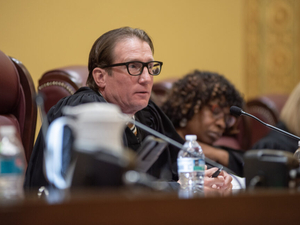
Some of the questions being raised about the initiative are not ready for the courts, Chief Justice W. Brent Powell said as he questioned Hunker.
“Don’t we have to wait to take up those challenges if the initiative passes?” Powell asked. “Even if we are examining this through the eyes of the secretary of state, it is not law yet.”

Jefferson City, MO