4,000 fewer West Virginia children have SNAP since One Big Beautiful Bill Act passed
Sep 02, 2026 | 6:00 am ET
Description
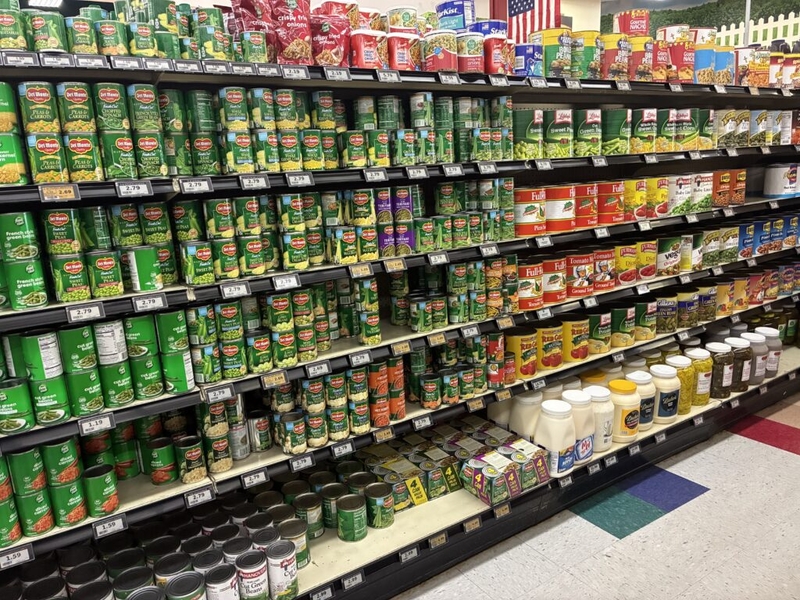
In West Virginia about 4,000 fewer children have Supplemental Nutrition Assistance Program benefits about a year after the One Big Beautiful Bill passed. (Photo by Lori Kersey/West Virginia Watch)
About 4,000 fewer West Virginia children have federal food assistance benefits as of May, a year after President Donald Trump’s One Big Beautiful Bill Act passed last summer, according to data from the state Department of Human Services.
The law — which Trump signed into law July 4, 2025 — made historic cuts to the Supplemental Nutrition Assistance Program, commonly called SNAP or food stamps, as well as to the health care program Medicaid.
“Presumably children were never intended to be impacted by this law, but I think the data that we’re seeing in West Virginia and across the country is clear that children are losing SNAP as a result of the implementation and the new restrictions to SNAP in this law,” said Kelly Allen, executive director of the West Virginia Center on Budget and Policy.
There were 93,566 West Virginia children on SNAP in June 2025, and the number decreased to 89,556 in May 2026, according to the data, which was provided to the West Virginia Center on Budget and Policy in response to Allen’s Freedom of Information Act request. A spokeswoman for the state Department of Human Services separately confirmed the accuracy of the data about children to West Virginia Watch on Monday.
Overall, state SNAP enrollment dropped about 14,000 in the same time period, from 269,687 in June 2025 to 255,201 in May of this year, according to the data.
Nationally, more than 5 million people have lost their SNAP benefits since the One Big Beautiful Bill Act was passed, according to estimates by the Center on Budget and Policy Priorities.
SNAP work requirements have expanded
With some exceptions, people who receive SNAP benefits have been required to do at least 80 hours per month of work, training or volunteering. Under the One Big Beautiful Bill Act, the work requirements for SNAP were expanded beginning last fall.
The law extended the upper age limit for work requirements from 54 to 64. It also removed exceptions for being homeless, a veteran, a former foster care youth under age 25 and for parents of children ages 14,15, 16 and 17.
Allen noted that the rate of decline in children on SNAP this past year has been significantly faster and bigger — about three times the decline in the previous year.
“I think it’s fair to say that it’s due to the One Big Beautiful Bill,” Allen told West Virginia Watch.
Allen said the decline for children may have to do with the work requirements newly affecting the parents of older children — those 14 and above.
“We know, I think, from some research in Medicaid, that when parents are eligible for a program, more kids end up being enrolled, and maybe the inverse is happening, too,” she said. “You know, it could be like parents get a notice that they’re no longer eligible, and maybe they’re confused about if that applies to the whole household. So I think there could be some of it to that.”
Allen said the decline may also be a result of a rush to implement the new rules for the SNAP program. The law also requires states to keep their payment error rate low or pay millions more for SNAP benefits beginning next year.
SNAP errors are largely unintentional; they can result from a household receiving less or more benefits than they’re required to, according to the Food and Nutrition Administration of the U.S. Department of Agriculture.
West Virginia’s SNAP program had a payment error rate of 6.69% for 2025, according to the Department of Agriculture’s Food and Nutrition Administration. With that number, the state would be required to pay 5% of the cost of food benefits, or about $27 million.
States can choose to base their cost share on the 2025 payment error rate or the 2026 rate, which means the state will not know if it will pay a cost share or how much until the 2026 numbers are released, typically in the summer.
“I think there was a lot of big changes being implemented really quickly, and then also this kind of perverse incentive that states have to kind of cover themselves against the SNAP benefit cost shift by reducing the error rate,” Allen said. “And we know, you know, just denying people outright isn’t an error, but calculating really complex household situations could result in errors.”
Allen said the state should look at internal SNAP policies to make sure that eligible families have all the support they need to be covered.
“If I were a state lawmaker or a state policymaker, or somebody in the SNAP agency, I think I would be raising alarms with our members of Congress who are considering a federal Farm Bill right now, in which they could delay the cost shifts that are really putting these pressures on state agencies in the state budget,” she said.
“I know there’s at least one provision to delay the implementation of states having to shoulder a burden of the SNAP benefits,” Allen said. “And I would also urge our members of Congress to revisit these policies that are inevitably impacting kids.”
Del. Evan Worrell, R-Cabell, the chair of the House Health committee, declined to comment Tuesday, saying he does not have complete data that shows the reason for the reduction in enrollment.
Taylor Patrick, a stay-at-home mother of three children ages 7 and under in Putnam County, told West Virginia Watch her family lost their SNAP benefits in August. Her husband’s income increased, and the family no longer qualifies for the program, she said.
“We make it work, and we were already struggling while we had it. Now we have to struggle worse,” she said.
“I just feel like people can work the hardest and not get any help when they actually need it,” she said.
WV food pantries feeling the impact
A decline in SNAP enrollment, along with increasing grocery prices have caused a strain for some feeding programs in West Virginia, representatives say.
Union Mission has seen an increase lately in the number of people it’s helping with food, said Kayla Smailes, the organization’s director of resources and family services.
The Charleston-based organization previously served about 12 clients per day but is now serving between 18 and 20, Smailes said. People come from as far away as Monroe and Mercer counties, she said. The agency also provides food to smaller food pantries in the area.
“In July of this year, it really started picking up,” she said. “Because I think that that’s when people really started losing the benefits from not meeting the requirements, honestly.”
Smailes said the organization is keeping up with the demand so far, though there are times when supplies are low.
“A lot of pantries are low at the end of the summer, because a lot of people think about doing canned food drives through the winter time and through the holidays, but then after you kind of run through those supplies,” she said. “I’d say a lot of pantries are running out of them by the end of the summertime.”
In July, staff at Heart and Hand Outreach Ministries in South Charleston provided food to 80 people in one day — the busiest day in the organization’s 60-year history, outreach director Jenny Keener said. An average day for the organization is serving between 30 and 45 people, she said.
“More and more people are coming to the food pantry all the time,” Keener told West Virginia Watch on Monday. She said the rising grocery prices have meant fewer people can afford to donate food to the pantry.
“What happens is that people like you and me who used to be able to go buy extra food and drop it off at a food pantry, we don’t have the money anymore to do that,” she said. “And at the same time, we have SNAP cuts, and so those people don’t go away. They’re still hungry… it creates this situation where we have to reach further and further out for donations and really rely on the good graces of others to help us keep everything stocked and ready to go for when we have those big days.”
Charleston, WV