NC families face higher back-to-school costs as school year begins
Sep 01, 2026 | 5:23 pm ET
Description
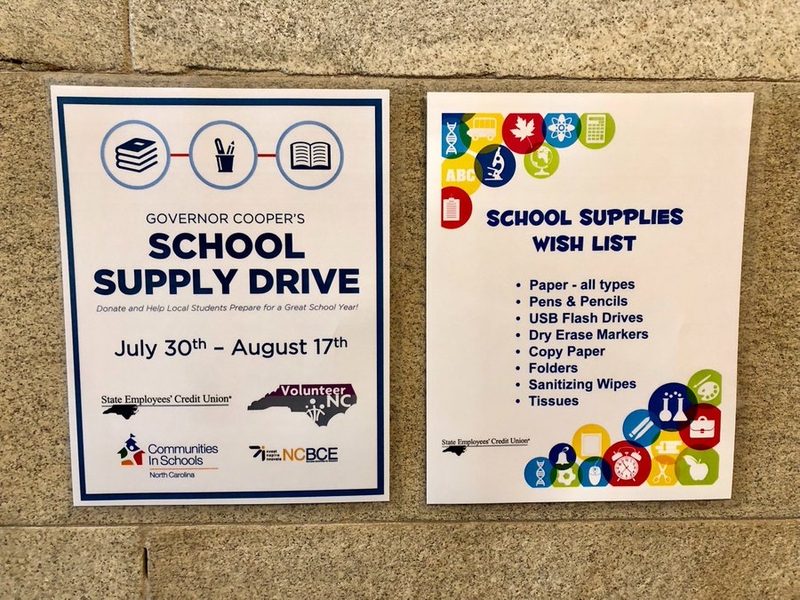
Signs in a school tout a school supply drive in 2018 (Photo: Office of the NC Governor)
North Carolina families and educators warned Monday that rising back-to-school costs are putting additional pressure on households and public schools as students return to classrooms.
The comments were made during a virtual press conference hosted by the left-leaning advocacy group Progress NC.
School supply costs are 7.7% higher this year than last year, outpacing inflation, according to an analysis by the Groundwork Collaborative and The Century Foundation. The groups also found that school lunch costs have risen 10.7% over the past year.
Wake County parent and former public school educator Brittany Gregory said families are being asked to cover classroom costs. Gregory said her daughter began kindergarten this week, and her school supply list included Clorox wipes.
“I explained that Clorox wipes were not just for our daughter or just for the kids in the class, but they were the supplies for her classroom because our schools and teachers do not always have everything that they need,” Gregory recalled telling her husband, who had asked why the Clorox wipes were on the list.
“Families are not only buying pencils, notebooks, and crayons for their own children. We are also being asked to fill the gaps in classrooms,” Gregory said.
The concerns come amid low teacher morale across the state. North Carolina scored +8 on Education Week’s 2026 Teacher Morale Index, compared with +13 nationally. The state ranked 42nd among states, according to the EdWeek Research Center.
North Carolina’s score was lower than those of Georgia (+13), South Carolina (+16), Tennessee (+10) and Virginia (+12). The index measures teachers’ past, present and anticipated perceptions of their working conditions on a scale of -100 to +100.
In Western North Carolina, local school districts face added financial pressure, nearly two years after Hurricane Helene damaged mountain communities and school infrastructure.
Adam Hege, a member of the Watauga County Board of Education, said rising costs are hitting local schools on multiple fronts. “As we headed back into school this year, our people are facing even more challenges with tariffs and skyrocketing gas prices negatively impacting the cost of living.
Hege pointed to those factors as the main drivers pushing up expenses for baseline necessities, including school supplies, bus maintenance, facility upkeep, and cafeteria meals.
As back-to-school prices rise, donations fill the gap for North Carolina teachers, families
At the same time, Hege criticized state leaders for expanding the private school voucher program, arguing the legislature is funneling public money to private schools while continuing to underfund traditional public districts.
State Rep. Zack Hawkins, D-Durham, echoed similar sentiments, calling the situation an “education priority crisis.” He targeted the state’s Opportunity Scholarship Program, which uses public funds for private school tuition, noting its budget has ballooned from $25 million in 2022 to nearly $600 million this year.
Although the state budget enacted this year gave raises to teachers and other school employees, Hawkins said it leaves behind veteran teachers, who mostly received only one-time bonuses.
“The goal should be ensuring that every North Carolina child, regardless of where they live, or where their parents are from, or how much they earn, they should have an excellent education, too, and that starts with making sure that we solve this affordability crisis,” Hawkins said.
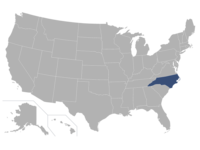
Raleigh, NC