Evnen rules Respect Nebraska Voters petition violates single-subject requirement
Aug 31, 2026 | 12:26 pm ET
Description
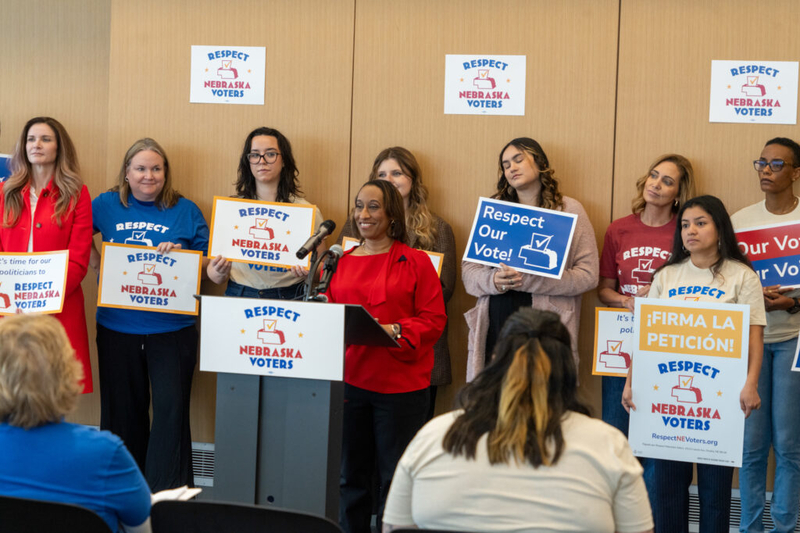
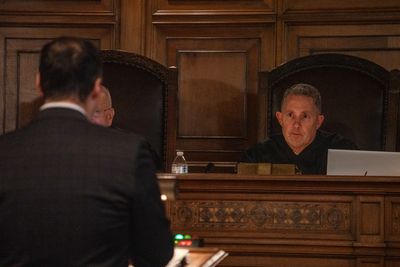
Advocates for a proposed amendment to the Nebraska Constitution hope to make it harder for legislators to tweak ballot measures approved by voters. Advocates, including ballot co-sponsor Jo Giles at podium, host a launch event in Omaha. Jan. 5, 2026. (Zach Wendling/Nebraska Examiner)
LINCOLN — Nebraska’s top elections official ruled Monday that a ballot measure seeking to restrict certain legislation regarding voter-approved laws and petitioning is too broad.
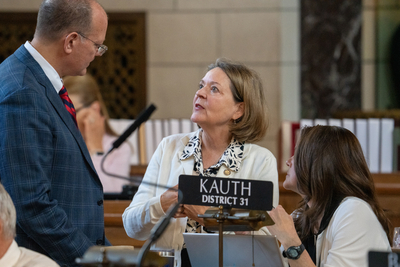
Nebraska Secretary of State Bob Evnen announced his decision after receiving an objection from state Sen. Machaela Cavanaugh, a Democrat from Omaha, and former state Sen. Curt Friesen, a Republican from Henderson. Cavanaugh and Friesen argued that the Respect Nebraska Voters measure had more than one subject, which is a violation of the Nebraska Constitution.
In a statement Monday, Respect Nebraska Voters said it “strongly disagrees” with Evnen’s decision to “side with a small group of senators’ concerns.” The campaign confirmed it will challenge the secretary’s ruling to the Nebraska Supreme Court.
“We are confident that this initiative will ultimately be placed on the November 2026 ballot,” the campaign said in an unsigned statement.
Evnen must finalize the statewide ballot by Sept. 11.
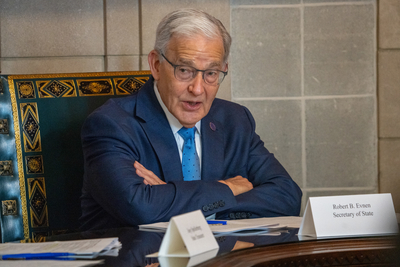
Though signature verification to generally qualify for the Nov. 3 ballot is continuing, Evnen’s office indicated the measure is expected to exceed 110% of its required signatures by Monday afternoon. At that point, local election officials are able to cease signature verification for voters from their respective counties.
A voter-led constitutional amendment proposal needs valid signatures from at least 10% of the electorate — 125,815 signatures — to qualify for the ballot. The secretary of state gets the initial determination whether a measure legally can be placed on the ballot.
How many subjects?
Former state Sens. Andrew La Grone and Julie Slama, attorneys from Dunbar, submitted the objection on behalf of Cavanaugh and Friesen.
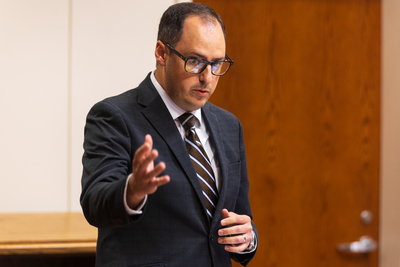
In the eight-page objection, La Grone said the measure violates a Nebraska Supreme Court test that all parts of a ballot measure have a “natural and necessary connection.”
The Respect Nebraska Voters proposal, which is supported by some of the largest nonprofits in the state, seeks to make it more difficult for lawmakers to tweak voter-approved laws. The changes would apply retroactively to any voter-enacted laws from 2004 onward.
Those laws involve minimum wage increases (2014, 2022), Medicaid expansion (2018), payday lending caps (2020), legalized casino gambling (2020), paid sick leave guarantees (2024) and the legalization and regulation of medical cannabis (2024)
La Grone said the proposed amendment to the Nebraska Constitution’s Article III, Section 2, and Article III, Section 4, provides for four distinct changes:
- Raise the threshold to amend, repeal, modify or impair any voter-enacted laws approved after 2004 from at least two-thirds of state lawmakers (33 of 49) to four-fifths (40 of 49).
- Require at least four-fifths of lawmakers to enact any new law “affecting the initiative and referendum process,” a new category.
- Restrict changes to the initiative and referendum process to only laws that “advance a compelling state interest achieved by the least restrictive means.”
- Prohibit the Legislature from enacting laws changing the ballot measure process if a change “conditions, restricts, burdens or otherwise impairs” petition powers.
‘Not unexpected, but it is disappointing’
In a statement last week, the Respect Nebraska Voters campaign said its ballot language was “carefully drafted and thoroughly reviewed to conform to single subject requirements.” The campaign called the Cavanaugh-Friesen challenge “not unexpected, but it is disappointing.”
“This is another effort by a few politicians to undermine the will of voters who want to strengthen protections for our state’s ballot initiative process and ensure that when Nebraskans make a decision at the ballot box, politicians respect it,” the campaign said in an unsigned statement.
Sponsors have described the issues as a desire to “protect the people’s reserved initiative and referendum powers,” so supporters say it would not violate the single-subject requirement.
But to La Grone, “this characterization obscures the measure’s fundamental flaw: It combines limitations on the Legislature’s power to legislate on subjects wholly unrelated to the initiative process with limitations on the Legislature’s authority over the initiative process itself.”
The first change deals with the Legislature’s power over substantive policy, not regulation of the petition process, La Grone said. In the latter, it’s pre-election regulation, “a distinct constitutional relationship from the post-enactment status of voter-approved laws.”
Friesen, in speaking with the Examiner last week, similarly described at least two subjects: the four-fifths threshold change and the various restrictions on the process side.
‘Classic logrolling’
La Grone said the issue is “classic logrolling to enhance electoral prospects.” He argued sponsors have focused on raising the threshold to change laws, but not the process restrictions. The former senator said that “reveals the true purpose of bundling these provisions,” which he described as using recent initiatives as a “vehicle” to bind the hands of future lawmakers.
Families who fought for more than a decade to legalize and regulate medical cannabis warned Respect Nebraska Voters that the effort could instead lock in “gridlock.” Medical cannabis supporters have said lawmakers might need to act to aid implementation.
Cavanaugh and Friesen argue that if 40 of 49 votes were needed to offer changes to voter-approved laws, doing so could be “impossible.”
La Grone, who was one of the attorneys against the medical cannabis petitions in 2024, noted the legislative override provision appeals to those who support recent voter-approved laws. Yet those views might be distinct from the Legislature’s authority on the process side.
“Voters who support protecting enacted minimum wage or marijuana laws from legislative amendment may have no interest in — or may actively oppose — restrictions that could prevent the Legislature from criminalizing petition fraud, imposing disclosure requirements on petition circulators or adopting other safeguards against manipulation of the initiative process,” La Grone said.
La Grone brought accusations of fraud against Nebraskans for Medical Marijuana in 2024 — assertions a lower court rejected — and he recently provided legal support for the Good Government Lincoln city charter amendment petition campaign, which faces allegations of fraud this year.
The Lancaster County Sheriff’s Office has said it is continuing to investigate fraud on at least eight different petitions. Respect Nebraska Voters petitions are included in that mix.
Respect Nebraska Voters is the lone campaign that has declined to comment on the investigation.
The general election is Nov. 3.
- 11:45 amEditor's note: This story has been updated with comment from the Respect Nebraska Voters campaign.
Lincoln, NE