Hawaiʻi’s Pain At The Pump Is Oil Giant’s Gain
Aug 31, 2026 | 6:01 am ET
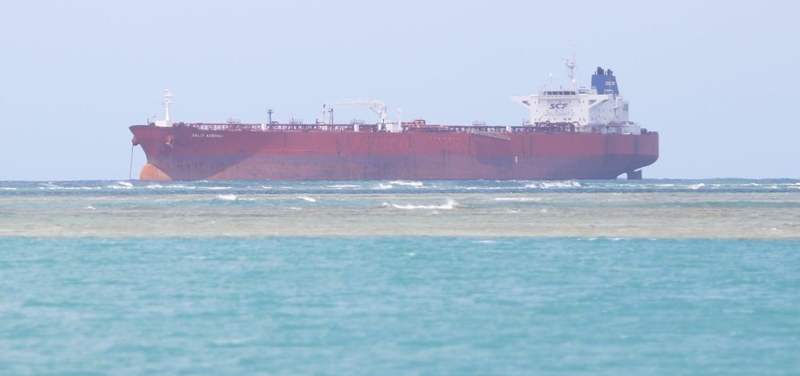
Description
Photo courtesy of Honolulu Civil Beat
Hawaiʻi residents may be facing high prices at the gas pump and spiking electric bills thanks to the military conflict with Iran and the effective closure of the Strait of Hormuz, but Hawaiʻi’s only oil refiner has parlayed the rising fuel prices into hundreds of millions of dollars in profit.
Par Pacific Holdings, the parent of Par Hawaiʻi, raked in $462 million in profit for the quarter ended June 30, an increase of more than $402.6 million over the net income the company reported for the same period a year ago.
Hawaiʻi consumers, meanwhile, aren’t so fortunate. After peaking in April at a record $5.67 per gallon, regular unleaded gasoline prices in Hawaiʻi were hovering around $5.41 statewide, compared to $4.47 a year ago, according to AAA. Residents on neighbor islands have suffered the most. Average prices on Kauaʻi peaked at just under $6 per gallon in May.
Hawaiʻi residents also are paying the nation’s highest prices for electricity. The 52 cents per kilowatt-hour was nearly three times the national average as of May, according to the U.S. Energy Information Administration. Hawaiian Electric Co. has attributed the current spike in customer electric bills to rising costs of the fuel oil it uses to generate electricity.
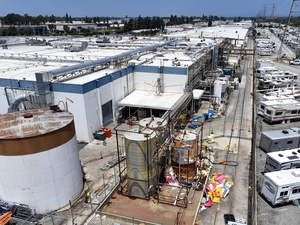
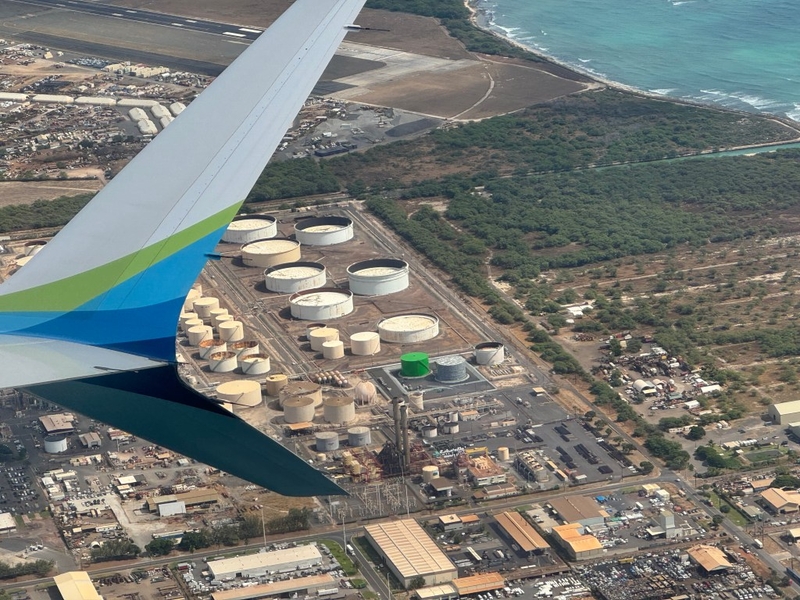
As the state's only oil refiner, Par Pacific plays a major, largely hidden role in the daily lives of Hawaiʻi residents. Because Par operates the state's only oil refinery and main fuel distribution system, the company often benefits, at least indirectly, any time someone turns on the lights, drives a car or takes a plane trip from the islands.
Par’s banner three months came as a result of a positive double whammy for the company. Because of long shipping times to Hawaiʻi, Par Hawaiʻi bought oil at lower costs months in advance of the troubles in the Middle East, then sold the refined products – gasoline, jet fuel and fuel for power plants – at current, high prices.
Also contributing was a global crunch in refined products from the Middle East and Russia, which drove up profit margins – known as “crack spreads” – for refiners globally.
Par did have to take some costly steps to deal with a global shortage of aviation fuel, some of which Par imports from neighboring Asian countries. To proactively make sure it had enough aviation fuel on hand, the company made what Par Hawaiʻi president Eric Wright called unprecedented maneuvers to deal with the federal Jones Act. But the refinery’s profits more than offset these costs.
“You're right,” said Eric Wright, Par Hawaiʻi’s president. “We had a strong quarter."
"Because Hawaii has such a long supply chain, we were buying crude two or three months in advance,” he said. “And so we were running this lower-cost crude through the second quarter."
LNG Deal Could Hurt Par
While the geopolitical landscape has produced a windfall for Par, a sudden, unexpected challenge may be looming – one that pits the refiner’s interests against Gov. Josh Green’s energy goals.
State law requires Hawaiʻi to transition to 100% renewables to produce electricity by 2045, and Par has been preparing for the change by investing $100 million to produce more renewable products, such as renewable diesel fuel, at its refinery.
“We can convert more of the refinery to renewable fuels production in the future,” Wright said. “And so we have been prepared for a gradual transition to renewable fuels over the next 20 years.”
But a new potential problem for Par has surfaced. Tokyo-based JERA Co. has proposed to build a 500-megawatt power plant on Oʻahu that would use liquefied natural gas instead of oil, threatening Par's dominance in Hawaiʻi’s energy landscape.
Gov. Josh Green’s administration has backed JERA's proposal, portraying LNG as a cheaper, cleaner-burning alternative to the oil, supplied by Par, now used by Hawaiian Electric Co.’s power plants.
HECO has received regulatory approval from the Hawaiʻi Public Utilities Commission to upgrade a major power plant on Oʻahu with generators that would burn a mix of oil and even more expensive biodiesel until 2045, when the plant would have to switch to 100% biodiesel or some other renewable fuel.
While Wright declined to discuss JERA’s proposed deal specifically, Par Pacific has told shareholders that Hawaiʻi bringing in LNG could reduce demand for oil and hurt Par’s bottom line.
“The development of alternative and competing products, including a switch to fuels such as liquified natural gas for power generation,” Par said in its most recent annual report to shareholders, “could adversely impact our business.”
Green, meanwhile, is adamant about his strategy to bring in LNG to Hawaiʻi as a bridge fuel while the state transitions to 100% renewables by 2045.
“I’ve spoken with PAR and made it clear that the state has to be able to move forward to bring down energy prices and reduce our dependence on oil,” Green told Civil Beat. “It’s time Hawai‘i moves ahead with a bridge plan that gets us to a fully renewable energy future.”
But Par may have another powerful player on its side: the U.S. military. The refinery is effectively the Pentagon’s gas station in the Pacific Ocean. Par provides about half of the diesel fuel the military uses in Hawaiʻi and is the military’s principal supplier of jet fuel, according to Wright, who said he met with military officials in Houston earlier this month.
“They're interested in anything that that can affect our future," he said.
Green insisted that the military and other buyers provide ample demand to keep Par financially healthy if LNG enters the market.
Profits Came Despite Big Investments
Par’s financial statements don't say how much of the company's $462 million in profit came from Hawaiʻi customers in the second quarter of 2026. Par Pacific also has refineries in Wyoming, Washington and Montana. In addition to its Hele and “76” retail locations in Hawaiʻi, it also operates gas stations in Washington and Idaho. All of that factors into the company’s earnings statement, and the company doesn’t break down financial results only for Hawaiʻi.
Analysts peg Par's Hawaiʻi operations as representing about 60% to 70% of Par Pacific's business, which would mean about $270 million to $323 million in net income came from Hawaiʻi during the most recent quarter, but Wright declined to comment on the breakdown.
“I really can't get specific on that because we're a publicly traded company,” Wright said.
What Wright did say is that it costs a lot to run a refinery. An analysis of Hawaiʻi results would have to factor in things like corporate interest expenses, costs of keeping inventory in Hawaiʻi and $60 million spent to shut down the Hawaiʻi refinery for major, planned maintenance during the quarter.
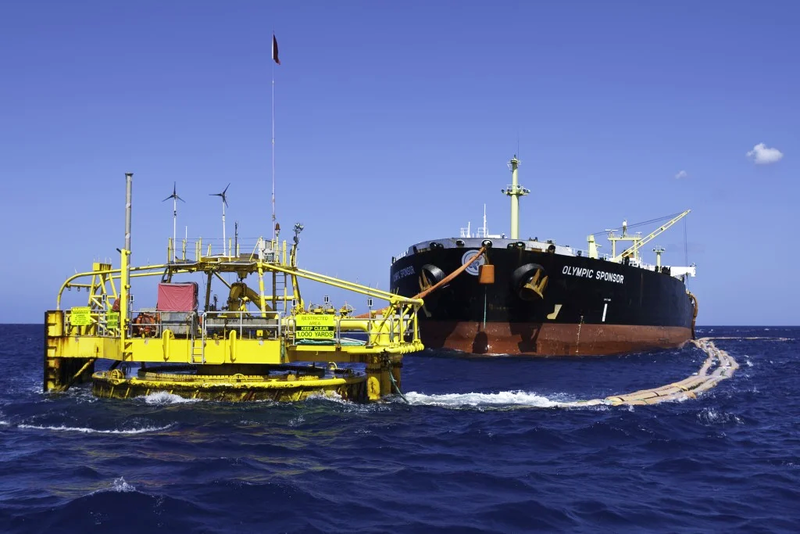
Another major expense during the quarter, Wright said, involved spending approximately $15 million to replace an offshore mooring for oil tankers. The mooring buoy was delivered from Dubai through the Strait of Hormuz, Wright said.
“Our earnings are what make it possible to fund these investments and keep the refinery running," Wright said.
Finally, the company had to take unusual steps to deal with the federal Jones Act. The 1920s law, passed to support the nation’s maritime fleet and shipbuilding industry, places restrictions on vessels carrying cargo between U.S. ports. Among them, ships must be built in the U.S. and employ domestic crews.
Because these requirements drive up costs, and because of a shortage of U.S.-built ships, shippers on the continent generally use railroads and trucks. That’s not an option in Hawaiʻi, and critics of the act, including U.S. Rep. Ed Case, say it needlessly drives up costs of all goods shipped to the state.
The Jones Act restrictions created a challenge for Par when international suppliers of refined jet fuel, including South Korea, prohibited exports of the fuel as a result of the Middle East conflict.
"We actually chartered a Jones Act barge to increase our ability to bring out fuel from the mainland, and we sourced two cargos under the Jones Act waiver and brought fuel, jet fuel out from the U.S. Gulf Coast,” he said.
Honolulu, HI