Va. officials announce disbursement of $122 million in Rural Health Transformation Fund awards
Aug 28, 2026 | 7:00 am ET

Description
Healthcare payment concept with stethoscope and big money US dollar. (Stock photo by Getty Images)
Of a total $189 million in Rural Health Transformation Fund awards that Virginia received late last year, $122 million has been allocated so far to various entities around the state, state health officials announced Friday.
The money is meant to hire and retain rural healthcare providers, invest in healthcare technologies and strengthen the industry’s workforce in rural areas.
“The ground is shifting under our health care system, and rural communities are feeling that uncertainty in real time,” Virginia Secretary of Health and Human Resources Marvin Figueroa said in a release announcing the disbursement. “These investments allow us to create stability where we can, innovate where it makes sense, and keep care within reach for the people who need it.”
Various community-based organizations including the Virginia Hospital and Healthcare Association Foundation, are among the first waves of grantees who will use the money to boost remote patient monitoring and rural medical residency slots in hospitals.
“Because rural Virginians have distinct health needs and may face barriers to accessing care close to home, hospitals serving those communities are investing in innovative approaches to care delivery that promote public health and meet the needs of patients and families,” said Julian Walker of the Virginia Hospital & Healthcare Association. “In this environment, the Virginia Rural Health Transformation initiative represents an important opportunity to advance rural healthcare delivery.”
The Virginia Foundation for Community College Education will use the funding to help grow the healthcare workforce.
The Virginia Department of Health, which has regional offices around the state, will invest in maternal care and community paramedicine, especially in areas where obstetrics units have dwindled or disappeared.
The Virginia Department for Aging and Rehabilitative Services also received money in the initial disbursement, to improve integration of care for people who are dual-enrolled in Medicare and Medicaid.
“There is innovation in rural communities already, now we get to tap into it,” Virginia’s RHTF director Heidi Hertz said in a previous interview.
Virginia’s millions in grant money come from a $10 billion pool available to states each year for the next five years.
The fund was created during negotiations over Congress’ reconciliation bill passed last summer and has been hailed by President Donald Trump’s administration as a critical investment in rural health care and means to address longstanding challenges.
“We think we have an opportunity not just to plug a few of the holes, but to transform in a lasting way the rural health care system in this country,” Centers for Medicaid and Medicare Services Administrator Mehmet Oz said in a press call last year.
Before his term expired, former Gov. Glenn Youngkin submitted an application for the funds, laying the blueprint that Gov. Abigail Spanberger’s administration is now carrying out. States must spend the money in meaningful ways or risk the federal government clawing some of it back.
During a conversation earlier in the summer, Figueroa noted an “inherent tension” between celebrating the promise that the rural healthcare funding represents for states alongside the reality of how forthcoming changes stemming from H.R. 1 will further exacerbate long-simmering healthcare issues.
“We’re kind of dealing with the world as it is, and so we’re managing both of those two realities at any given moment,” he said.
The reconciliation bill entails major changes to Medicaid and the Supplemental Nutrition Assistance Program. Congress also did not renew expired Affordable Care Act subsidies.
With thousands having already lost ACA insurance and several thousand more people at risk of losing Medicaid, the state has invested millions to both comply with H.R. 1 and prevent eligible people from losing coverage.
As Spanberger announced an executive order this week to build on statewide efforts to prepare for H.R. 1 implementation deadlines, Figueroa assured Virginians the administration would do its best to meet the unique new challenges.
“What we can promise is disciplined execution. We will communicate early,” he said. “We will tell the truth of what we can and can’t do. We will publish the data, and we will listen when the process is not working and try to fix it.”
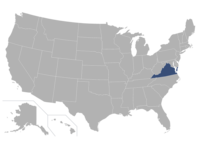
Richmond, VA