Minnesota wins $214M settlement from Meta in teen addiction case
Aug 26, 2026 | 5:44 pm ET
Description
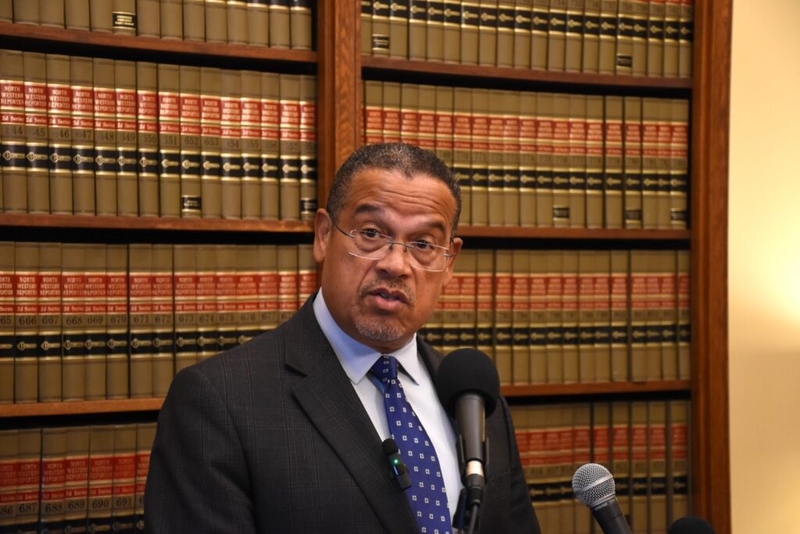
Minnesota Attorney General Keith Ellison holds a press conference after Meta and dozens of states agreed to settle in a landmark teen addiction case, Wednesday Aug. 26, 2026. (Photo by Alyssa Chen/Minnesota Reformer)
Meta, the parent company of Facebook and Instagram, has agreed to pay $214 million to Minnesota over 10 years to settle a lawsuit brought by dozens of states alleging it knowingly made its apps addictive for children.
The proposed settlement, which must be approved by a judge, includes payments of as much as $17.1 billion across 47 states, the District of Columbia and U.S. territories as well as changes to its social media apps.
The settlement could prove to be a watershed moment for Big Tech, which has historically been adept at avoiding regulation even when it comes to the safety of children.
Meta to pay 47 states up to $17.1B in landmark child safety settlement
“Meta knew its platforms were harming kids,” said Minnesota Attorney General Keith Ellison at a Wednesday press conference announcing the settlement.
Meta does not admit to any wrongdoing as part of the settlement, which comes just a week after a trial began in the case in Oakland, Calif.
Former Meta employees testified in the trial that Meta knew its teen safety tools were ineffective and that several internal Meta studies had highlighted the risks for teens on its apps while the company continued to prioritize usership over safety.
The payments are among the largest Big Tech settlements with states to date. Meta will pay at least $12 billion over the next decade, plus $5 billion more if Snapchat, TikTok and YouTube reach similar settlements.
The product changes Meta agreed to implement as default safety features include a two-hour time limit; a block on Meta apps between midnight and 6 a.m.; options to make their social media feeds less personalized; and a block on beauty filters. The safety features can be overridden by a supervising parent.
The settlement also includes requirements that Meta improve its age-identification algorithms to identify teen accounts and catch accounts of kids under 13, who are not supposed to use Meta apps under the company’s policy. Kids often bypass age restrictions by lying about their birth date, which isn’t verified. The company instead uses artificial intelligence to analyze an account’s photos, posts, comments and other content for clues on their age, such as birthday wishes.
Most of the new safety features are required for a decade. Ellison said he thinks “it would be great” if the settlement terms were “nailed into state law” by the Legislature.
The settlement includes examples of how states can use the funds, such as spending on crisis hotlines like 988, after school programs and public health advertising, but Minnesota’s share of the settlement will just go into the state’s general fund until the Legislature decides how to allocate it.
Minnesota’s payout has the potential of reaching $307 million depending on whether other industry giants — TikTok, Snapchat and YouTube — agree to similar terms in possible future settlements. On Wednesday, Meta published an “open letter” to TikTok and YouTube to adopt the new standards set by the settlement.
Minnesota sued TikTok last year in state court, alleging that the infinite scroll short-form video platform preys on young users with addictive algorithms. That case is currently in discovery, with a trial date set for October to November of 2027.
A 2024 Pew Research survey found that 90% of teens use YouTube, 63% are on TikTok, and 61% use Instagram. More than 1 in 10 teens said they use YouTube, TikTok, Instagram and Snapchat “almost constantly.”
In 2025, 90% of Minnesota high school students reported using social media every day, and a large portion — over 1 in 3 eighth graders and juniors — suspect they have a social media problem. Over 1 in 6 students, including those in fifth grade, said they use technology between midnight and 5 a.m. on all five school nights.
States that have brought suits against social media companies are using a similar playbook that led to billions in damages levied against Big Tobacco in the 1990s and helped drive down American nicotine use until vapes and pouches brought about a revival. Ellison acknowledged the comparison.
“For years, it was like, you can’t beat Big Tobacco, and then suddenly, you know, Minnesota took on Big Tobacco,” Ellison said.
On social media litigation, he said, “I see this as an industry sweep, but we’re at the front end of it.”

Saint Paul, MN