National monuments drive economic growth and unite diverse interests
Aug 26, 2026 | 5:30 am ET
Description
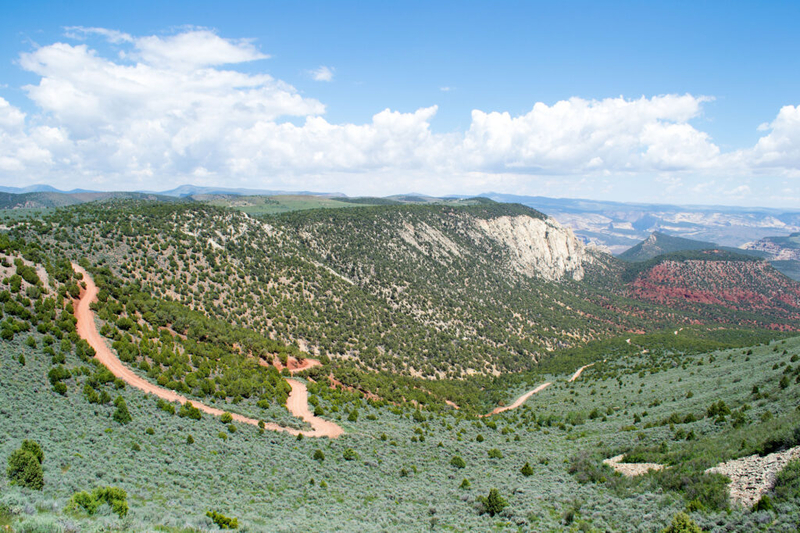
A view of Echo Park Road snaking through the canyons of Dinosaur National Monument in 2015. (Peter K./NPS)
Colorado’s public lands encompass four national parks and nine national monuments, including the 210,844-acre Dinosaur National Monument in Moffatt County, home to some of the most stunning canyons on the continent, including the jaw-dropping Lodore Canyon and Echo Park.
During August, I joined a group of public lands and national monument proponents — hunters and anglers, banking and mining executives, a local rancher, small business owners, marketing professionals, economic development specialists, public lands and waters stewards — for a four-day float down the Green River through Dinosaur.
Sponsored by Visit Moffatt County and the National Park Service, we were tasked with discussing the diverse and sometimes conflicting interests intertwined with public lands and waters management along with considering the economics of communities that are sustained by these public resources in Northwest Colorado and beyond.
The common denominator among all of us is a desire to help ensure that public lands are managed sustainably for everyone: communities and wildlife. Unfortunately, threats to public lands have increased significantly during recent years. From proposed sell-offs to rapidly accelerated oil and gas leasing with limited opportunity for public input to growing year-round recreation, our shared estate is experiencing unprecedented pressures.
Earlier this year I joined a group of public lands advocates visiting Colorado congressional delegation offices in Washington, D.C. Tom Kleinschnitz, Moffat County director of tourism, was among them and he explained to our U.S. senators and representatives that his county has a population of about 13,000 people, but Dinosaur National Monument attracted over 315,700 visitors in 2025.
A January 2026 report from Headwaters Economics called “Economic performance of communities near national monuments” documents the vital role national monuments play in local economies. The report emphasizes that Colorado’s national monuments and other public lands are sustainable economic engines that power rural economies and support our great hunting, angling and outdoor recreation heritage.
Nationwide, outdoor recreation — from hunting, fishing and camping to cycling, boating and more — accounts for $788 billion in annual gross economic output and generates 5.2 million American jobs. The U.S. Bureau of Economic Analysis calculates the economic output of outdoor recreation in Colorado to be $13.9 billion, surpassing industries such as mining, utilities, farming and ranching.
“Recent lease sale proposals in areas such as North Park, Moffat County, and Routt County have generated concerns from landowners, sportsmen, conservation organizations, and state wildlife managers regarding potential impacts to wildlife migration corridors, outdoor recreation, and local economies that depend on healthy public lands,” an Aug. 21 Grand Junction Daily Sentinel editorial explained. “But, under current law, the Bureau of Land Management has no authority to respond to those concerns.”
Eighty-four percent of Western voters say that “rollbacks of laws that protect our land, water and wildlife” are a serious problem, up from 68% eight years ago, according to a 2026 poll by Colorado College’s State of the Rockies project. “Whether one supports or opposes additional oil and gas development, Coloradans should be able to participate in decisions that affect the lands and resources they own collectively,” the Daily Sentinel editorial added. “That’s the American way.”
“I’ve hunted elk on Colorado’s public lands for some 20 years, on ground that belongs to all of us — truck drivers, ranchers, schoolteachers, and veterans back home on leave,” I explained in an Aug. 7 Colorado Times Recorder op-ed. “That’s the quiet miracle of public land: you don’t have to be rich to have somewhere to hunt, fish, or otherwise recreate in the outdoors.”
And as the old saying goes, “All of us are smarter than any of us.” But if that collaborative process gets short-circuited by Washington, D.C., politicians favoring one industry or interest group without giving the rest of us a seat at the table, then “we the people” will, at best, be an afterthought.
Former U.S. President (and Medal of Honor recipient) Theodore Roosevelt said, “Of all the questions which can come before this nation, short of the actual preservation of its existence in a great war, there is none which compares in importance with the great central task of leaving this land even a better land for our descendants than it is for us.”
During our four days rafting the Green River in Dinosaur National Monument through the Gates of Lodore, Lodore Canyon, Echo Park and beyond, we all seemed to agree with both Roosevelt’s sentiment and the Daily Sentinel: “Public lands belong to all of us and we should all have the opportunity to have a say in how they’re managed.”
Denver, CO