Alabama Public Library Service staff, board at odds over new compliance employee
Aug 21, 2026 | 5:59 am ET
Description
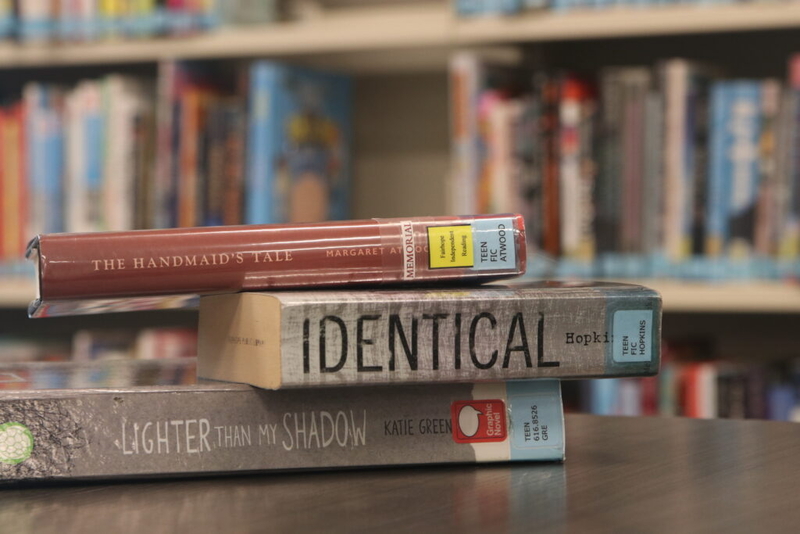
A collection of books on display in Fairhope Public Library in Fairhope, Alabama on March 2, 2026. Members of the The Alabama Public Library Service (APLS) Board Thursday expressed concerns that parents will complain about library books in children's section after APLS staff recommended the board not fill a position designed to help local libraries comply with administrative code changes. (Ralph Chapoco/Alabama Reflector)
Alabama Public Library Service staff Thursday advised members of the APLS board to not fill a position created to assist libraries with compliance with controversial administrative code changes over the last two years.
Pennie Broussard, who works in the human resources department for APLS, told the Board she advised rescinding the posting without filling it.
“We really have no need for this position,” she said. “The agency really has no need for this position. We have got an assistant director, and some of the duties that were mentioned for this position to do are Katie’s (Bailey) duties that she is graded on for her appraisal.”
Board Chair John Wahl, the Republican nominee for lieutenant governor, and board member Amy Minton disagreed with the recommendation. Both said they believed the position was necessary after hearing from libraries about the resources required to make changes aligned with the code.
“I think putting someone in this role that could really work with local libraries, and make sure we go above and beyond, to make sure they do have someone they can lean on and a resource they can use, I think that is good for local libraries,” Wahl said in an interview after the meeting.
Read Freely Alabama, an organization opposed to restricting access to library books, also said that the position is unnecessary.
“Board member Amy Minton admitted that she intends for the ‘sole job’ of the assistant director to be to identify individual books libraries would be forced to censor or lose their state funding,” the organization said in a statement. “This creates a state censorship officer, and expands inappropriate state control over local libraries.”
Kelyn Ralya, the director of APLS, delayed a final decision because of the concerns from Minton and Wahl.
Staff said during the meeting that APLS cannot go into every library to review books shelved in the youth sections of libraries in the state. The only way to determine whether books have been appropriately shelved is to have the public inform the Board.
Staff members of the Fairhope Public Library traveled multiple times to Montgomery to address the APLS Board about their concerns related to the books. Wahl took it upon himself to read the books for about a month and found that Fairhope was not in compliance with the administrative code by keeping them in the teen’s section.
“So then, is the answer to these parents, who have gone to their local library, the answer is they come back to us?” Minton told the staff.
Ralya said that several libraries will likely not comply with the updated administrative code imposed by the APLS Board.
“They may be willing to leave state aid on the table,” Ralya said. The Fairhope Public Library refused to move books that Wahl claimed were not permitted in the youth section of the library.
APLS announced in March that it planned to advertise for the position.
“This position was an at-will position,” Minton said after the meeting. “It is not a merit position. It is literally in place to help these libraries, so no one loses their funding. We don’t want them to lose their funding.”
According to the job description, one of the responsibilities is to “serve as a point of contact in an advisory role for public libraries regarding policy and administrative code compliance.”
The person hired will also monitor legislation that lawmakers are considering that will affect APLS and respond accordingly, as well as develop relationships with board members, staff and policymakers to advance the goals of the agency that is responsible for distributing state aid to local libraries.
“That hard part is moving the books and identifying the books,” Minton said. Without assistance from APLS, Minton said, libraries may not move the materials but continue to receive state aid.
State libraries became a flashpoint of fighting between conservatives who claimed Alabama’s libraries had inappropriate material shelved in youth sections and critics who said the activists were attacking content with LGBTQ+ themes or characters. In 2024, the board required libraries to develop policies to limit access for minors to books considered sexually explicit, obscene and or “otherwise inappropriate” or risk losing their state aid.
In 2025, APLS changed the administrative code to bar books that dealt with “gender ideology,” a term the board did not define.
Montgomery