More extreme heat days are coming. Will states be ready?
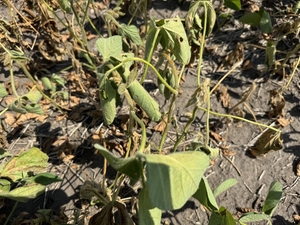
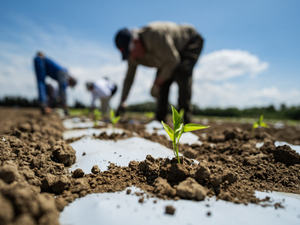
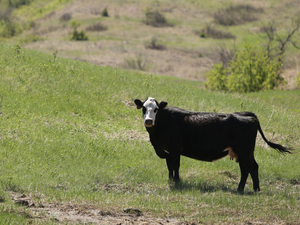
In states such as Colorado and New Jersey, record-high temperatures have led to a spike in heat-related illnesses. In agricultural states like North Dakota and Wyoming, farmers are struggling to grow crops amid withering drought.
Throughout the U.S., extreme heat days are becoming more frequent and more intense. State policymakers are now attempting to plan for extreme heat’s growing risks, which could strain public health and infrastructure budgets and the agricultural economies.





In Episode 42, you’ll hear from Andrea Snyder, an associate manager at The Pew Charitable Trusts. She’s been researching how the hotter summers could affect communities across the country and how some states are responding.
You’ll also get a weekly news wrap-up from Daybreak newsletter writer Madyson Fitzgerald. She’s got you covered with the latest on: Flock camera misuse, a ballot measure about Arizona’s school voucher program and data center legislation.
Episode produced and edited by Mallory Cheng. Music for Stories From The States composed by David Singer.
Got questions? An episode idea? Email us at [email protected].
Subscribe to Stories From The States on Apple Podcasts, Spotify or YouTube.
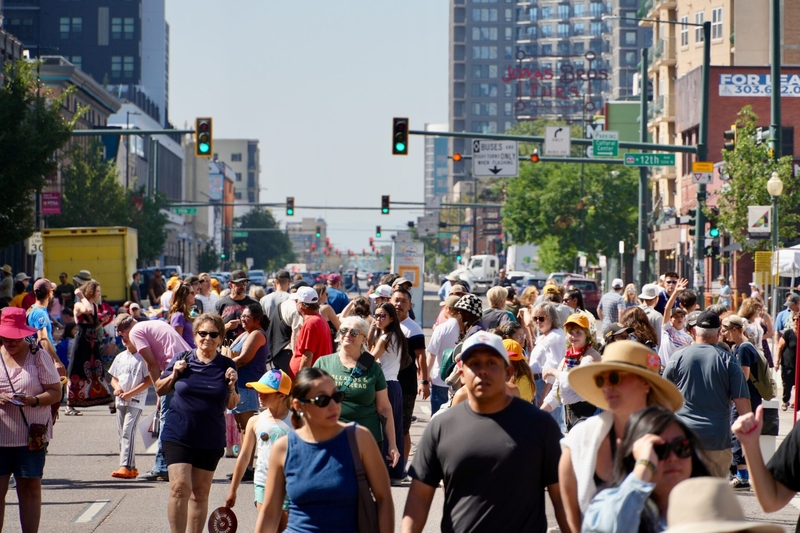
Photo: Crowds gathered in downtown Denver for Colorado Day celebrations commemorating the 150th anniversary of statehood on Aug. 1, 2026. Heat-related illnesses spiked in Colorado as the state experienced high temperatures. (Photo by Chase Woodruff/Colorado Newsline)
Stories From The States is a production of States Newsroom, the nation’s largest state-focused nonprofit news organization, with reporting from every capital. At this pivotal moment in American democracy, our veteran journalists from all 50 states are reporting the consequences of government decision-making. By zooming in on one story each week, Stories From The States contextualizes and gives a human voice to what is happening now.
Transcript was created using an automated software.
Chris Fitzsimon
This is Stories From The States. I'm Chris Fitzsimon. Here at States Newsroom, we know there's a lot going on around the country in every state capital. So thank you for being here. First, we're going to jump in with the news of the week from around the country. Quite a week it was. We're talking about the automated license plate...
Transcript was created using an automated software.
Chris Fitzsimon
This is Stories From The States. I'm Chris Fitzsimon. Here at States Newsroom, we know there's a lot going on around the country in every state capital. So thank you for being here. First, we're going to jump in with the news of the week from around the country. Quite a week it was. We're talking about the automated license plate reader called Flock cameras. You probably have heard of. In Wisconsin, a police officer was sentenced for misusing the technology for unlawful targeted surveillance. And that episode is raising more questions about transparency and control of this new technology. We'll also hear about the latest on data center legislation. As always, data centers continue to be a massive issue in almost every state in the country, and of course, this summer has felt very hot. The number of extreme heat days are becoming more frequent and are becoming more intense. So later in the show, we will chat with a researcher from the Pew Charitable Trust about how those hotter summers could affect communities across the country and how some states are responding, but first let's check in on the news with our States Newsroom newsletter author, Madyson Fitzgerald. Hi, Madyson. How are you?
Madyson Fitzgerald
I'm doing well. How are you?
Chris Fitzsimon
I am well. As the I guess the dog days of summer continue, a lot of heat out there, but fall is in the air a little bit.
Madyson Fitzgerald
Yeah, I actually checked my Dunkin app this morning because I was thinking about going to get coffee, and they had their pumpkin drinks ready this morning, which I thought was strange because it's August.
Chris Fitzsimon
Uh oh.
Madyson Fitzgerald
and it is like cooling down. But I would not say it's pumpkin spice latte season yet. I was I was shocked.
Chris Fitzsimon
That's like Christmas vacation. I think Halloween and stuff is happening earlier and earlier, but I think it's because everybody's tired of the hot weather.
Madyson Fitzgerald
Yeah, for sure. Everyone's trying to move on.
Chris Fitzsimon
Well, a lot of a lot of stuff happening this week. Let's jump in and talk about the news. I think that I was a little, I'm a little behind on all the Flock camera controversy.
Madyson Fitzgerald
Yeah, it's been one of the most talked about issues this week in several different cities across the U.S. But one of the stories that caught my attention actually took place in Wisconsin, where a 32-year-old police officer was sentenced for misusing these Flock license plate reader cameras for unlawful targeted surveillance. And so, according to a criminal complaint, this officer actually conducted seven off-duty searches using between 15,000 and 92,000 individual cameras across Flock's Network. The officer was looking for a vehicle belonging to his ex-girlfriend, who reached out to the Appleton Police Department about her suspicions that she was being tracked, which is what triggered the investigation.
Chris Fitzsimon
That is just creepy.
Madyson Fitzgerald
Terrifying, and you know it's you never. I I personally wonder how she was able to find out that she was being tracked, but anyways, his sentencing comes as Wisconsin and communities across the country are really pushing back against these flock cameras, and they're calling for more transparency and control over police surveillance technologies. And so, earlier this week, you know, Rhode Island Governor Dan McKee actually ordered a pause on the installation of new flock cameras for 60 days, and residents of Huntington, West Virginia, they were angered over their city council's approval of a contract with Flock Safety, and are organizing a weekend-long canvassing campaign later this month to collect signatures for their "Get the Flock Out" ballot initiative. Creative.
Chris Fitzsimon
Well, that's a good name. It is interesting how like this collision of technology, law enforcement, surveillance. My wife and I actually got a... We were seeing some relatives on the eastern shore of Maryland, and got a notice that we had exceeded slightly the speed limit in a small town on the eastern shore of Maryland. It was all based on a camera that nobody knew was there.
Madyson Fitzgerald
Interesting.
Chris Fitzsimon
And then you start wondering, is this even real? You know, because it like it feels like it's all it's not only an invasion of privacy, but it feels like it's open to spamming and all sorts of things.
Madyson Fitzgerald
For sure. And then not always are they actually looking at like information regarding the driving itself. Sometimes they're looking at there was I think there was I can't remember where the story was. There was a person who drove over state lines to get marijuana from one state and bring it back to his own state, and they were tracking him for that. And as soon as he got home, they ended up arresting him. And so it's it's becoming a lot more. It's becoming a bit more of an invasion of privacy than maybe people had imagined to begin with, and that's why they're calling for more transparency.
Chris Fitzsimon
Yeah, it's interesting that politicians of both parties, or just in general, are starting to respond to all this.
Madyson Fitzgerald
For sure.
Chris Fitzsimon
Well, let's talk. Let's talk about the the rights of the voters, which is to change their laws in their own states. That's also been a big issue this week.
Madyson Fitzgerald
Yeah, and I think it will continue to be a big issue as November gets ever closer. But this week, two states really faced a lot of court decisions regarding proposed constitutional amendments that voters would have the chance to decide on. And so, starting with two significant measures in Arizona that caught my attention, one ballot measure that would have asked voters to institute sweeping regulations to the state's billion-dollar universal school voucher program, Another very popular topic that measure is actually dead after the state supreme court ruled against the backers of the proposal, and basically that decision disqualified a number of voter signatures, meaning that it was below the threshold to make the ballot. And the Arizona Supreme Court also ruled that another proposal that was Republican-backed that would amend the state's constitution to make sweeping changes to how elections are conducted can remain on the November ballot. So, lots of ballot measures. If you head to our website or visit the Arizona Mirror, you'll be able to see all eight measures that are going to be on the ballot this November.
Chris Fitzsimon
And then Missouri. This is one that the whole battle in Missouri about what the the whole idea of initiative and referendum and voters and it feels like the legislators are trying hard not to have the will of the voters rule the day.
Madyson Fitzgerald
Yeah, it's it's a really interesting story, a tad confusing, but very interesting. And a count, so a county judge in Missouri basically decided that a proposal to limit the legislature's power to alter repeal measures passed by initiative should not be on the November ballot because, in that way, would basically it would impermissibly constricts the legislative freedom to make new laws reflecting new views, which I think is the whole point of ballot initiatives and having these kind of citizen-led pushes to be able to make changes within their state.
Chris Fitzsimon
Right, and it used to be, I think, if I'm right, the Missouri has they had a ballot initiative and referendum process, and then the General Assembly there wanted to change it to make it so that the ballot measure had to pass in every congressional district, not just statewide, which is really does seem to go against the spirit of the idea. But...
Madyson Fitzgerald
Right, that was a very interesting one. I'll just say that much, and they definitely have a lot more ballot initiatives that they'll probably be considering as, like I said, November gets closer and closer.
Chris Fitzsimon
Yeah, and what would a week be without talk about data centers? Everywhere I turn, I feel like I'm reading about data centers, hearing about data centers. People are upset about data centers, and this week was no exception.
Madyson Fitzgerald
Yeah, and I try to, I almost try to avoid talking about data centers because I don't want to to beat a dead horse, but it's it's remained a very very popular topic. And in specifically this week, Pennsylvania Governor Josh Shapiro signed an executive order that issues stricter guardrails on data centers. And while the governor used fiery language such as greedy and predatory to describe the companies that were quote unquote recklessly pushing data centers, critics are saying that the order falls short, especially when you consider that New York actually just issued a moratorium on data centers earlier this year, and so the first-term governor is up for re-election, and both his opponent and grassroots campaigns have criticized him for not doing more to limit data centers and also not doing it earlier because this is an issue that they've been talking about for months when it comes to Governor Shapiro.
Chris Fitzsimon
And this is another one of those issues, like the surveillance topic we talked about a minute ago, that really is not so much a partisan thing. Because I certainly hear Republicans and Democrats, supporters of President Trump, opponents of President Trump, a lot of people are upset about this, regardless of their political affiliation.
Madyson Fitzgerald
For sure, on both sides, people are really, really upset, and also when it comes to paying your own way in terms of making sure data centers are paying for their own energy, the water usage, there's just so much that's involved in these data centers, and for how fast they're developing and how fast they're spreading. I think that legislators will have a lot of work to do in terms of catching up. But in other states and localities across the country, there was a lot more conversations about data centers, and so a similar situation was actually brought up in Kentucky after the the governor signed an executive order seeking to limit the effects of data centers. And in Nevada, a gubernatorial candidate said as governor that he will pause the state's tax breaks on data centers. And then in Wisconsin, data centers are also becoming a focal point in the race for governor, and so it's definitely going to stay a topic of conversation at the dinner table.
Chris Fitzsimon
Yeah, absolutely, and I know we talked to we had a podcast recently talking about the industry trying to fight back and have a sort of a PR campaign, which feels like whatever you think of them, that was it's a little late. I think people sort of already made up their minds, but the good news is we have a fascinating one last thing this week. I think
Madyson Fitzgerald
Yes, and I I would say it's the cutest story that I've read this summer because I'm a very big fan of this of this particular endangered species actually. But the Maine Department of Inland Fisheries and Wildlife is once again asking residents to look out for one of Maine's most elusive native species, the rusty patched bumblebee.
Chris Fitzsimon
That sounds like a cartoon character to me, but go ahead.
Madyson Fitzgerald
Oh, it does, and you can. I literally was struggling to say it. Try saying it five times fast. It's one of two native species of bumblebees that hasn't been seen in years, and it's considered a rare species of special concern by the state, and fun fact, it was the first bumblebee species to be added to the U.S. Endangered Species List. So the search for the rusty patched bumblebee actually started in earnest in 2015 when the department began work on the Maine bumblebee atlas. And over several years, volunteers with the Community Science Project took photos of bumblebees around the. And submitted them to the department in their quest to save the bees.
Chris Fitzsimon
So, what do we? Where is it now? What do we do? What What are people in Maine? They're supposed to look out for them.
Madyson Fitzgerald
You know, that's what I thought was interesting. I think they're actually just running around taking photos of bees, and hopefully, the scientists that actually study this will be able to identify where you know the if they can catch the rusty patch bumblebee eventually.
Chris Fitzsimon
Well, it's fascinating stuff, Madyson. As always, thanks for keeping us up to date with the news. Thanks for being with us.
Madyson Fitzgerald
Yeah, thanks for having me.
Chris Fitzsimon
To stay up to date on the latest news happening in all the states, subscribe to Daybreak and Evening Wrap. You can subscribe at newsfromthestates.com/subscribe. This summer has felt like the hottest it's ever been. States like Colorado and New Jersey reported that heat-related illnesses spiked when temperatures soared to record highs, while farmers in North Dakota and Wyoming are facing droughts. Many researchers are predicting that the number of extreme heat days could actually grow over the next few decades and get even more intense. Some state policymakers are trying to figure out how to plan for it. It could strain public health, agriculture, and infrastructure. In a moment, we're going to talk with a Pew researcher about how you could be affected and if your state is planning for what's going to happen. We'll be right back.
Moses Esheit
At a time when so many communities are losing their local news outlets, States Newsroom is filling a gap. We are now the nation's largest state-focused nonprofit news organization, with reporters based in every state capital and Washington D.C. But we can't do it without your support. Your contributions allow us to produce award-winning journalism and deliver it to you for free, no pop-ups, no paywalls. This is a crucial time to support local journalism, and every bit helps. To give, go to statesnewsroom.com/donate.
Clayton Henkel
Hi, it's Clayton Henkel, deputy editor at NC Newsline, at States Newsroom, we believe journalism should be fair, fearless, and free. With reporters working on the ground in all 50 states and Washington D.C. we provide nonpartisan coverage of the state issues that matter most to you. You can subscribe to our work by going to statesnewsroom.com/subscribe.
Nelle Dunlap
State government plays a huge role in our lives, but sometimes with our busy schedules, it can be hard to keep up with the flood of news. Our Evening Wrap newsletter from States Newsroom summarizes the day's top stories happening across the country's state capitals. You can sign up by going to statesnewsroom.com/subscribe.
Madyson Fitzgerald
What's your morning routine? Maybe it sounds like turning off your alarm clock, then shuffling into the kitchen to brew a cup of coffee and checking your phone for the latest news in your email. What's mine? It's waking up early and sending you that email. Hi, I'm Madyson Fitzgerald. I write Daybreak. It's a daily national newsletter for people who want to start each morning informed about how state news fits into the national news cycle. Start your day informed with our 50-state snapshot, subscribe now at newsfromthestates.com/subscribe.
Chris Fitzsimon
Daily news, especially these days, can get overwhelming. At times, it's hard to keep up with how it all could impact you, your family, and your community. Hi, I'm Chris Fitzsimon. I host a podcast called Stories from the States to help make the top stories a bit more digestible. It's a weekly news podcast that explores one issue happening in the states that could shape the entire country with the help of local journalists.
Sherman Smith
There's no evidence that anybody can find really where somebody was really bothered by who was in the bathroom with them.
Chris Fitzsimon
Experts.
Dr. Kristin Lyerly
They had an ultrasound picture of what they were told was their pregnancy, but what it actually was was a full bladder.
Chris Fitzsimon
And community members.
Max Moran
Money isn't everything, and the real value when it comes to the land is being able to pass it down.
Chris Fitzsimon
We've got you covered. Subscribe now to Stories From The States, a podcast from States Newsroom.
Chris Fitzsimon
Andrea Snyder is an associate manager at the Pew Charitable Trusts. Well, Andrea, thank you very much for being with us. We appreciate your time.
Andrea Snyder
Yeah, I'm happy to be here.
Chris Fitzsimon
I have a feeling that most people listening to this are hot, regardless of where they live. I know it's certainly been a very hot summer in North Carolina on the East Coast. It's interesting that that's happening all over the country. Is it true that the summers are getting hotter?
Andrea Snyder
It is true that the summers are getting hotter, and the U.S. is experiencing more high. Than average temperatures. That's how we discuss it in the piece. And as you noted, many of those regions, including those that are typically cooler, are experiencing this trend. And in the piece, we talk about how in 2025, the National Weather Service issued heat advisories for every region in the U.S. including the first time in Alaska. And this year in July, it was recorded that as that hottest year on record.
Chris Fitzsimon
Yeah, I was really struck by the. I mean, it's hard not to see Alaska jump out for those of us who are so far away. It always feels like we have colleagues in Alaska. I'm always jealous, but this year, I guess it's it's even reached that far. Let's talk about the what that means. I know for for state governments, for federal governments, for money, for expenditures-not just effects on our human lives. I know our outlet in Colorado recently reported that heat-related illnesses has spiked. Is that a one of the things that we have to worry about? Is actually the effect on not only individuals' health care but the cost of providing the care for those folks.
Andrea Snyder
Yeah. So, as you noted, extreme heat is harming people's health, and as a result, governments are facing higher costs for medical care and preventive services. Prolonged heat or exposure to heat can lead to heat-related illnesses like heat stroke or or other heat related illnesses, which could drive demand for medical services, and that requires states to fund emergency services, hospitalizations, emergency response, and including assistance for uninsured and insured residents. There's a study, a 2023 study in Virginia on the summers between 2016 and 2020, that found, on average, extreme heat led to 59 more emergency care visits and 25 additional hospitalizations compared with other days.
Chris Fitzsimon
I guess a lot of that that strain and stress on on governments and finances is based on whether or not folks have health care, obviously, and whether or not they show up. We had a case in in Rocky Mount, North Carolina, a few weeks ago where a family's power was cut off. The power was managed by the city, and three people actually died because of the heat. I think they were elderly. So there's there's I guess a lot of states or local governments have struggles trying to make sure that people have who don't have enough resources can actually stay cool.
Andrea Snyder
Yeah, that's absolutely true, and I'm sorry to hear that news. And I think, as you pointed out, Chris, extreme heat is also damaging property and infrastructure, including to including power outages, and and that can really strain the grid.
Chris Fitzsimon
Another, I think one thing people have probably noticed is the wildfires. It feels like every summer there are wildfires somewhere in the country. We had a lot of publicity about the ones in Canada, the smoke coming over, but there's been a lot in our in our country as well in the Midwest and the West. How how how important or how big a deal is this the rising temperature on these fires?
Andrea Snyder
So the rising temperature on these fires isn't something that we particularly looked at in this piece. Pew does have some existing research on on wildfires and their impact on state budgets, but it's not a cross section that we necessarily visited or looked at for this.
Chris Fitzsimon
I guess the the drought would be one part of that.
Andrea Snyder
Yeah, definitely. And so, drought and extreme heat together can cause strain. What comes up in this piece is related to agriculture. So, extreme heat is damaging agriculture, and as a result, governments are spending more to assist affected producers. Like the tangible effects are are that crop production can reduce, and reducing agriculture revenues, for instance, can put pressure on states. So, actually, a North Carolina analysis by the by Duke University found that heat related crop insurance payments have steadily increased over the last two decades, and they found that in some states that could cost millions to hundreds of millions of dollars annually.
Chris Fitzsimon
Right, and I guess this seems to follow that if there's a a big problem with food production because of the heat and/or the drought, that then food is more scarce, prices rise, and in a time when folks are already worried about making ends meet, it just feels like another way that would sort of strain a budget.
Andrea Snyder
Right. Yeah.
Chris Fitzsimon
What about what about infrastructure and how do states handle what what sort of impact does this extreme heat have on state infrastructure.
Andrea Snyder
Yeah, that the impact on infrastructure is is varied. Most infrastructure is not designed to withstand prolonged extreme heat, so in some cases it can cause materials to soften or crack or expand, which can lead to mechanical failures, and these stresses increase. Likelihood that a state will have to pay for costly repairs and additional maintenance means.
Chris Fitzsimon
Who bears the brunt of most of this financial strain? I guess is it shared? Traditionally, states would would would pay or would absorb the cost, but the federal government would step in, whether it's with a disaster declaration or other federal programs. But even those are sort of feel like have been curtailed, and I know folks have probably read a lot about the changing structure and what the Trump administration believes about how much the federal government should pay and what role states should play.
Andrea Snyder
Yeah. So although states do play a role in responding to heat-related impacts, the costs are shared across federal and local government as well as individuals, but it's not well understood how much of this cost gets placed onto individuals and local governments.
Chris Fitzsimon
Yeah, it's it's such an interesting topic, and thank you for doing the the story. I guess when most people just think of the heat, they understandably think of themselves and sort of what they're going through without realizing how much it has an impact on sort of all levels of government, I wonder why this doesn't get more publicity. Is it because it's sort of diffuse, or because there's so many other things going on?
Andrea Snyder
Well, that's why I'm really grateful that you all have decided to cover this story. And what I would say to that is that the impacts of heat are already visible. I think people are experiencing them, and I think people see this in their neighbors or friends having to visit the hospital due to heat-related illness, or maybe on their commute they're experiencing train delays from heat, or farmers and agricultural workers might be affected by crop yields, so yeah, our aim with this piece was really to underscore that governments have a role to play in managing and responding to those impacts. And effective response requires planning, data, and resources. So we are encouraging governments to to prepare for extreme heat now, so that they can respond effectively when the events occur, and and also reduce long term risks.
Chris Fitzsimon
Did you get a sense of how states are, or governments in general? But we focus obviously primarily on the states. Do you get a sense overall how states are responding? Are they planning enough?
Andrea Snyder
So we highlight a number of state actions in the piece. Some states are starting to evaluate their physical and fiscal exposure to extreme heat, and also identify risk reduction strategies. So, for example, Wisconsin's Department of Health Services has a heat vulnerability data explorer, and that calculates the heat vulnerability index statewide to pinpoint areas of greatest risk or negative health impacts, and that's an example of how states are using data and mapping tools to analyze their vulnerabilities. Some states are starting to quantify the economic impact of heat on key revenue streams and services. Examples of that are in Delaware and California, who have both commissioned detailed studies of of the costs of extreme heat, including costs for transportation, for emergency services, for preventative measures like cooling centers and or wellness checks, and then finally, states are also, or some states are also developing and implementing heat action plans, which outline risk reduction measures. North Carolina is one of those states, and some others that have done that include Arizona, California, New Jersey, and New York.
Chris Fitzsimon
Did anything surprise you when you were writing this?
Andrea Snyder
I think the thing that surprised me is the extent of the budgetary impact of extreme heat. So while statewide costs remain rare, as I was just mentioning, there are a handful of states that have started to quantify these impacts. California analyzed seven extreme heat events between 2013 and 2022, and some of the numbers that came out of that include cost of road repairs to states, which ranged from 2 million to 11 million per event.
Chris Fitzsimon
Wow!
Andrea Snyder
Yeah, and so I was mentioning before that we don't have comprehensive comparable data, but the the scale of those costs certainly stood out to me.
Chris Fitzsimon
Well, thank you so much for writing that and and focusing attention on it, and we really appreciate you being with us. Thank you very much.
Andrea Snyder
Thank you so much, Chris.
Chris Fitzsimon
Thanks for listening to Stories From The States. I'm Chris Fitzsimon. Mallory Cheng produced and edited the podcast. David Singer produced our theme music. If you liked what you've heard, please share it with someone you think might enjoy it, and leave a rating and review if you can. It means a lot to know what you think about the podcast, and it helps other people find us. To stay up to date on the latest episodes, subscribe now to Stories From The States. A podcast from State's Newsroom, available wherever you listen to podcasts. We'll talk to you soon.