Road-building coalition calls for long-term funding solution
Aug 12, 2026 | 5:00 am ET
Description
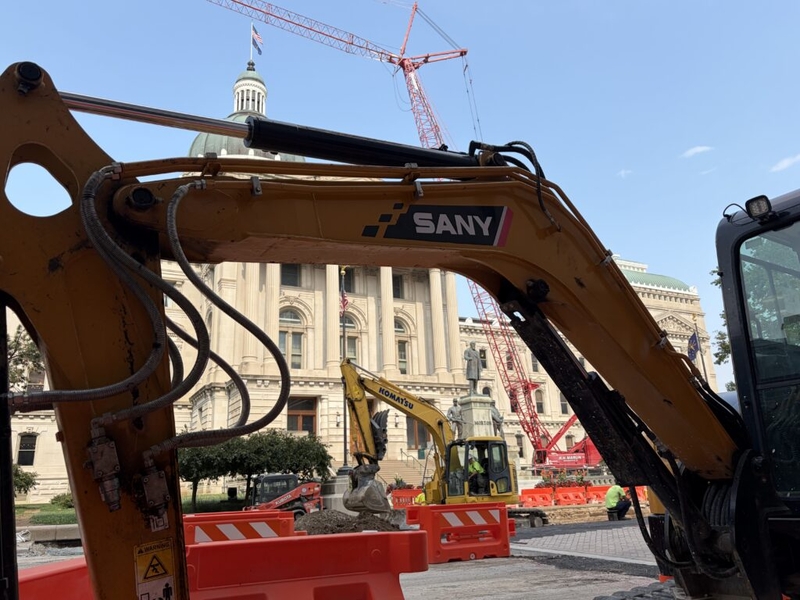
Construction continues on a local road outside the Indiana Statehouse in downtown Indianapolis on Tuesday, August 11, 2026. (Photo by Leslie Bonilla Muñiz/Indiana Capital Chronicle)
As Indiana enters its fifth month without collecting the gas taxes that pay for road and bridge improvements, builders say the state must reinstate the charges and find more revenue streams.
The coalition applauded Gov. Mike Braun for helping taxpayers — and backfilling transportation-funding accounts.
But, Indiana Constructors President Richard Hedgecock said, “We don’t want this temporary disruption to become the norm as Indiana funding sources diminish.”
“Our current funding projections will allow us to perform only the most basic maintenance without adding to the network that has brought our state so much economic success,” he said at a Tuesday news conference. “We have to continue to invest if we want to keep moving forward.”
Braun announces new energy emergency, continues Indiana’s gas tax suspension
Braun first suspended the state’s 7% sales tax on gasoline in April, following the spike in worldwide oil prices after President Donald Trump launched the war with Iran in February. In May, he added a moratorium on the excise tax of 36 cents per gallon.
Braun extended the tax breaks to the 120 days allowed under a 1981 state law, which empowered him to declare an energy emergency for fuel shortfalls and suspend enforcement of any state transportation laws that would hinder efforts to cope with the emergency.
Those months without collections are expected to cost local governments and the state $533 million in road-funding revenue. The first backfill payments out of the state’s General Fund went through last month.
But last week, Braun declared a new emergency — this one citing disruptions from Russia’s war in Ukraine and Canadian wildfires rather than the U.S. war with Iran — and announced the tax breaks would continue for at least 30 more days. They could be extended to early December.
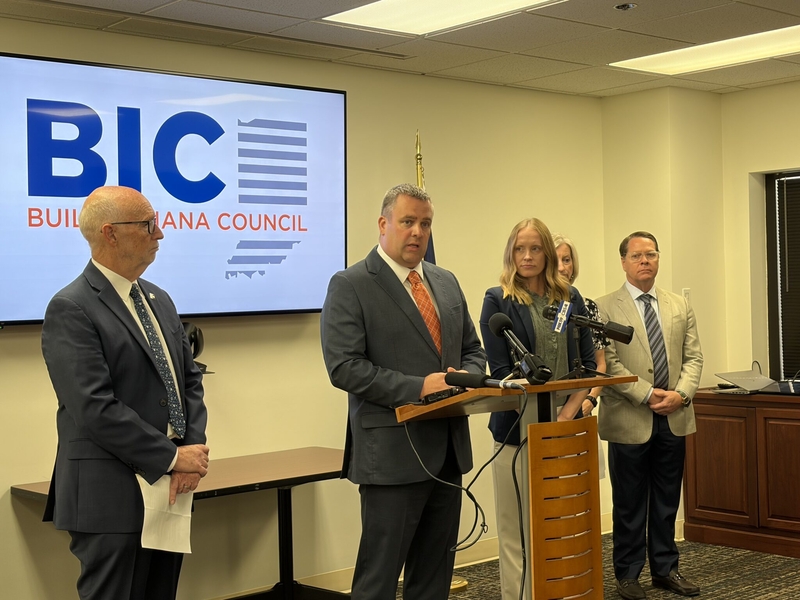
“We must acknowledge the importance of reinstating this funding mechanism to protect the vitality of Indiana’s transportation grid,” said Brian Gould, the executive director of Build Indiana Council. The organization represents road and bridge construction industry groups.
He emphasized that gas taxes are easy to collect: more of the money collected goes to infrastructure instead of administration, and hits sooner than other mechanisms.
“Those are dollars that go back out for a project 45, 60 days later, usually. We’re a cash-pay state,” Gould said. “We would hate to … suspend gas taxes into the long term and look at things like debt. That’s not a long-term, viable solution for our needs.”
He also called on leaders to diversify funding mechanisms and reduce dependence on fuel money.
Lawmakers focused on gas taxes in a 2017 law that added 10 cents to the 18-cent gas excise tax and baked in an inflation index raising it by a maximum penny annually. In 2023, they added a stopgap three-year extension to the annual index — but there’s little appetite now to continue those hikes.
Indiana’s excise tax rose to 37 cents per gallon on July 1.
“When we passed that road funding package then, we understood we had about a decade that we could continue to rely on fuel taxes, registration fees,” Gould said. “And then, at that point, they’re just not sustainable for the future.”
Analysts estimated in 2024 that Indiana would need to dedicate an additional $1 billion annually just to maintain local roads and bridges at their current conditions — and $1.8 billion to make improvements. State transportation officials have also warned of their own funding shortfall.
The Build Indiana Council and its members support another kind of user fee: tolling.
Braun’s administration is seeking federal permission to toll Interstate 70 in order to pay for widening all of the route to six lanes. According to the application, submitted last September, driving across I-70’s 156 miles would cost $15.60 for a car and $84.24 for a semitrailers.
“Six years ago, … we were told by the Indiana Department of Transportation (that) to get six lanes on I-65 and I-70 was about a 40-year process,” Gould said. “Six years later, now the number is 70 years. That’s that’s a whole ‘nother generation. That’s another lifetime. Hoosiers are not going to be that patient.“

Indianapolis, IN