What Minnesota 2026 primary voters are saying at the polls
Aug 11, 2026 | 1:43 pm ET
Description
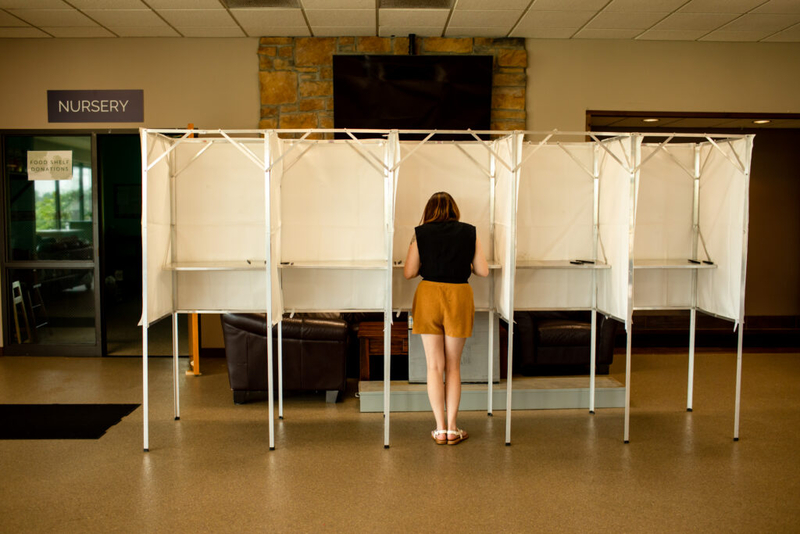
Voters cast their ballots at Bridgewood Church in Savage, Minnesota during the primary election Tuesday, Aug. 11, 2026. (Photo by Nicole Neri/Minnesota Reformer)
This article will be updated throughout the day with additional voter interviews.
A record number of Minnesotans — more than 240,000, by early Tuesday, according to the secretary of state — have already voted, which could propel Minnesota to a turnout record in a nonpresidential year. (In 2018, about 926,000 voters cast ballots, or 22.8% of eligible voters.)
Although he’s not on the ballot, Minnesotans are energized by the second term of President Donald Trump, and especially Operation Metro Surge and other ramifications felt here.
The biggest races on this primary Election Day — when the winners in each party will move on to the November general election — are for U.S. Senate and governor. A hotly contested Democratic-Farmer-Labor primary in the 2nd Congressional District, the state’s most competitive, could help determine control of the U.S. House. Eleven legislators face primary opponents ahead of the November election, when all 201 legislative districts are up for grabs.
Polls close at 8 p.m. Tuesday, and you can still vote even if you’re not registered yet. See here for more information.
The Reformer fanned out across the metro to talk to voters. Here’s some of what they told us so far.
Among the Cottage Grove swing voters
At Cottage Grove Elementary School, voters of both parties said they are looking for a change and want life in Minnesota to be more affordable.
Michael Hinderks, 71, said he is a moderate voter who doesn’t like either party, but he voted Democratic because he’s “not impressed” with House Speaker Lisa Demuth. Hinderks supports Sen. Amy Klobuchar for governor. He said he doesn’t think Demuth will be able to get a handle on the fraud crisis in the state’s safety net programs, while Klobuchar will root it out.
Asked if he considered voting for pillow mogul Mike Lindell for governor, Hinderks replied, “Oh God, no.”
“He needs to go away. He’s darn near a criminal. He should be arrested,” Hinderks said. “And Trump likes him.”
He said he doesn’t support the president, but he’s disappointed in Gov. Tim Walz and Attorney General Keith Ellison for failing to stop the fraud sooner, as that put a target on Minnesota’s back.
Verónica Arias, 54, voted for Demuth because her campaign’s supporters knocked on her door, and she liked Demuth’s anti-abortion message and promise to stop fraud.
Arias said she wants to see Minnesota become Republican to “protect the babies” and restrict African immigrants from coming into Minnesota, citing the East African defendants in recent government fraud cases.
Adam Igl, 43, said he thinks he voted for Kendall Qualls for governor but couldn’t remember why.
“I just came up with my list, but I don’t have a good memory of what I picked,” Igl said.
In Cedar-Riverside, Klobuchar faces resistance — from a Democratic voter
Salim Ali, 19, a second-year civil engineering student at the University of Minnesota, said he voted for Lt. Gov. Peggy Flanagan in her Senate primary against U.S. Rep. Angie Craig.
Ali said Operation Metro Surge, when the Trump administration targeted immigrant communities with 3,000 federal agents, motivated him to vote for candidates he believes will bring change.
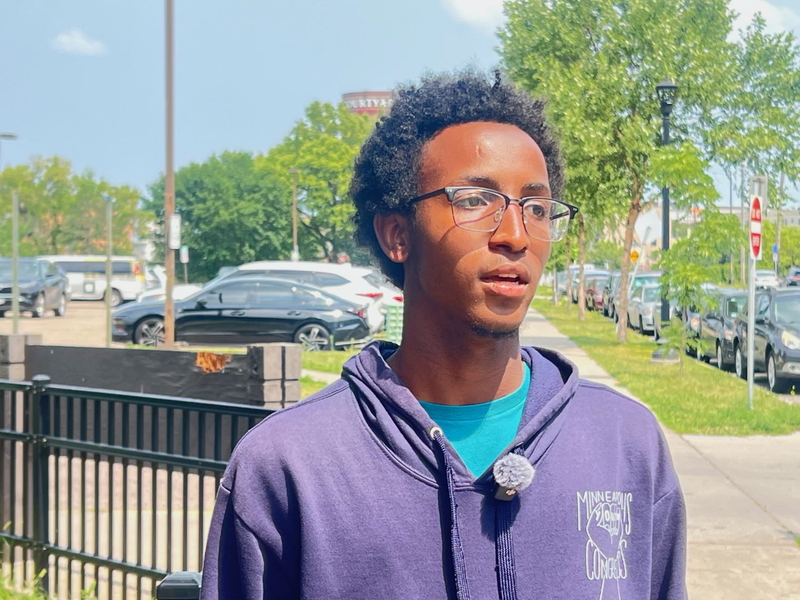
In one big high-profile race, Ali took a pass: “I did not vote in the governor race because Amy Klobuchar is pro-Israel, and I will not support a candidate who supports the killing of children,” he said, referring to the war in Gaza.
“I’m a taxpayer, and I do not want my tax dollars used to kill people,” Ali said.
He said Americans need that money for food, healthcare, and housing, instead of sending it overseas and starting wars.
In Burnsville, Republicans are divided on Trump’s second term
Patti Collamore, a 62-year-old self-employed Burnsville Republican, voted for Adam Schwarze for U.S. Senate and Demuth for governor.
She initially planned to vote for Michele Tafoya, but a friend convinced her to vote for Schwarze instead, referencing Tafoya’s more moderate stance on abortion. Tafoya, a retired sports broadcaster, is among the most high-profile abortion rights supporters in the GOP. Schwarze’s veteran bona fides are a plus in his column, Collamore said.
Though she voted for Trump in 2024, she’s been disappointed in how his second term has gone, taking particular issue with the Iran war.
“I prayed going into it that he was going to act like a grownup, which he hasn’t,” Collamore said. “So it’s very upsetting.”
Mark Heaner, a 72-year-old Home Depot employee, brought to his Burnsville polling location a marked-up sample ballot with notes and grades for each candidate, compiled based on their answers to a questionnaire he found online.
He landed on Mike Lindell, the MyPillow mogul, as his choice for governor: “Everybody else seemed to be aimless.”
For U.S. Senate, he went with the Republican-endorsed Schwarze.
Heaner has been pleased with Trump’s second term, especially his decision to attack Iran.
“Were (opponents of the war) going to just wait until somebody nukes us, nukes Washington and New York and Minneapolis, and then go, ‘Oh, gosh, we should have done something,’” Heaner said. “It’s stupid to do that.”
An Eagan voter fears Israel’s influence, but still backs Trump
Jessica Gonzalez, a 45-year-old who works in real estate, voted for Demuth for governor and couldn’t remember who she picked in the U.S. Senate race — though she was certain it wasn’t any of the three top candidates.
Her top issues?
“Illegals. Fraud. That’s it — and taxes.”
Although she’s still supportive of Trump, she’s grown “leery” of the Iran war.
“I think he has a plan,” she said. “I see the plan, but I’m starting to debate if the plan is for us or for Israel.”
An immigrant goes for pillow mogul in downtown Minneapolis
Daniel Stoica, 71, a downtown Minneapolis resident, voted for Lindell for governor because he was looking for a Republican who can win. Trump’s endorsement wasn’t a major draw, he said. Instead it was the promise of having a Republican governor break the 20-year losing streak.
“You can’t go with Democratic power for life,” Stoica said.
Stoica, who immigrated from Romania 35 years ago, said the Republican Party gives him hope that the country won’t become communist. (Romania suffered under the brutal communist dictatorship of Nicolae Ceaușescu until his execution in 1989.)
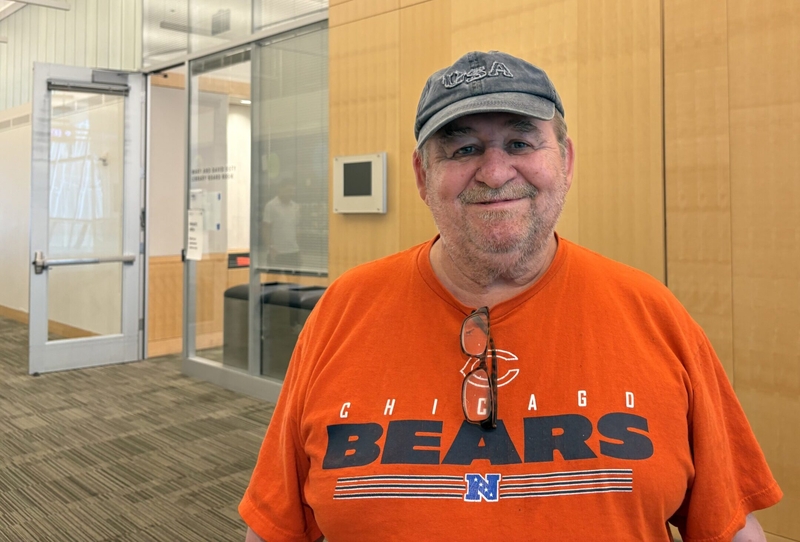
Stoica said he wants the youth to enjoy Minnesota the way he did, under a Republican governor, instead of Democrats, who are “not good” for safety and “steal the money.”
Asked why he chose Lindell over the two other Republican nominees, Stoica said Demuth “has some problems.” Stoica did not say anything about GOP-endorsed candidate Kendall Qualls.
Also downtown, Wendy Morris, 71, a northeast Minneapolis resident, voted for Craig for U.S. Senate because of her bipartisan experience.
A Flanagan voter on Operation Metro Surge: ‘Appalling’
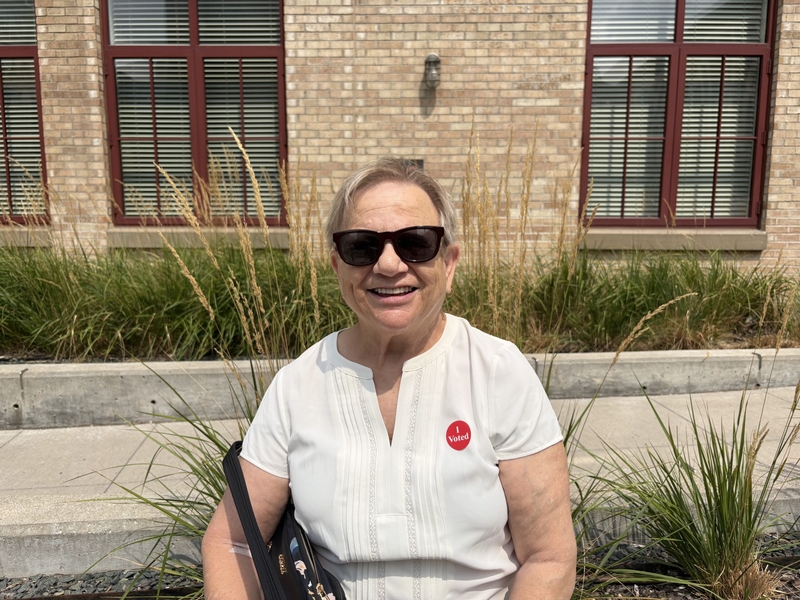
Sarah Bahr, 42, a costume and scenic designer at a theater, said she voted for Klobuchar, Flanagan and U.S. Rep. Ilhan Omar.
After seeing how the Trump administration targeted Democratic states, immigrants, academics, and the art community, she wanted to vote for candidates who would protect these communities and their programs.
“I’m in the Cedar-Riverside neighborhood, and what ICE did to my neighborhood was unforgettable,” Bahr said.
She called Operation Metro Surge “appalling” and said no one should have to go through that again.
In St. Paul, voters want to oppose Trump, first and foremost
“I feel like the country’s going the wrong direction, and we’re just handing the country to billionaires,” said Ying Jin, a 42-year-old physician. “We need to right the ship and make the government for the people, and not for the people in power.”
Jin voted for Flanagan in her U.S. Senate primary against Craig. He said he was troubled by Craig’s hawkish voting record on immigration enforcement.
Flanagan and her supporters have attacked Craig for voting for the Laken Riley Act, which requires the detention of undocumented immigrants accused of certain nonviolent crimes. Craig has since said that she would not have voted for the bill if she had seen Operation Metro Surge coming.
Other voters echoed the importance of resisting Trump, but liked Craig for her electability in November.
“I think, to win, we need someone that maybe doesn’t have that baggage with them, like Flanagan does,” said Janet Vantassel, a 72-year-old retired librarian, citing the widespread fraud of safety net programs discovered during the tenure of Gov. Tim Walz, for whom Flanagan has served as lieutenant governor.
Tim Dennis, a 76-year-old retired orthotist, said, “(Craig) is a little bit more conciliatory as far as being able to achieve some compromises — and I think there’s still room for that in government.” He also said he thinks Craig is the DFL candidate best positioned to win swing voters in November.
Thomas Keefe, a 74-year-old retired university professor and attorney, was going to vote for Flanagan, but changed his mind and voted for Craig. This was partially because of her endorsements — first lady Gwen Walz supported Craig. The governor didn’t endorse any candidate. Keefe said his decision came down to Craig’s ability to win against Republicans in the fall. Democrats’ electability was Keefe’s No. 1 issue in this election.
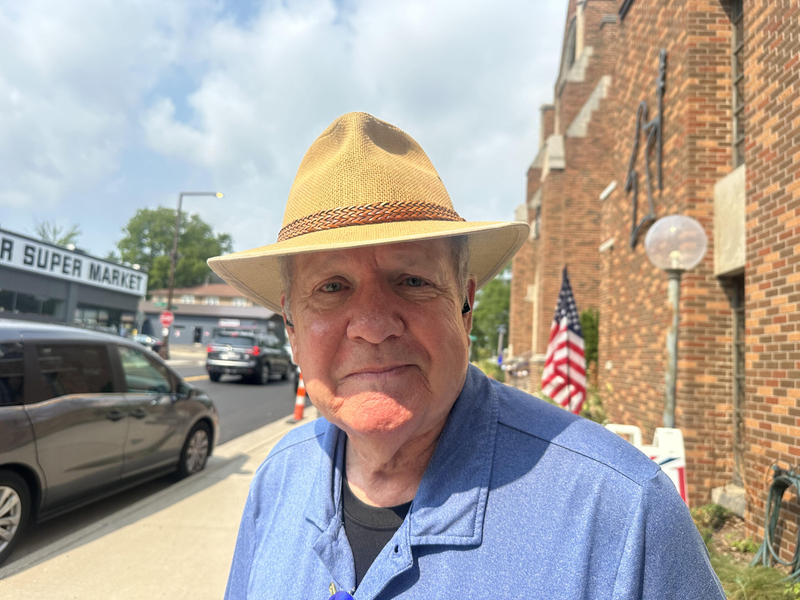
“In Donald Trump, we have a reprehensible person leading the Republican Party,” Keefe said. “I find all of his supporters, particularly in the House and the Senate, to be enablers of a sick man. It’s imperative for our government that the Democrats take control of, if not both houses, at least one.”
Keefe said Democrats are more likely to respect human dignity regardless of identity.
“Trump has given license to about 30% of the people in this country to be racist and misogynist and no longer to hide it,” Keefe said. “We are just as racist and misogynistic as we were 50 years ago, and that breaks my heart. I thought we were going to rise above that.”
Operation Metro Surge motivates in Apple Valley
Carson Medcalf, a 64-year-old Apple Valley hardwood flooring installer, was motivated to vote in his first primary election after Operation Metro Surge; his wife is an immigrant from Vietnam, and they were terrified all winter.
He showed up to vote for Flanagan over Craig in the DFL primary for U.S. Senate.
“I like Angie (Craig), but I didn’t like her support of ICE, and Flanagan’s a little bit more progressive,” Medcalf said.
In the three-way DFL race to replace Craig in the U.S. House, Medcalf voted for state Sen. Matt Klein over state Rep. Kaela Berg and former state Sen. Matt Little, because Klein is a doctor and seemed prepared to tackle healthcare costs, one of Medcalf’s top priorities.
“I just thought the Klein ads were better,” Medcalf said. “They were more descriptive of what he was going to do.”
Robbinsdale in the progressive lane
Nicholas Erdos-Thayer, 40, said he prefers candidates who “prioritize people over corporations.”
Erdos-Thayer voted for Flanagan over Craig in the Democratic primary for Senate. In another closely contested race, he voted for Rep. Cedrick Frazier, the DFL-endorsed lawmaker running against former acting U.S. Attorney Anders Folk and others in the technically nonpartisan race for Hennepin County Attorney.
Standing next to his bike outside his downtown Robbinsdale polling place, Erdos-Thayer said improving multimodal mobility was a top local priority.
“Generally speaking, we need to do more regarding public transit, bike and pedestrian infrastructure,” said Erdos-Thayer, an at-large member of the Robbinsdale Parks, Recreation, and Forestry Commission who worked on a recent update to the city’s bike and pedestrian plan.
Nick and Allie Heid, both 32, also biked to the polls. They chose Frazier, Flanagan — “enthusiastically,” Nick said — and Omar, whom Allie called “a very strong representative” who’s responsive to constituent needs.
“We like her stance on ICE … to prosecute the people who have deported our neighbors,” Allie said.
Both said Klobuchar — who won the DFL endorsement for governor and is the presumptive nominee — was a reluctant choice.
“(I’m) not thrilled about the governor option; I think she is a little bit too cozy with Republicans,” Allie said.
Nick, an energy auditor with a “non-utility-aligned” sustainability nonprofit, called Klobuchar a “fossil fuel capitalist.”
He said he prefers candidates serious about addressing climate change.
“Are we going to do something,” on climate, he began — “or are we going to keep not doing anything,” Allie finished. Both want candidates committed to police reform, protecting immigrants and repelling attacks on women’s rights and healthcare, she added.
Both are optimistic about the November elections; Nick said he hoped for “a nice wave ahead,” propelled by progressives.
“Minnesota has the potential to be a progressive hub — a champion for climate, protecting immigrants, and women’s rights and health,” Allie said.

Saint Paul, MN