Deficient data means Montana FWP should stop wolf hunting
Aug 06, 2026 | 7:49 pm ET
Description
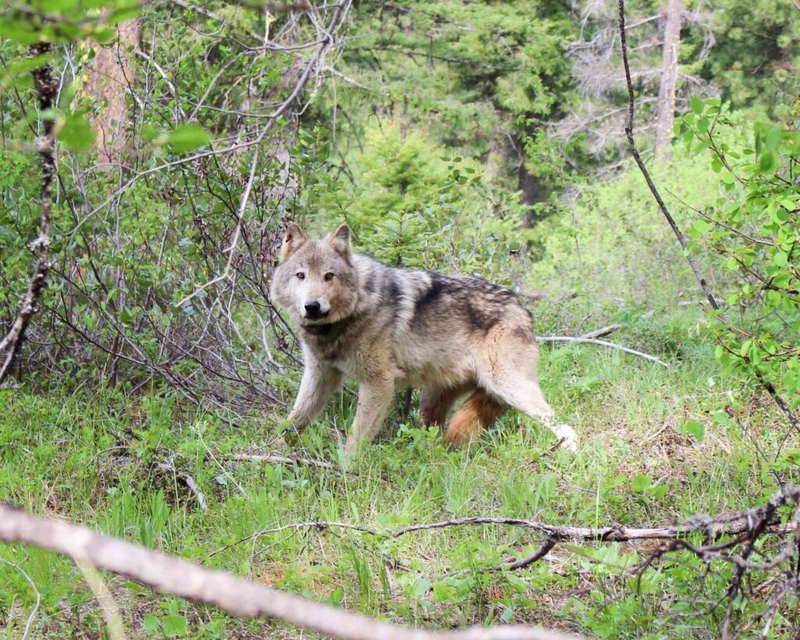
A gray wolf. (Washington Department of Fish & Wildlife)
How many wolves are left in Montana?
Nobody knows.
Montana Fish, Wildlife and Parks admitted that its iPOM counting method over-estimated wolf numbers for years. Instead of 1,094 wolves, FWP’s revised iPOM 2.0 method now estimates that Montana’s population is 725 wolves—34% less.
Longtime wolf researchers say the population is closer to 400 wolves.
Either way, the tipping point has been breached; wolves are in perilous decline. The average pack has plummeted to four wolves, well below a healthy, functioning pack size.
Yet FWP is proposing a quota of 250 wolves and 20 wolves per person.
In 2025, FWP recorded 328 wolf mortalities including the 247 killed by hunters and trappers. and those killed by vehicle collisions and other causes.
If that scenario is repeated with a 250 quota, there will be 397 survivors. If the reality is 400 wolves left on the landscape, wolves will be effectively exterminated.
By law (Montana Code Annotated 87-1-901), 450 wolves must be maintained in Montana to ensure 15 breeding pairs. This rule is the core foundational benchmark of the Montana Gray Wolf Conservation and Management Plan 2025.
The history of exaggerated numbers and quotas should trigger the Commission to suspend wolf killing to keep wolves at or above the legal number. This includes not giving FWP and USDA Wildlife Services carte blanche to kill an unlimited number of wolves, as proposed.
FWP’s deeply flawed iPOM was built on four bad models and the iPOM 2.0 does not improve it. Information is hidden; FWP can’t verify it. FWP no longer radio collars wolves and does not collect scat (markers) for genetic individual identification. The iPOM is riddled with bias and not updated with annual variables. FWP depends on phone surveys with game hunters six weeks after hunting season. This means coyotes are mistaken for wolves, the same wolves are counted multiple times, locations are sketchy, packs are guessed at. Relying on anecdotal sightings recollected by hunters untrained in data collection is the antithesis of reliable research.
FWP chose not to adopt a method similar to Italy’s most accurate Integrated Spatial Model, which uses multiple lines of evidence and non-invasive inputs to determine individual genetic information, pack size and population estimates. Instead, FWP uses numbers which are wrong and irrelevant because wolf survival depends on family social structures and individuals holding families together.
Wolves are held in the public trust. But as trustee, FWP pays only lip service to societal values, ignoring 74% of Montanans who want wolves on the landscape and hundreds of people who speak out against high quotas and killing methods that amount to persecution.
As the top apex predator, wolves provide humans healthy ecosystems by “culling weak deer and elk, suppressing coyotes that prey on calves/sheep, reducing disease transmission, restoring streamside vegetation that supports songbirds, beavers, trout and insects and reducing deer-vehicle collisions,” wrote Dr. Robert Crabtree, chief scientist, Yellowstone Ecological Research Center. “Naturally formed, larger packs are the key indicator of a healthy ecosystem.”
Deficient data, canine distemper, habitat destruction and catastrophic wildfires, heat and drought signal doom for this keenly intelligent, valuable species.
This is no time for recreationally killing 250 wolves struggling to survive.
At the Aug. 19 meeting, the Montana Fish and Wildlife Commission can and should place a moratorium on wolf hunting and trapping until a transparent, reliable method of ascertaining wolf packs and wolf population health is established. It is the right thing to do in a time of great uncertainty.
Poten is the co-founder and board president of Footloose Montana and Heister is the co-founder and executive director of Footloose Montana.
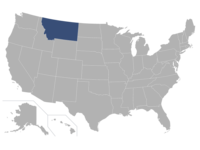
Helena, MT