As Meta data center expands, advocates push harder for transparency
Aug 05, 2026 | 5:33 pm ET
Description
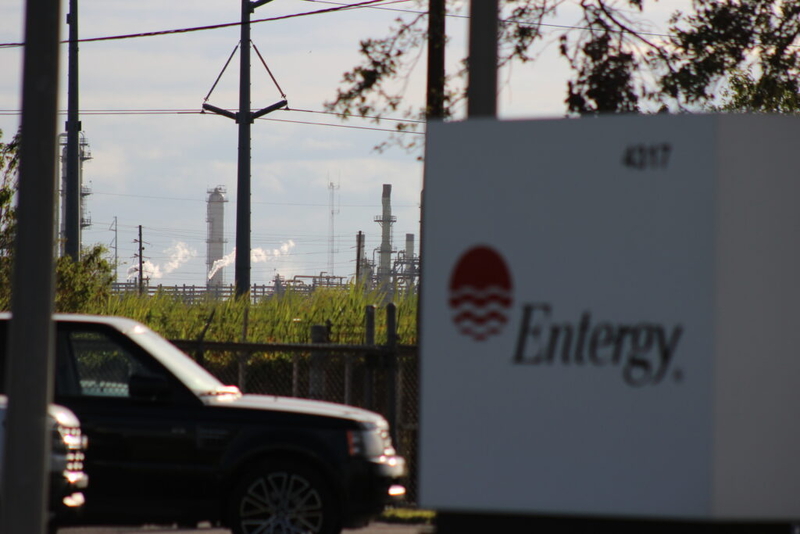
Smoke rises from distant stacks at Entergy's power plant in Reserve, Louisiana, on Wednesday, Nov. 10, 2021. (Wes Muller/Louisiana Illuminator).
Consumer, science and environmental advocates are pushing harder for transparency from Meta and the utility that will power its expanding Hyperion data center in Northeast Louisiana.
The Alliance for Affordable Energy and Union of Concerned Scientists held a joint news conference Monday to address what they consider an ongoing lack of public information available about the sprawling data center campus in Richland Parish and Entergy Louisiana’s plans to meet its massive electricity needs.
The latest updates to its footprint call for more than 10 million square feet of building space on a site covering 3,650 acres. It will require 7.5 gigawatts of electricity to operate — enough to power up to 7.5 million households.
The data center is among the largest industrial development deals in Louisiana history, and much of its key aspects have been cloaked through nondisclosure agreements state and local leaders have signed with Meta. NDAs reached in recent months under the Landry administration have severely limited what elected officials will say about major projects around the state, including the Amazon data center campus in Northwest Louisiana and the Hyundai steel mill near Donaldsonville.
“Louisiana officials and industry have used secrecy and deals made behind closed doors to move projects forward before communities are even aware or have a chance to object,” Logan Burke, executive director of the Alliance for Affordable Energy, said at the news conference.
“The process and the purpose are clear: Hide the ball until it’s already in the goal,” she added.
Burke’s group and others are asking state regulators to further scrutinize the proposals from Meta and Entergy.
The Alliance for Affordable Energy and Union of Concern Scientists submitted written testimony and exhibits Friday to the Louisiana Public Service Commission that are critical of the power generation plans for the Hyperion campus. The documents call into question Entergy’s projections and claims for its proposal to build seven additional natural gas-powered turbines — in addition to the three originally planned — to power the Meta data center.
The plans are on an expedited schedule as part of Gov. Jeff Landry’s Lightning Speed Initiative to fast-track the utility regulatory process in the name of economic development.
Specifically, the two groups say Entergy’s claims that ratepayers and the public will benefit from the additional power plants are unrealistic. Paul Arbaje, a senior analyst with the Union of Concerned Scientists, said Entergy’s projections are “based on a flimsy analysis that leaves little to no room for deviating from expectations.”
“Entergy has deemed so much of the information in these filings confidential,” Arbaje said, “but also because they indicated … they haven’t even quantified themselves the impact this project will have on an average residential electric bill.”
A spokesperson for Entergy said the company is currently reviewing the groups’ submissions to the Public Service Commission and plans to respond to regulators by an Aug. 14 deadline.
Meta did not respond to multiple emails requesting comment.
Entergy and Meta have said in prior filings with the Louisiana Public Service Commission that a fast-track regulatory process for the natural gas plants is justified because the job creation from the projects will benefit the public.
Advocates are also suspicious of this claim.
“Meta has provided no information regarding the number of permanent jobs and refuses to tell whether these jobs will be in Louisiana or remote or will be part-time or full-time,” said Susan Stevens Miller, a senior attorney at Earthjustice who filed the testimony for the Alliance for Affordable Energy and Union of Concerned Scientists.
“There’s really no way of knowing how many jobs will be permanently created by these data centers,” she added.
In last week’s Public Service Commission filings, both advocacy groups cautioned there is no guarantee from Entergy that its other utility customers won’t end up bearing some portion of the cost for the $15 billion being spent to provide power to the Hyperion campus.
Meta and Entergy have promised to ensure Meta covers all power service costs throughout the end of its contract with Entergy.
A spokesperson for Entergy reiterated that the company expects Meta’s coming to Louisiana means “customer bills will be lower than they otherwise would have been … generating approximately $2.6 billion in savings for Entergy Louisiana customers over the next two decades.”
The advocacy groups said they have little faith in an executive order the governor issued earlier this year to protect ratepayers from the risk of increased costs from the data center’s increased energy demand. President Donald Trump’s ratepayer protection pledge connected to data centers and their power needs, made soon after Landry’s executive order, carries the same weight for the groups.
“The problem is this executive order has roughly the same force of law as does the president’s ratepayer protection pledge, which is to say zero,” Burke said.
The alliance and scientists’ group aren’t alone in their concerns. The Sierra Club also submitted testimony Friday to the Public Service Commission questioning the lack of transparency and the potential costs for other ratepayers.
“Entergy’s proposal to build even more gas plants and transmission for Meta’s Hyperion project is a huge risk to existing customers,” Tony Mendoza, a senior attorney for the Sierra Club’s Environmental Law Program, said in a news release.
The Sierra Club is urging the Public Service Commission to significantly change Entergy’s proposal to make Meta more directly responsible for costs associated with the buildout of the new power plants.
Baton Rouge, LA