Pro-data center industry group behind ad campaign in 7 states
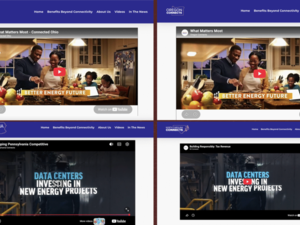
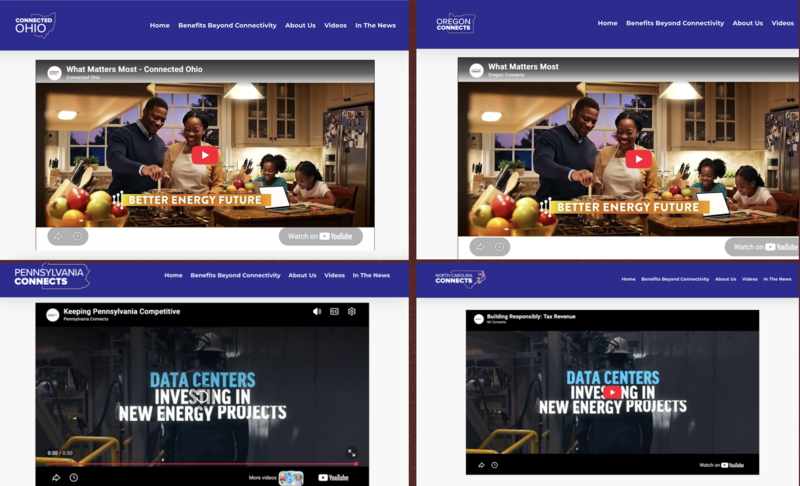
As community pushback against data center construction grows, new commercials are cropping up in an attempt to improve public opinion. If you live in Indiana, North Carolina, Ohio, Oregon, Pennsylvania, Texas or Virginia, you might have seen the 30-second ads on social media or TV.
The ads are running in states where a growing number of local governments are considering and passing policies meant to slow data center growth. For example, a group called Oregon Connects registered as a nonprofit business in the state. This came just days before the state legislature passed a one-year pause on a popular tax incentive program for data centers.






In Episode 40, you’ll hear from Alex Baumhardt, a senior reporter at the Oregon Capital Chronicle. She has been covering who is behind the pro-data center ads and how communities are responding.
You’ll also get a weekly news wrap-up from Evening Wrap newsletter writer, Danielle Gaines and Daybreak newsletter writer Madyson Fitzgerald. They got you covered on the latest on: the latest wildfires in the West, Indiana’s “Medicaid churn”, and how the prediction markets offered some insight to Kansas’ primary races.
Episode produced and edited by Mallory Cheng. Music for Stories From The States composed by David Singer.
Got questions? An episode idea? Email us at [email protected].
Subscribe to Stories From The States on Apple Podcasts, Spotify and Youtube.
Photo: Screen grabs of similar videos, clockwise from the left, from Connected Ohio, Oregon Connects, Pennsylvania Connects and North Carolina Connects. The groups were founded by leaders at the Data Center Coalition, a nonprofit data center advocacy group backed by large tech companies. (Collage by Alex Baumhardt/Oregon Capital Chronicle)
Stories From The States is a production of States Newsroom, the nation’s largest state-focused nonprofit news organization, with reporting from every capital. At this pivotal moment in American democracy, our veteran journalists from all 50 states are reporting the consequences of government decision making. By zooming in on one story each week, Stories From The States contextualizes and gives a human voice to what is happening now.
Transcript was created using an automated software.
Chris Fitzsimon
This is Stories From The States. I'm Chris Fitzsimon. Here at States Newsroom, we know there's a lot going on around the country in every state capital. Thank you for being here. This week, we're jumping in with the news of the week from around the country. First, a handful of states held their primaries, and some are still talkin...
Transcript was created using an automated software.
Chris Fitzsimon
This is Stories From The States. I'm Chris Fitzsimon. Here at States Newsroom, we know there's a lot going on around the country in every state capital. Thank you for being here. This week, we're jumping in with the news of the week from around the country. First, a handful of states held their primaries, and some are still talking about redistricting as we inch closer to the November midterms, we'll also hear about the hundreds of 1000s of Indianans who lost access to health care coverage in the so-called Medicaid churn. And you may have seen Kalsi or Polymarket become really popular around sports betting, but what if I told you in Kansas those same prediction markets helped give insight as to who is going to win the primary races. Later in the show, we're diving into who is behind a pro data center ad campaign in seven states. It's trying to counter common critiques of data centers. We'll chat with Oregon Capital Chronicle senior reporter Alex Baumhardt about that. But first, let's check on the news with our two amazing States Newsroom newsletter authors, Danielle Gaines, who writes the Evening Wrap, and Madyson Fitzgerald, author of Daybreak. Hi, Danielle and Madyson. How are you guys?
Madyson Fitzgerald
Doing good. How are you?
Danielle Gaines
Hey, Chris.
Chris Fitzsimon
Good. Well, let's talk about the week. A lot of travel, a lot of news, a lot of movies. So somebody said the new Spider-Man movie was good. All the publicity has been about the Odyssey.
Madyson Fitzgerald
I've been seeing a little bit of both, but Spider Man was really, really good. I'm also just like a huge Marvel fan, so I've been following it since 2000. Whenever when the first Iron Man movies came out, but I did see that. Haven't seen The Odyssey yet, but it's definitely on my list.
Danielle Gaines
I am in a different era of life because I have seen Moana and Toy Story Five. It was fun, though.
Chris Fitzsimon
Well, see, there you go. I'm old enough to remember Superman. I mean, Spider Man way back on TV without any special effects, so that's bad.
Danielle Gaines
Yeah.
Chris Fitzsimon
But a quite a crazy news week. I feel like we could say that every week. Talk about healthcare, fires, elections. Let's start with the fires. It's really astonishing what's going on.
Madyson Fitzgerald
Yeah, it's really honestly kind of terrifying, and this is kind of the this seems like a yearly occurrence now, where we're running into really heavy wildfires. But this year, wildfires are raging along the West Coast in several states, including Oregon, Montana, Idaho, Utah, and Washington, and state officials are kind of struggling to fight back. And so, in Utah, raging wildfires have burned enough land in the backcountry to match the size of Salt Lake County this year. And earlier this week in Washington, the three fires that are part of the Spokane Complex have scorched more than 10,000 acres, according to figures on Monday night, and initial estimates indicate that around 700 homes and other buildings had been burned by then.
Danielle Gaines
That's terrible.
Chris Fitzsimon
And and we had some coverage of the folks who were fighting them and and and how their job is going, Danielle.
Danielle Gaines
Yeah. So a few weeks ago, we talked about all the the smoke that was spreading from Canada at that time, and now we've got the smoke homegrown, I guess. And you know, the president was coming down with some really harsh rhetoric about like Canada must pay. And it's interesting because the president's rhetoric has now shifted toward American firefighting techniques. So, the Trump administration is encouraging really aggressive fire intervention tactics, which wildland firefighters and experts say could put firefighters at risk. You're getting closer. You're in more dangerous and severe situations. And we have had four firefighters perish this year.
Chris Fitzsimon
Well, it feels like I wasn't long ago, although it is a long time ago now, where he was talking about all we need to do is rake the forest and open the tap. Remember that hole? I don't even know what that was. Open the spigot.
Danielle Gaines
Yeah, yeah, and well, and there's not much water in the West either, which both Mady and I wrote about this week with the Colorado River agreements. So, a lot of fire, not a lot of water.
Chris Fitzsimon
Yeah, it's really interesting. Well, now that we've moved from, I guess in many cases a natural disaster, although in some of them I suppose there's human involvement to something that is definitely human: the battle over how to take care of folks struggling, part of the safety net with healthcare coverage, Indiana and Medicaid.
Danielle Gaines
Yeah, so we had some great reporting this week out of our Indiana newsroom about kind of the sheer magnitude of of Medicaid changes there. So hundreds of 1000s of Indiana residents have lost Medicaid coverage over the past few years. So that's partly due to shifting state and federal eligibility rules. It's partly due to increasing costs and it is partly due to what's called the Medicaid churn, and we wrote a great story looking at this. And so, the Medicaid churn is a term that's used for folks who get knocked off of Medicaid, re-enrolled, knocked off reenrolled, and have a lot of instability in their life, not because they're not eligible, but just because of the the paperwork and kind of the procedure becomes all encompassing, completely time consuming. We had a story about a mom to a five year old who said she worked around the clock to try to restore his coverage.
Chris Fitzsimon
Yeah, it's a cynic I think would say that some of the the burdensome requirements are not too subtle effort to actually decrease enrollment or to save money.
Danielle Gaines
Yeah, that mom. It was really interesting because her her son has some pretty serious disabilities, requires a lot of help, and she had been proactive and changed their address with the state. The state had mailed them some documents to their new address, but mailed their re-enrollment form to the prior address, and so she didn't know that they needed to do an eligibility. She also at one point got a document that said she needed to do an asset verification for him, and she was like, "He's five. There's no asset to verify. But we had a lot of kind of real people stories that really kind of illuminated the loss. There, 343,000 people were disenrolled in one year, and it's almost 700,000 over the last three years.
Chris Fitzsimon
That's amazing, and and I guess Madyson, there's more coming. Work requirements, the big beautiful bill, the so-called the effects of that. It does. We've been. It feels like more is to come.
Madyson Fitzgerald
Oh yeah, for sure. And now that this year's legislative sessions are kind of wrapped up, state lawmakers are expected to revisit Medicaid policy in 2027 when they write Indiana's next two-year budget. For Indiana, they're entering the budget cycle with a multi-billion-dollar surplus and growing questions about how to reduce the unnecessary coverage losses. But what also awaits is that over the next 18 months, Indiana is expected to implement a series of state and federal policy changes that will require more frequent eligibility renewals with additional verification and for many adults, new work or community engagement reporting requirements to maintain coverage. And this is, as Danielle mentioned, something that a lot of our newsrooms have been talking about this week. I saw a story earlier from Louisiana, and it was saying that you know there was a huge drop in SNAP numbers, and it turns out a lot of it wasn't that these people were in a situation where it was like a procedural error, where something was like they was missed, and it's it's a lot of stories where either for Medicaid or for SNAP, it's kind of these like small things that are that are really taking people off of these large rolls, and so I think it's something that we'll continue to see over the next couple of a couple of months, and I'm also excited for State's Newsroom simply because we have so much robust coverage on this area, and I also want to shout out the new section that we have on our website that's dedicated to Medicaid and SNAP stories.
Chris Fitzsimon
Yeah, that's on newsfromthestates.com. You guys are doing a great job of of highlighting all that. Well, for political junkies, this was quite a week. Even though you think normally late summer, getting into August, not that big a deal in the political world. Everybody's looking toward November, but this was quite a primary week.
Madyson Fitzgerald
Yeah, it was. There was a lot of primaries this week, and that's the exciting part, I think, because otherwise summer does tend to get a little bit a little bit dry in terms of the political landscape. But this week there were primaries in five states, and there will also be a primary on Thursday in Tennessee and on Saturday in Hawaii, but so far out of the results that we've got, one of the biggest stories came out of Michigan, where after a grueling primary that saw attacks for Republicans and establishment Democrats alike, Abdul El-Sayed has won in his race to be the party's nominee to face Republican former U.S. Rep. Mike Rogers in the November general election, and so Bernie Sanders, if you saw, was very very excited about this. He told reporters on a post August 4 election press call that "his revolution has finally come to Michigan", and the candidates that he had endorsed, including El-Sayed, Donovan McKenny in District 13, and Will Lawrence in District Seven, they all won their primaries, so it was a very exciting week for Bernie Sanders.
Danielle Gaines
Yeah, he called the El-Sayad victory the most extraordinary victory in modern American politics. I thought that was quite the statement.
Chris Fitzsimon
I mean, that was a victory. I'm not. That seems like a tiny bit hyperbolic, but the other thing I thought was interesting. I mean, there's a million things to take from this, of course, and all the political analysts have been doing this. I was also struck by, I actually, from following this coverage fairly not closely, but you know, fairly closely, I thought that El-Sayed might win by double digits. The polling was sort of off the charts. It just sort of reminds me as we go into the midterms that we are still struggling as a sort of the nobody's really caught on to polling in this new era. I mean, some people have, but it does feel like there's everybody has to be careful about what the polls show and what to expect. And speaking of elections, the way we vote for people or redistricting, Danielle got some attention.
Danielle Gaines
Oh yes, well yes. This week I was consumed with news from my home state of Maryland about future elections. So, the Maryland General Assembly had a special session this week. It is an issue that goes all the way back to my time as a reporter and editor at Maryland Matters. So, I was following it really closely, and this is a special section, a special session that was held that changes the Maryland Constitution to make clear that congressional district boundaries will be drawn by federal law and U.S. Constitution, and that is because a judge in 2022 overturned Democrats' proposed map. Maryland has a Democratic supermajority, and they created an 8-0 congressional district map. It was struck down. It was struck down because the judge applied the state standards for legislative districts to those congressional to those congressional districts. So they have to be compact and contiguous, and all of these kinds of things. Democratic lawmakers say that it's an overreach, and that they should be able to draw federal districts according to federal rules, which don't have anything about contiguity, compactness, etc. So this is a constitutional amendment. It's a question that will probably go before voters in November. The deadline for the lawmakers to pass this was Wednesday. They did it late Tuesday. There's going to be a lawsuit if it hasn't already been filed by the time you hear this, and so there's a real kind of timing issue about ballot access for that. But they did rally behind it.
Chris Fitzsimon
Yeah, it's interesting how I mean so much of who's in Congress, who's in state legislatures, unfortunately, is decided by the folks who draw the lines and the courts, and I think it's hard for folks to keep up, but it's very important.
Danielle Gaines
Yeah, I mean, this was an issue that really, really deeply divided Democrats in the state of Maryland during the regular session because ultimately their goal is what some would call an undemocratic one-to to write lines in such a way that would preclude a Republican from getting elected in the state. And even though it's a deeply democratic state, it's not a 100% democratic state, and so it really caused some consternation.
Chris Fitzsimon
Yeah, and and to be clear, to do it in the wake of the president kicking it off in Texas, like this whole raft of redistricting, everybody was being as partisan as they could.
Danielle Gaines
Right. And that's the argument. And so voters won't actually be voting on any lines right now. They're just basically allowing for that language change, which would then allow the state to get in on redistricting next year if they wanted to.
Chris Fitzsimon
All right. Now we come to the part of our discussion I look forward to the most. Of course, not that I don't enjoy the news, but Madyson, tell us about one last thing or one more thing.
Madyson Fitzgerald
Yeah. Well, this week with all of the primary elections going on, there's been one story that's really stuck with me, and so this is before all of the elections on Tuesday. But in Kansas, they had a story about Polymarket and Kalshi, the prediction markets. They basically wrote that online prediction markets ahead of Kansas's primaries showed who was favored to win key races and offered a glimpse into voter behavior before the polls closed. Polymarket and Kelsey, the two largest platforms where bettors can weigh the likelihood of candidate success, show that people at that time-this was Monday-had wagered almost $800,000 on Kansas primary races. That's a lot of money, in my opinion.
Chris Fitzsimon
That's a lot of money.
Danielle Gaines
So much.
Chris Fitzsimon
It's so bizarre.
Danielle Gaines
Yeah, and one thing you know to note, I guess, when we have less polling or when people are skeptical of polling, is that the prop bettors were correct. So they had the correct outcomes in the governor's race and in the U.S. Senate race, and perhaps it's a new way to keep track of public opinion.
Chris Fitzsimon
Wow! Well, thank you both. Quite a week. We really appreciate it.
Danielle Gaines
Thank you
Madyson Fitzgerald
For sure. Have a great weekend.
Chris Fitzsimon
To stay up to date on the latest news happening in the states, subscribe to Daybreak and Evening Wrap, you can subscribe at newsfromthestates.com/subscribe. If you live or have visited Indiana, Ohio, Oregon, North Carolina, Pennsylvania, Texas, or Virginia, you might have seen the 30-second ads on social media or television. They sound like this:
Ad
From homes to hospitals to businesses, Oregon's data centers are unlocking a smarter power grid for our communities.
Chris Fitzsimon
As community pushback against data center construction grows, new commercials are cropping up in an attempt to improve public opinion. The ads are running in states where a growing number of local governments are considering and passing policies to slow data center growth, like over in the West, a group called Oregon Connects registered as a nonprofit in the state. This came just days before the state legislature passed a one-year pause on a popular tax incentive program for data centers. In a moment, Alex Baumhardt, senior reporter at the Oregon Capital Chronicle, will join us. To share who exactly is behind the pro data center ads, we'll be right back.
Moses Esheit
At a time when so many communities are losing their local news outlets, States Newsroom is filling a gap. We are now the nation's largest state-focused nonprofit news organization, with reporters based in every state capital and Washington D.C. But we can't do it without your support. Your contributions allow us to produce award-winning journalism and deliver it to you for free, no pop-ups, no paywalls. This is a crucial time to support local journalism, and every bit helps. To give, go to statesnewsroom.com/donate.
Chris Fitzsimon
Alex Baumhardt is a senior reporter at the Oregon Capital Chronicle. Hi, Alex.
Alex Baumhardt
Thanks for having me.
Chris Fitzsimon
Well, let's jump in now. So much to talk about with data centers, but you've written about something that has popped up on the scene in a lot of states. Tell us about Oregon Connects.
Alex Baumhardt
Yeah, it's a nonprofit that was registered in March, and most public association with it here would be these ads that have been running on TV and social media that sort of expound on the benefits of data centers and sort of try to meet pointed criticism in a 30 second ad with B-roll of wind farms and nurses and people living their daily lives. The point being, AI is a part of your life. You need it. Data centers are there, and we are a part of your community. We are not taking. We are giving.
Chris Fitzsimon
I've actually seen these watching a streaming a movie a couple weeks ago in my state, North Carolina, and they were every because I'm too cheap to pay for the non you know the non paid one, and I saw I must have seen it 10 times. So who's do we know who's behind this? Obviously, we're guessing it's the tech industry.
Alex Baumhardt
Yeah. So just like North Carolina Connects and Connected Ohio and Indiana Connects, it's like seven states so far that these connects groups have registered in. They all are associated with the nonprofit Data Center Coalition. So the director of the data center coalition is sort of the registrant on all of these smaller nonprofits. They've also made a larger one called America Connects, which grew out of Virginia Connects, which they registered in 2024. So the data center coalition is a powerful industry group. I actually, when I started covering data centers a few years ago, you know, I immediately got an email from folks there saying we need to talk. They are made up of the biggest tech companies in the U.S. Their membership is Microsoft officials, Google, Meta, these companies that own massive data centers, including the largest ones in Oregon, so you could look at an Oregon Connects or North Carolina Connects sort of public information campaign as a direct message from the very people that are behind, you know, the very tech companies that are behind these data centers.
Chris Fitzsimon
Have there have there been has there been a reaction to these ads or this group, or has it just been all part? I know there's. I'm going to ask you a lot about what's happening in Oregon with data centers in general, but has there been some reaction to this this PR campaign?
Alex Baumhardt
Yeah, I mean, from what I gather online, it's a lot of there was a lot of sort of you know Reddit comments or on Instagram threads. People were posting about it or posting under the videos saying, "Who is this? You know, this seems like propaganda. I think there was general confusion about where it came from, and it obviously felt sort of like an industry-backed thing. And I think since some of our reporting has come out and our colleagues in North Carolina who report on North Carolina Connects, I think the general sense is like people feeling validated in their concerns that this was a industry-backed sort of astroturfing campaign. Because yeah, it just felt it sort of felt like those political ads where you're like, "What is that PAC, and what are they trying to get me to believe?
Chris Fitzsimon
Right. Well, let's talk about Oregon, a relatively progressive state government. What's the status of data centers there in terms of the state lawmakers or the administration? What where are we?
Alex Baumhardt
Yeah, so Oregon's actually been a very fertile spot for data center development for many years. At this point, Oregon is among the top 10 states hosting these data centers. It's a combination of being one of five states that has zero sales tax. It is decades of very gracious property tax incentives that were sort of meant to help the state rebound from the loss of timber revenue following federal changes in the 80s, 90s. So the idea was, you know, they grew this silicon forest in Oregon. You had Intel. You had all these smaller tech companies starting to pop up, incentivized by these 5, 10, and 15-year pauses on property taxes. I mean, this year alone, data centers-just data centers-will avoid about half a billion dollars in property taxes in Oregon because of these these three tax incentives we have. So, long story short, it's been a long time coming. This industry's been building here for a long time, and the backlash-I would say-in the last year publicly has grown in the same way that it has in the U.S. in like the last few months, right? I was just reading Heatmap News is this sort of climate journalism site. They did an analysis of city, county, municipal effective data center bans, things that would basically make it impossible to build like noise ordinances and sort of land use stuff. Over 500, they found that, and of those, 40% had passed just since June 1st. So I think you're seeing a rapid escalation in the public backlash against data centers in recent months. And I would say in Oregon, it's been growing for over a year at least.
Chris Fitzsimon
I just want to make sure that I understand that the tax incentives were these tax incentives put in place before we knew about data centers? Were they for tech companies that were building other things, and then the data centers sort of just were became part of that, or was it for data centers?
Alex Baumhardt
Yeah, it was really for the idea was like we've lost all this timber revenue, right? You had federal protections, half of Oregon is federal land, logging all but ceased on most of the federal forests out here. They had been overlogged. So in the early '90s, you had these massive changes economically. The timber industry went down. The sort of silicon forest, the Intels, the yeah, they really were seen as sort of having saved Oregon's economy at that time. The property tax incentives grew out of that. Hey, we can bring more manufacturing tech industry jobs. No one could have foreseen data centers, and it was really in the early 2000s that Amazon and Google really honed in on that in Eastern Oregon, which is where we have this property tax incentive called the Long Term Enterprise zone. You can build a data center in rural Oregon and get a 10-year property tax incentive. You can get a 15-year strategic investment program incentive, which basically gives you massive write-offs for the cost of your equipment. Combined, out in eastern Oregon, I mean, Google and Amazon have saved hundreds of millions of dollars per year over the last 15 years.
Chris Fitzsimon
In some states, the advantage that data centers tell rural counties is that they will contribute to the tax base. That that that it's a tax benefit, even though it may not create a lot of jobs other than the construction. So if they're getting a tax abatement in Oregon, does that mean the local counties are not getting that property tax revenue?
Alex Baumhardt
This is sort of the argument of the tech companies too. Is once the abatement ends, those tax or those companies start paying taxes, right? They start paying their property taxes. They also pay income taxes and a corporate activities tax. The income tax bit, to be honest, they don't they don't create a lot of jobs. These investment programs and were specifically meant to spur job creation, so that's an issue. But yeah, Google will say, hey, we've added to the local property tax base. We've added to your corporate activities tax and your state income tax. We're bringing revenue in. I think the bigger question now is whether or not A) that revenue is worth what's being given up on the property tax level. Are we getting back something greater than several 100 million dollars from these companies to the general fund while they save several 100 million dollars in local local property taxes? Those property taxes, by the way, also cede the state school fund. So we're also talking when we give a property tax incentive to a Google, we are telling schools that they're they will not get that 100 million, $300 million they thought might they might have gotten. Google, Amazon, these companies on the other hand say, 'hey, we invest locally. We've bought you know fire engines for the Morrow County Fire Department. We've invested in an apprenticeship program for students at Hermiston High School'. Again, all of those things are they pale in comparison to what these companies would be paying into local property tax base if they were forced to pay those taxes. And then now, of course, like you're seeing everywhere else, it is: are these tax incentives worth what we're giving up as far as these companies changing the the dynamic with energy demand out here, changing our sort of climate targets right now. It was this year that Oregon and Washington State had to announce that they are not on track to meet climate targets that were set back in 2020, as far as reducing emissions by 2030 and 2050. That is in large part because you have these massive new energy users, and it's shifting the mix of where we can buy energy from because they need it very fast, so it's energy consumption, it's water. I think it's a lack of transparency. We only know about these the amount of money that these companies have saved on property taxes because in these like very I would say not not well organized reports that counties have to submit to the state piecemeal. Journalists have gone through and said, "Okay, I see there's a clear line item there for an abatement on a property tax that the schools have to report. And there's a great group called Good Jobs First that does this. They go state by state and go through these reports to see how much did the school lose. But there's there's really not a great infrastructure around delivering publicly clear information that says here's how much water here's how much energy here's how much they're getting in property tax abatements here's how much they're giving back. Instead, you have this sort of scrappy reporting apparatus around it, and I think the public's getting kind of frustrated. They see these popping up around them, while they're also getting on their computers and seeing all kinds of new features that they didn't necessarily opt into popping up, they're hearing about sort of these economic shifts, labor force shifts, and all of it. I think is coalescing the data centers become sort of symbolic of this this change that's happening really fast, and people feel like they're they're not being brought into it in a authentic and transparent way is sort of what I've been gathering.
Chris Fitzsimon
Yeah, that yeah that seems really smart. That I noticed in the South Carolina Senate debate of all things, very conservative state. The the candidates were sort of falling all over each other to say which one supports the the Trump administration agenda more. The one place they all differed from him was data centers. So that leads me to my next question, which is: This isn't sort of a left-right, Trump anti-Trump. This it feels like, at least in most states, this is a nonpartisan or bipartisan sort of opposition that's grown up.
Alex Baumhardt
It really is. It's you know, there's a lawsuit out here in Hillsboro, which is sort of the heart of Intel Silicon Forest big data center buildout. There's a lawsuit against the city and the county for having rushed some of these approvals for data centers and tax incentives. That lawsuit is being led by the state's largest teachers union, a bunch of farmers and a bunch of environmentalists. You know, data centers are popping up in rural places that tended to be sort of more conservative. Many of whom voted for Donald Trump, right? Like in Eastern Oregon, and these guys are mad. They they feel like their local lawmakers are approving stuff without their input, and they just don't have the information. So it's drawing anger from a pretty broad cross section of people who all feel collectively left out of a decision they think they should be part of.
Chris Fitzsimon
Yeah, and how is the state of Oregon responding? I mean, what's the response been?
Alex Baumhardt
Well, it's interesting now. You've got sort of lawmakers, I think, scrambling to meet the moment. Oregon's Governor Tina Kotek had convened this data center advisory panel in January. The idea being, we're going to spend, you know, the bulk of the next year holding these once monthly meetings with experts, and the public can watch. We're just going to talk about the issues. These guys will come up with some policy recommendations. 2027, the legislature can adopt them, right? Maybe it'll be, maybe it will be a pause on these tax incentives. Maybe it'll be a slowdown. Ultimately, the legislature here a few months ago decided to pause one of the tax incentives that basically applies to a very select area of data center development,
Chris Fitzsimon
And for just a year, right? Just one year.
Alex Baumhardt
Just for a year. Yeah. The two other incentives, especially the ones that incentivize data center development in rural Oregon; those are ongoing, not paused. You know, free to fly. Just the other day, we had a group of Democratic lawmakers release a sort of announcement that they were going to, in 2027, ask for a three-year pause on all data center development in Oregon. That's a huge shift. You could not have passed that in the legislature six months ago, it's possible you could pass it six months from now. You've got lawsuits, like I said, in Hillsboro, Salem, Oregon's capital. The state lands department was sort of set to sell some land to a data center developer. The governor intervened to stop it after there was massive public outcry. Then city council just unanimously voted to stop the development of a data center there. So in Oregon, I think you're really seeing this sort of more organic, piecemeal grassroots. You had cities, counties, individuals packing these meetings. I guess like you see in a lot of states, right? Packing these meetings where on a local level a decision is going to be made. And now I think the sort of state lawmakers are looking at this, saying if we don't if we don't start to get a grip on this, we're going to be dealing with massive public dissatisfaction. Oregon, like many states, has made this a local thing, right? These tax incentives, it's up to a county and a city to sort of decide who gets them and what are the terms, how many jobs are you going to create, what's going to be the average wage for those, and I think the state is sort of seeing this now as a local thing that's gotten a little out of control.
Chris Fitzsimon
Well, we really appreciate your reporting and for being with us. It's I'm sure we'll be talking again. Thank you so much.
Alex Baumhardt
Thanks for having me. It's a pleasure.
Chris Fitzsimon
Thanks for listening to Stories from the States. I'm Chris Fitzsimon. Mallory Cheng produced and edited the podcast. David Singer produced our theme music. If you liked what you've heard, please share it with someone you think might enjoy it, and leave a rating and review. It means a lot to know what you think about the podcast, and it helps other people find us. To stay up to date on the latest episodes, subscribe now to Stories From The States, a podcast from States Newsroom available wherever you listen to podcasts. We'll talk to you soon.