Georgia Power breaks ground on natural gas expansion at Plant Bowen despite air pollution concerns
Aug 03, 2026 | 5:00 am ET
Description
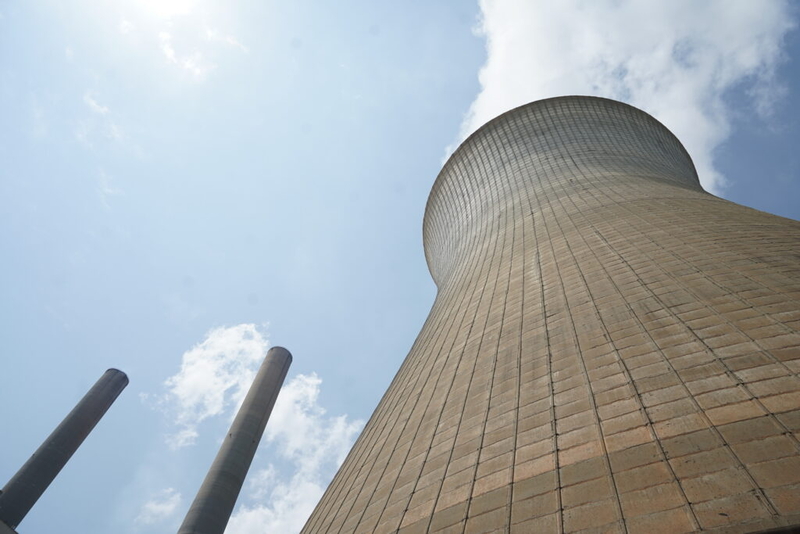
A cooling tower next to flue-gas stacks, or smoke stacks, at Georgia Power's Plant Bowen, a coal-fired power station in Bartow County, on July 28,2026. The utility company is planning to add natural gas turbines and battery storage capacity over the next few years. Alander Rocha/Georgia Recorder
EUHARLEE, Ga. — A major natural gas expansion at Georgia Power’s Plant Bowen will hurt air quality in the Atlanta region, which is already struggling with ozone pollution, according to environmental groups challenging a state air permit for the project.
The Georgia Environmental Protection Division in January issued a permit authorizing Georgia Power to build new turbines that will be powered by natural gas, a fossil fuel that is mostly methane, at the Bartow County power plant, which can currently produce about 3,500 megawatts of coal-fired power.

The utility backtracked on plans to retire the coal-fired units by 2028, saying it would need those units to help meet growing demand from data centers. The expansion, which is part of nearly 10,000 megawatts of new electric generating capacity approved by the Public Service Commission in December, largely to power data centers, will add about 1,500 megawatts of natural gas-fired capacity and 500 megawatts of battery energy storage.
During a groundbreaking event on Tuesday, state and federal officials called the expansion a step toward energy reliability and a stronger economy.
“We need this additional generation for Georgia. Georgia is growing. It’s an exciting time to be in Georgia,” said Georgia Power President Kim Greene. “Many of you may have seen just last week an announcement outside of Savannah, where a customer is coming and needs almost as much generation as is produced at this plant.”
The project is being supported by a $26.5 billion federal loan Southern Company received to prop up projects in Georgia and Alabama that will eventually add over 16,000 megawatts of electric power capacity. The loan, which is the largest in the Department of Energy’s history, will also allow Georgia Power to build nearly as much natural gas generation at Coweta County’s Yates Power Plant as at Bowen, but James Danly, deputy secretary of the U.S. Department of Energy, said Tuesday that the increased demand for energy is a sign of a growing economy, and that growth “is not a problem.”
“That is in fact great news. The more demand you have, that means the more driving your economy. Every time you need more electricity, it’s because people are doing things that are valuable and worthwhile with that electricity,” Danly said.

Alex Fitzsimmons, a senior adviser to the Department of Energy secretary, said after the groundbreaking that President Donald Trump administration “is focused on building the most affordable, reliable, and secure energy system possible” and that natural gas infrastructure is a major part of that effort.
“Natural gas is now 44%, roughly, of U.S. power generation. That will only continue to grow for communities that opt into that investment because it is one of the most affordable, reliable baseload sources of energy that we have in the United States,” Fitzsimmons said.
But the buildout faces legal pushback. The Southern Environmental Law Center, on behalf of Sierra Club, is challenging the Environmental Protection Division’ approval of the air permit and claimed in a court filing that the greater Atlanta area is violating air quality standards again, just four years after it was cleared from federal monitoring to bring down ozone levels. The increase in ozone levels would have triggered its contingency plans for the seven counties in the Atlanta area that were subject to the regulations.
After a state administrative judge ruled in favor of Georgia Power, saying that despite pollution levels increasing again, the utility company followed the correct permitting process after the clearance from stricter regulation in 2022, SELC and Sierra Club appealed the decision to the Superior Court of Fulton County.
“[The Environmental Protection Division] has failed in its obligations to protect Atlantans, to protect Georgians, from bad air quality. They are not applying the most stringent requirements to plant Bowen, even though the Atlanta area is currently experiencing unhealthy levels of ozone,” said Marissa Land, a lawyer with the SELC, in a phone interview.
Sara Lips, a spokesperson for EPD, did not return multiple requests for comment.
According to the most recent American Lung Association State of the Air rankings and report card, Atlanta ranked 42 worst for high ozone days — or days with high levels of ozone near the ground — out of 226 metropolitan areas, with Fulton, DeKalb and Henry counties all receiving an F grade and Gwinnett and Douglas counties receiving a D grade for high ozone days.
That type of pollution, said Sierra Club Georgia chapter director Adrien Webber, a plaintiff in the lawsuit, will only exacerbate current health issues, like asthma, that impact vulnerable populations like children and the elderly, and with the recent wildfires and growth of data center construction, people are paying more attention to how pollution affects their health.
“Our ultimate claim is that the EPD approved this permit in violation of federal air standards, so our air is going to continue to get unhealthier, which is going to impact people’s health,” Webber said.

Atlanta, GA