Election officials unfazed by Trump administration monitoring primaries in Manchester and Nashua
Jul 31, 2026 | 12:51 pm ET
Description
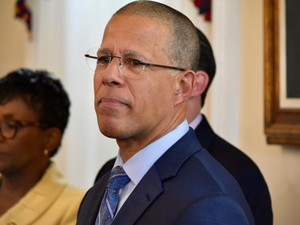
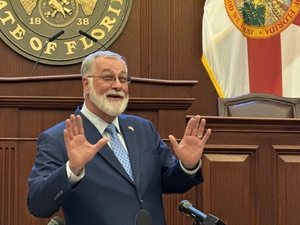
New Hampshire Secretary of State David Scanlan, the state’s chief elections official, said his office learned of the monitors at the same time the public did. (Photo by Kate Brindley/New Hampshire Bulletin)
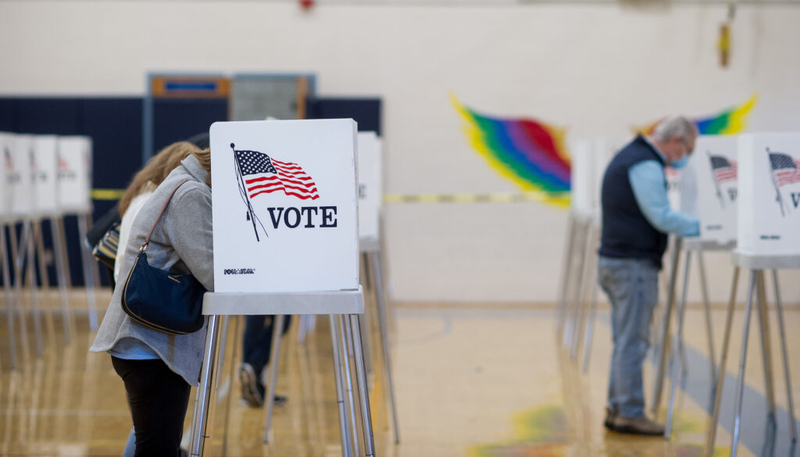
New Hampshire election officials say they’re unconcerned after the Trump administration announced it will send election monitors to watch September’s primaries in Manchester and Nashua — a longstanding practice that has drawn partisan suspicion amid the president’s recent actions on elections.
The U.S. Department of Justice announced earlier this month it’s sending monitors to 15 jurisdictions in six states. In addition to Manchester and Nashua, the DOJ plans to send monitors to Boston and New Bedford in neighboring Massachusetts. Arizona, Michigan, Minnesota, and Virginia are the others.
“We’re sending the monitors into cities and counties where there may have been some problems in recent elections,” Assistant U.S. Attorney General Harmeet Dhillon said in a video posted to social media. “So this is something that DOJ does routinely.”
Dhillon said the goal is to ensure people with disabilities and language barriers are able to vote, but also to “make sure that our voting is accurate so that every citizen who votes has their vote counted equally without being canceled out by somebody who shouldn’t be voting.”
New Hampshire Secretary of State David Scanlan, the state’s chief elections official, said his office learned of the monitors at the same time the public did.
“In New Hampshire, we have a tradition of letting people observe our election process,” Scanlan, a Republican, said. “It doesn’t matter whether they’re from New Hampshire, from the federal government, or international observers. Those individuals do not have a role in the election process, and the expectation is that if people representing the federal government are here, that they are not going to get in the way of our election officials doing their job.”
Manchester City Clerk Matthew Normand, who runs the Queen City’s elections, also said he’s ready to welcome monitors.
“We have them at every election at all the polls generally,” Normand said. “So I don’t really have a reaction other than they’re welcome to come and watch what we do here in Manchester.”
The DOJ asked Manchester to provide it with information about its precinct locations and other election-related matters. Normand said the city will respond by the DOJ’s Aug. 8 deadline.
Normand said he met with the Secretary of State’s Office and New Hampshire Attorney General’s Office last week. He said they’ve promised “additional guidance” and that local moderators on his team will have a chance to meet with the New Hampshire Attorney General’s team to ask questions about what the federal government may be doing.
Both Scanlan and Normand said they weren’t concerned about September’s elections. Nashua City Clerk Daniel Healey did not respond to the Bulletin’s request for comment.
Asked what problems with Manchester’s recent elections the federal government may be referring to, Normand said he was unaware of any.
The DOJ declined to answer the same question. Instead, it wrote in an email: “Election monitoring is a longstanding DOJ practice that has continued under presidents of both parties. In 2022, DOJ sent monitors to nine jurisdictions during the primaries, and 27 jurisdictions in 2024. It helps ensure compliance with federal voting laws and strengthens public confidence in the process.”
Indeed, presidential administrations from both parties have monitored elections in previous elections to ensure compliance with federal laws. However, the Trump administration’s monitors come amid the president’s repeated claims that American elections are rife with fraud.
At the heart of those claims is Donald Trump’s 2020 election defeat, which he unsuccessfully attempted to overturn and still claims — falsely — was stolen from him. In January, the FBI conducted a search warrant on a Fulton County, Georgia, election center at the heart of Trump’s claims, seizing boxes of 2020 ballots. Additionally, earlier this year, Trump called to “nationalize” elections in some states, ostensibly because the states are allowing undocumented immigrants to vote in high numbers. That kind of federal intervention runs counter to the U.S. Constitution, which specifies states determine the “times, places, and manner” of elections in a purposefully decentralized system.
“I’ve heard comments that the administration has made,” Scanlan said. “I don’t think that they have been particularly helpful in establishing the confidence that voters should have in the election process. Anybody that participates in New Hampshire elections knows that they are fair and accurate and well run, and that just means that we have to be more vigilant in keeping our voting population informed about how our elections operate.”
The DOJ also sent a letter to Scanlan threatening him with “criminal liability” if he knowingly allows noncitizens to vote. The same letter was sent to chief state election officials across the country.
“I have not yet reacted to the letter,” Scanlan said. “It did not get me very excited. I’m not concerned about criminal prosecution because we are not engaging in vote manipulation.”
The letter, sent on July 7, asked for a response within five days. Scanlan said he has not responded.
“I’m in no hurry,” he said.
Gov. Kelly Ayotte also chimed in on the election monitors, telling reporters Wednesday: “I would welcome anyone that wants to come to New Hampshire and see how we do elections. I think we do them well, and so if they want to come and observe how we do elections here in New Hampshire, I think they will see that we conduct our elections in a fair, transparent way.”
The decision to send monitors to New Hampshire comes in the wake of the Trump administration’s defeat in federal court last month over its attempt to force New Hampshire to hand over sensitive voter data. The administration ordered all 50 states to provide their voter registration records. When many states — mostly Democratic led — refused, including New Hampshire, the administration sued. Scanlan said New Hampshire state law intended to protect citizen privacy prevented him from releasing certain information, such as partial Social Security numbers and driver’s license numbers. In June, U.S. District Court Judge Joseph Laplante ruled federal attorneys hadn’t established a sufficient legal basis to compel Scanlan to turn over the voter database. The Trump administration has suffered similar defeats in other states. The federal government still has the opportunity to appeal the decision.
Concord, NH