Diné community leaders protest Trump proposal to remove Chaco Canyon mining ban
Description
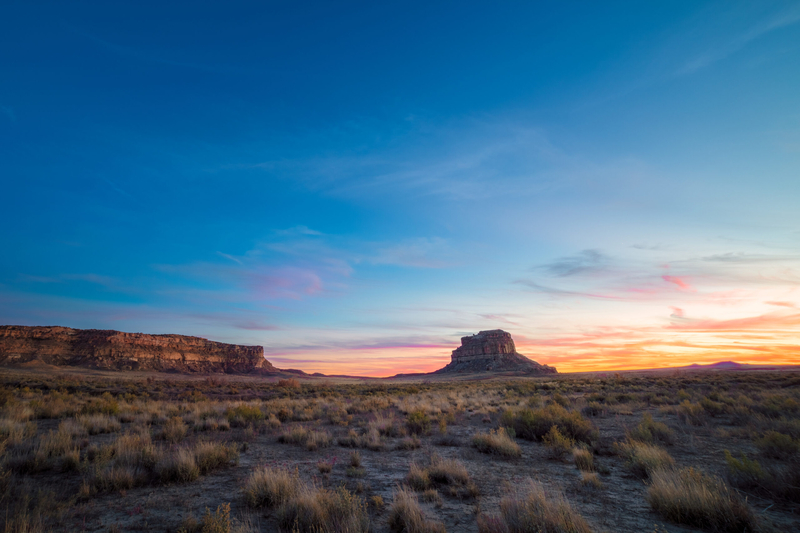
Chaco Canyon at sunset. (Photo by Eric Lowenbach/Getty Images)
WASHINGTON — A group of Diné allotment shareholders and community leaders called Wednesday for the Bureau of Land Management to continue enforcing oil and gas restrictions near New Mexico’s Chaco Culture National Historical Park.
The delegation, gathered in front of the U.S. Department of the Interior headquarters that also houses BLM leadership offices, called on the agency to maintain a 2023 order that placed a 20-year ban on oil and gas extraction in public areas surrounding Chaco Canyon.
The order applies to over 338,000 acres of federally managed lands that extend 10 miles beyond the park itself, creating a buffer zone around the site that holds great cultural and spiritual significance for Diné, Pueblo and other indigenous tribes.
“It’s a beautiful area,” said Hazel James-Tohe, one of the community leaders who led Wednesday’s press conference. “It has so much history … everything that we hold sacred to us.”
Revoking protected status
For more than a year, the Trump administration has moved to potentially reverse the Biden-era BLM order and clear the way for mineral leasing in the Greater Chaco region.
The BLM on July 15 opened a two-week public comment window on a draft environmental assessment of the proposal.
According to the draft assessment, “the purpose and need for the proposed withdrawal revocation is to restore discretion over mineral leasing to the BLM and facilitate mineral development to meet the policies established by” a 2025 Trump executive order aimed at increasing U.S. mineral production.
In an email late Wednesday, a BLM spokesperson said the agency was reviewing public comment on the proposal.
“The BLM welcomes input from stakeholders as we analyze the environmental effects of revoking the withdrawal of public lands surrounding Chaco Canyon National Historical Park,” the spokesperson wrote. “Gathering and considering these perspectives is a vital part of our process and central to our mission of managing public lands for the benefit of all Americans.”
Tribal leaders from the Greater Chaco region, along with advocates and New Mexico lawmakers, have organized on numerous occasions to protest the proposal to revoke the withdrawal.
Effects of oil and gas development
Standing under the hot afternoon sun outside of the Interior building, the visiting delegation opened Wednesday’s press conference with a prayer before launching into their calls.
“We came over here to Washington, D.C., to tell the leaders that we want to keep the buffer zone in place,” Diné allotment shareholder Mario Atencio said. “That’s what we’re here to do, to yell at buildings and yell at pictures of Donald Trump to tell them, ‘don’t frack around Chaco. It affects public health.”’
Nearly 40,000 oil and gas wells dot the Greater Chaco landscape, meaning the Diné people living in the region are already disproportionately exposed to environmental harms such as air pollution, oil spills, industrial traffic and land degradation even with the buffer zone in place, according to a press release from the group that organized Wednesday’s event.
“The pollution does not recognize boundaries–it moves through air we breathe and water we depend on, placing the greatest burden on our elders, children,” said Wendy Atcitty, a member of the Eastern Navajo Huerfano community, in a separate release shared following the press conference.
Atcitty and her fellow Diné representatives told firsthand accounts of what it's like to live near oil development.
Growing up, she said, all she saw were “the different types of equipment scattered across the landscape,” and the sound of machinery was “louder than the birds.”
Diné allotment shareholder and former Navajo National Council Delegate Daniel Tso also talked about witnessing large liquid waste leaks and exposure to methane gas in areas outside the protected withdrawal zone.
“What you do to the land, you do to the people,” he said on Wednesday, quoting an old cultural saying.
In a press release, he added that energy companies were “running amok” and he feared they would destroy the area’s land, air, water and sacred places.
People who live near active mines often suffer from respiratory and cardiovascular illnesses, Atcitty said.
Lawmakers respond
After BLM announced the public comment window on July 15, members of New Mexico’s U.S. congressional delegation sent a letter to Interior Secretary Doug Burgum urging him to extend the commentary period and condemning the Trump administration’s lack of communication with those who live in the Greater Chaco region.
The administration has “been abdicating its responsibility for meaningful and complete Tribal consultation and continues to railroad communities through arbitrary deadlines and rushed decision-making,” Democratic U.S. Sen. Martin Heinrich said in a July 16 press release.
“Proposing to fully revoke protections for Chaco Canyon and only allowing 14 days to comment on this development is wrong, shameful, and a slap in the face to Tribes,” he added.
Heinrich is the top Democrat on the Senate Energy and Natural Resources Committee.
Diné and Pueblo community advocates, tribal members and allied organizations also conducted their own analysis of BLM’s draft environmental assessment. The document was shared with States Newsroom Wednesday.
Among its findings, the analysis determined that “revoking the Chaco buffer zone would produce minimal additional energy production while imposing severe and irreversible harm on Indigenous communities, sacred cultural landscapes, and the environment.”
The Diné group on Wednesday urged BLM to correct its environmental assessment.
All States Newsroom content is free to republish. Read our republishing policy for more information.