Bridging the gap: Why regional transit is a lifeline, not a luxury
Jul 29, 2026 | 5:00 am ET
Description
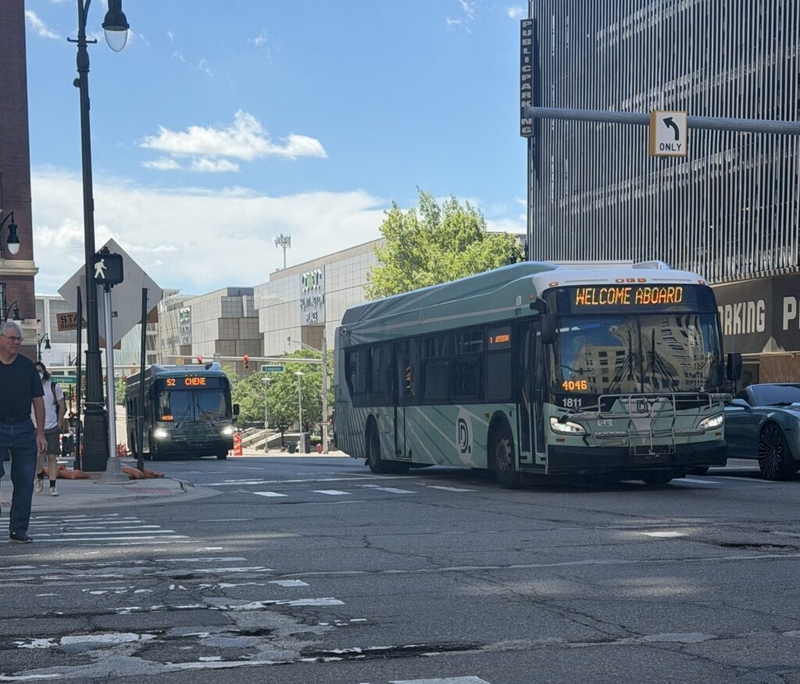
DDOT bus in Detroit, Michigan. | Photo by Jon King/Michigan Advance
At Wayne Metropolitan Community Action Agency, our mission is to eliminate poverty by empowering people and communities to be strong, healthy and thriving. Every day, we serve low- and moderate-income families across Wayne County, helping them secure quality housing, access early childhood education and build financial stability.
But we know that our programs cannot successfully operate in a vacuum. True stability requires a strong regional infrastructure, and nothing is more foundational to our work and the broader community than a reliable public transportation system. The Wayne County Public Transit Millage on the ballot August 4 addresses this very real issue.
If you want to talk about lifting people out of poverty, you have to talk about how they get to work. We often hear that the easiest way out of poverty is simply to “get a job.” Yet, one of the very first questions on almost every job application is: “Do you have reliable transportation?“ If you don’t, the door to employment slams shut before you even have an interview.
When a household is surviving on less than $25,000 a year, reliable car ownership is a financial impossibility. With skyrocketing gas prices, high car insurance rates and inflation, navigating daily life without a personal vehicle is a forced reality. Expanded regional transit solves this massive economic roadblock, opening up employment opportunities that were previously completely out of reach.
Furthermore, robust public transit is not just for the working class, the poor or college students. It is a utility for everyone. It allows seniors to maintain their independence, connects veterans to vital healthcare, reduces traffic congestion for daily commuters, opens the door for tourism, and makes Southeast Michigan a competitive hub for new businesses and talent.
For those skeptical of public spending and who view transit as a safety net expense or a waste of tax dollars: consider the return on investment. Funding regional transit is not about subsidizing a safety net; it is a direct investment in our regional economic engine. People in our communities want to work, but lack of transportation remains the primary barrier standing between a willing worker and a paycheck.
If you want to improve our region’s economy, expand the labor pool and strengthen our local businesses, investing tax dollars into a functional transit system is the most practical step we can take.
By expanding DDOT bus service and renewing public transit, this millage intentionally bridges our region’s geographic divide, connecting residents directly to more jobs, schools and essential resources like Wayne Metro. The stakes on August 4th could not be higher. If this millage does not pass, communities with existing SMART service risk losing those connections entirely. The client journeys we see every day would effectively hit a dead end, leaving families, seniors and people with disabilities completely stranded.
But this challenge does not stop at Wayne County’s borders. True economic mobility is regional. The invisible lines that separate Wayne, Oakland and Macomb counties should not be barriers to a person’s livelihood. When a worker in Detroit cannot easily reach a job hub in Troy or Warren, our entire regional economy suffers.
Public transportation is more than just buses on the road; it is the physical infrastructure of opportunity. It can build bridges, strengthen our workforce and ensure that every resident has a reliable road to economic stability. Consider this before voting on the August 4th ballot measure.
Lansing, MI