States expand fight against organized retail crime, gift card fraud
Jul 27, 2026 | 1:52 pm ET
Description
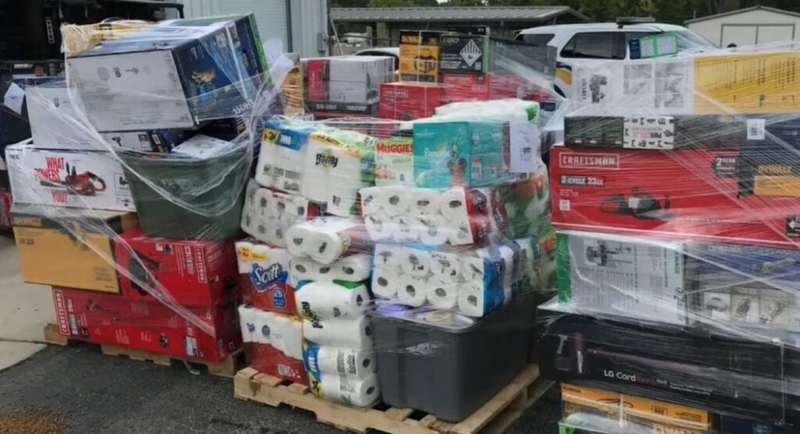
On rare occasions property is recovered following organized retail thefts, as was the case in this handout photo, from Lowe’s, shared with North Carolina lawmakers. States across the country are strengthening penalties and expanding law enforcement efforts to combat organized theft rings. (Photo courtesy of Lowe’s/Craig Dowdle)
From hijacked freight shipments to tampered gift cards hanging on store racks, states are responding to new forms of organized retail crime with a fresh round of legislation.
More than a dozen states this year have passed laws creating new criminal offenses, increasing penalties and establishing specialized task forces and advisory boards designed to better investigate and prosecute organized theft rings.
While organized retail theft has been a growing focus for state lawmakers in recent years, this year’s legislation reflects how the crime has evolved beyond traditional shoplifting. Many of the new laws target fraud schemes that authorities say are increasingly tied to organized criminal groups, including cargo theft, gift card scams and identity theft used to steal freight or merchandise.
In April, the Los Angeles Police Department announced the seizure of about $1 million in stolen merchandise, including products from brands such as ALO, SKIMS, Edikted, Ariat, Milwaukee, Ninja, Dyson and Duracell.
As consumers lose millions to gift card scams, lawmakers pressure businesses
Investigators recovered 55 pallets of stolen commercial and train cargo from a Van Nuys warehouse, according to a news release. The stolen merchandise was tied to an e-commerce scheme involving the resale of stolen goods through the livestream shopping platform Whatnot.
Reported shoplifting increased 4% in the first half of 2026 compared with the same period in 2025, according to the nonpartisan think tank Council on Criminal Justice’s latest crime trends report. Across the 18 cities included in the analysis, shoplifting rates were about 5% higher than in 2019 and reached their highest level in the nine-year period tracked by the group.
Still, monthly rates were mostly similar to 2025, with the largest year-over-year increases occurring in February and April. This data only captures incidents reported to police and likely undercount the overall level of shoplifting.
“The number of shoplifting incidents has been declining in the last several years, but the amount stolen per incident has been increasing,” said Marc Levin, the council’s chief policy counsel.
“Shoplifting rings have gotten more and more sophisticated,” he said, adding that some operations have reportedly hacked into the computer systems that dispatch trucks carrying merchandise to retailers, redirecting the shipments to steal the goods before they are delivered.
Harsher penalties
Several states expanded criminal penalties or gave prosecutors new tools to pursue organized retail theft cases this year.
In Tennessee, Republican Gov. Bill Lee in May signed into law a measure creating a registry of people convicted of retail theft or organized retail crime, including attempted offenses and conspiracies. The registry is only available to law enforcement.
New shoplifting data explains why they’re locking up the toothpaste
The new law, which took effect earlier this month, also increases penalties for offenders who commit retail theft while carrying a firearm, ammunition or a firearm accessory, possess anti-theft jamming devices or use disguises or fake license plates during a theft. Certain violations now carry mandatory minimum jail sentences.
A new Wisconsin law allows prosecutors to aggregate multiple retail theft offenses when determining criminal penalties and increasing sanctions for repeat offenders.
Two new laws in Wyoming, both of which went into effect this month, increased penalties for repeat theft offenders and created the new offense of absconding for criminal purposes, aimed at people who cross county or state lines to commit additional crimes or conceal stolen property.
In Oklahoma, a new law broadens the state’s organized retail crime and identity theft statutes by expanding the types of fraud covered and closing loopholes involving elderly people and minors.
Cargo theft
Lawmakers also turned their attention to cargo theft as freight theft has become increasingly sophisticated and costly for retailers and supply chains.
In April, Lee, of Tennessee, signed another piece of legislation creating a legal definition for fraudulent freight theft. The law, which is already in effect, covers schemes involving fake identities used to obtain shipments, illegally rerouted freight and unauthorized transfers of cargo. It also requires local law enforcement agencies to investigate those reports as theft crimes, even if the offense originated elsewhere.
Arkansas Republican Gov. Sarah Huckabee Sanders signed legislation in March creating sentence enhancements of up to 10 years for organized cargo theft, with offenders ineligible for early release on the enhanced portion of their sentence.
Arizona created a cargo theft task force within the state attorney general’s office under legislation signed by Democratic Gov. Katie Hobbs in June.
California lawmakers are still considering legislation that would establish a statewide cargo theft task force within the state attorney general’s office. The bill is still under consideration in the Senate, but lawmakers have until November to act.
State officials last month announced that previous investments, including funding for local law enforcement agencies and legislation aimed at strengthening the state’s response to organized retail theft, have resulted in more than 32,000 arrests and nearly $260 million in recovered stolen goods since October 2023.
Michigan lawmakers also are still considering two pieces of legislation that would increase penalties for cargo theft. The bills cleared the House earlier this year. The legislature adjourns in December.
Gift card fraud
Gift card fraud also emerged as a growing concern this year as lawmakers responded to scams involving tampered cards and stolen account information.
Georgia Republican Gov. Brian Kemp signed legislation in May creating new crimes for gift card theft, forgery and fraud. The law took effect this month. New laws in Virginia and West Virginia also established gift card fraud as a criminal offense.
Colorado Democratic Gov. Jared Polis signed legislation in June creating the Retail Theft Prevention Advisory Board within the Department of Public Safety. The board will oversee grant funding, collect statewide data on organized retail theft and gift card fraud, and develop policy recommendations in coordination with state and federal partners.
In Maryland, a new law going into effect in October will prohibit people from altering or tampering with gift cards or their packaging with intent to defraud. The law also establishes how gift cards are valued when determining theft charges.
Kansas Democratic Gov. Laura Kelly signed legislation in February that allows prosecutors to charge people under the state’s financial card crime laws for illegally obtaining or using gift cards to acquire money, goods or services.
Stateline reporter Amanda Watford can be reached at [email protected].