Indiana FSSA to use AI to detect Medicaid fraud
Jun 24, 2026 | 1:39 pm ET
Description
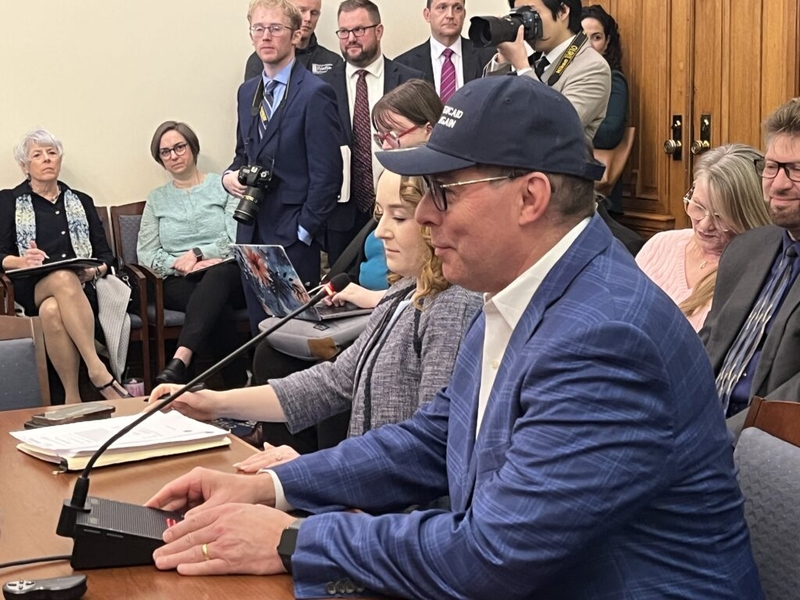
FSSA Secretary Mitch Roob talks before a legislative committee on March 19, 2025 while wearing his "Make Medicaid Boring Again" hat. (Whitney Downard/Indiana Capital Chronicle)
The Indiana Family and Social Services Administration is participating in a pilot initiative to use artificial intelligence for Medicaid fraud prevention.
The pilot, launched by the federal Centers for Medicare & Medicaid Services, grants the state agency free access to advanced AI software from Oracle to analyze Medicaid claims for suspect billing patterns like upcoding and ghost services.
FSSA announced the 90-day partnership Wednesday, boasting of the software’s potential to identify fraudulent claims before they are paid.
The agency also intends to test the machine learning software’s ability to suggest claims edits, prior authorization triggers and policy changes, as well as create a shared platform for joint fraud investigations and accelerated enforcement actions against high-risk providers.
In exchange, Indiana FSSA will assess whether other states can use Oracle’s models and software for Medicaid fraud detection and identify technical, legal and privacy issues to fix before a broader rollout in a report to CMS.
“Indiana is proud to partner with CMS and Oracle on this state-of-the-art pilot program to help states eliminate fraud,” Gov. Mike Braun said in a statement Wednesday. “We are proud to lead the way and look forward to showing every other state how it’s possible to administer programs low-income citizens need while still protecting taxpayer dollars.”
The pilot initiative is part of federal and state efforts to root out waste, fraud and abuse within Medicaid — and the latest example of the governor’s embrace of AI.
FSSA seeks return of $200 million in improper payments to attendant care providers
One key reason for the anti-fraud push is that new federal law will reduce state’s Medicaid matching rate based on error rates in the future.
FSSA Secretary Mitch Roob in April revealed the agency is seeking to recover $200 million in alleged improper payments to attendant care providers after an audit of 625 claims submitted to Medicaid identified errors in nearly all claims.
Those alleged errors ranged from missing and incomplete consent forms and background checks, blank service plans, missing visit notes, billing for improper services and failure to activate electronic verification or providing services outside a patient’s location.
Roob said the agency would expand audits and begin prepayment review of claims submitted by offending providers.
Providers are expected to appeal FSSA’s decision, and at least one pushed back on allegations of fraud.
The agency also paused signups for autism behavioral analysis providers earlier this month as it reviews Medicaid claims for similar irregularities.
Indianapolis, IN