Colorado bill removing statute of limitations for conversion therapy survivors passes committee
Mar 26, 2026 | 4:10 pm ET
Description
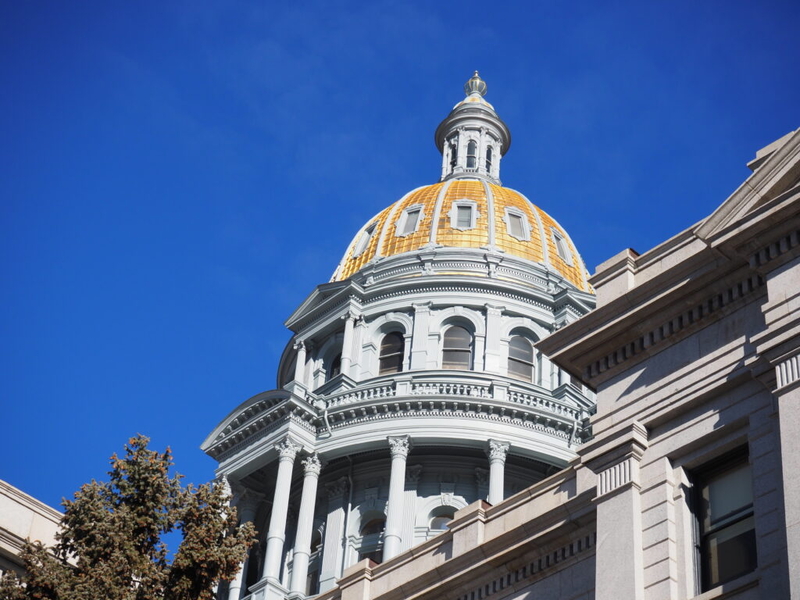
The Colorado Capitol is pictured on the opening day of the Colorado Legislature, Jan. 14, 2026. (Photo by Lindsey Toomer/Colorado Newsline)
A bill that would allow Coloradans who are survivors of conversion therapy to take legal action at any time against licensed providers who conducted the practice passed its first committee hearing Wednesday.
House Bill 26-1322 would allow survivors to pursue legal action against a licensed mental health professional who conducted conversation therapy at any time after it occurred, removing the statute of limitations on those claims. Entities that hired and supervised the professionals who conducted conversion therapy could be sued as well.
Rep. Alex Valdez, a Denver Democrat and sponsor of the bill, said removing the statute of limitations on those claims recognizes that the harm caused by conversion therapy can take years for survivors to process and fully understand. The current statute of limitations for conversion therapy claims is two years.
“What the bill does is make sure that existing pathways to accountability are more accessible, and it matters because of how this harm shows up and when it shows up in life,” Valdez said.
The measure seeks to align state law related to conversion therapy claims with laws that passed in 2021 removing the statute of limitations for child sexual assault claims. It does not create any criminal penalties or a new cause of action.
The House Judiciary Committee voted 7-2 along party lines to move the bill forward, with Democrats in support.
At the bill hearing, witnesses who testified in support of the bill shared personal stories of the harms of conversion therapy, and psychological experts spoke about the well-documented harm the practice causes. Those who testified against the bill said it infringes on the First Amendment rights of religious counselors and will lead to legal action being taken without proper evidence.
Conversion therapy has been denounced by major medical organizations including the American Medical Association, the American Psychological Association, the American Psychiatric Association and the American Academy of Child and Adolescent Psychiatry.
It is illegal for licensed medical providers in Colorado to conduct conversion therapy following the passage of a 2019 law. A case currently under review by the U.S. Supreme Court, Chiles v. Salazar, asks whether that ban violates the First Amendment right to free speech of a Christian counselor in Colorado Springs.
Jax Gonzalez, political director at LGBTQ advocacy organization One Colorado, said during public testimony on the bill that while the Chiles v. Salazar case will determine the legality of state regulation of conversion therapy, the decision will not change the medical consensus that the practice is harmful. They said the bill does not prevent anyone from seeking counseling aligned with their beliefs.
“This bill is designed to stand independently of that case, using a traditional civil liability framework to ensure accountability for licensed professionals who cause harm,” Gonzalez said. “At its core, this bill ensures that when harm occurs, people are not denied justice simply because it took time to understand.”
Other organizations that testified in support of the bill include Rocky Mountain Equality, The Trevor Project, Bread and Roses Legal Center, the National Center for LGBTQ+ Rights, the Colorado Coalition Against Sexual Assault, Colorado PTA, Interfaith Alliance of Colorado, the Colorado Center on Law and Policy and the Colorado Psychologocal Association.
Addressing harms
Rep. Karen McCormick, a Longmont Democrat and sponsor of the bill, said the bill is to help families like that of Alana Chen, who died by suicide in Boulder after experiencing years of conversion therapy as a teenager from religious institutions and licensed providers who told her not to mention the therapy to her family.
Nhi Nguyen, who was friends with Chen, said her family could have had the chance at justice if this bill had passed sooner.
“The people she trusted and believed in tried to change who she was. The harm didn’t just affect her beautiful soul, it took her from us,” Nguyen said. “This is not the first time this has happened. Many LGBTQIA+ youth experienced the same kind of harm. This bill matters because it addresses that harm.”
Among those testifying in opposition to the bill was Colleen Enos, with Christian Home Educators of Colorado, who said it punishes licensed providers who offer counseling that aligns with their “sincerely held religious beliefs.” She said the point of the bill is to punish those who disagree and to monitor the speech of therapists.
A 2024 survey by The Trevor Project, a national suicide prevention organization for young LGBTQ people, found that one in seven young LGBTQ people in Colorado were threatened with or subjected to conversion therapy, according to Gabby Doyle, the group’s senior manager of state advocacy.
Li Brookens, a licensed clinical social worker who founded group mental health practice The Umbrella Collective, received conversion therapy three times a week for over four years from a licensed provider when they were a young child. It took them decades to fully learn what the intentions of those treatments were.
“As a licensed therapist who’s queer and trans-affirming, I see the harm that conversion therapy survivors like myself experience every day,” Brookens said. “They need an expanded timeframe to access justice resources. The whole nature of the harm is developmental trauma in the context of a relationship with a trusted licensed provider, especially for children.”
The bill will need to pass floor votes in the House before going to the Senate for additional hearings and votes. Its Senate sponsors are Sens. Lisa Cutter, a Littleton Democrat, and Kyle Mullica, a Thornton Democrat.
Denver, CO