America’s complicated relationship with the death penalty
Executions in the United States have been on the decline over the past few decades, yet 27 states still enforce the death penalty – and many are imposing it more often.
One very recent case in Alabama illustrates the complicated and emotional debates unfolding around the death penalty.
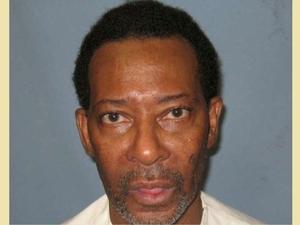
In 2025, Alabama executed five people, and the state was set for its first execution of 2026 this month. Charles “Sonny” Burton, 75, had been convicted of felony capital murder in 1992, even though he didn’t pull the trigger, and was scheduled to die March 12.
However, Burton’s fate quickly changed this week when Alabama Gov. Kay Ivey commuted Burton’s death sentence to life in prison. Alabama Reflector senior reporter Ralph Chapoco will have the latest.
This episode also examines a death penalty abolition movement in Indiana as well as developments in Arizona and Utah.




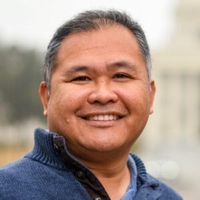
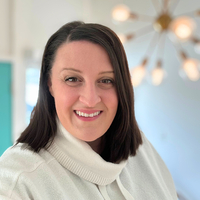
In Episode 19, host Chris Fitzsimon catches listeners up on breaking news in Alabama, where the governor this week commuted the death sentence of a prisoner to life in prison.
He’ll also talk with Kim Dillman, an opponent of the death penalty whose family history may make her position surprising. In 1994, her uncle Eric Wrinkles shot and killed her parents, Tony and Natalie, and her aunt Debbie, in a brutal mass murder in Evansville, Indiana.
Kim and her brother and cousins were in the house where the murder occurred.
Wrinkles was convicted and sentenced to death for the murders. He was executed by lethal injection in 2009.
Since Wrinkles’ conviction and execution, Dillard has become a vocal opponent of the death penalty. She is involved with the Indiana Abolition Coalition, which advocates to end the practice.
Finally, Evening Wrap newsletter author Danielle Gaines shares the top stories she’s watching.
Episode produced and edited by Mallory Cheng. Music for Stories From The States composed by David Singer.
Got questions? An episode idea? Email us at [email protected].
Subscribe to Stories From the States on Apple Podcasts, Spotify and Youtube.
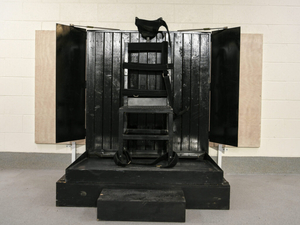
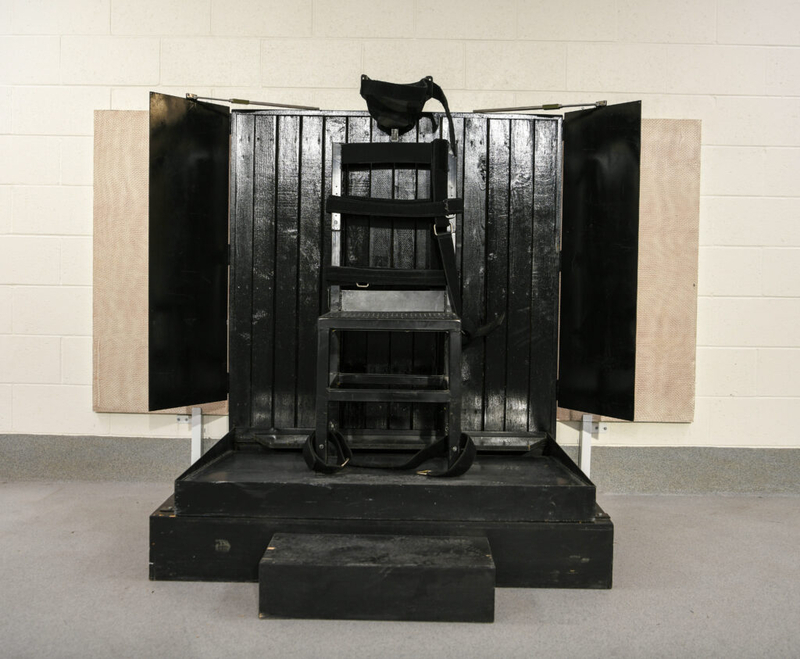
Photo: The chair used for firing squad executions is shown in the execution chamber at the Utah State Correctional Facility. (Photo courtesy of the Utah State Department of Corrections).
Stories From The States is a production of States Newsroom, the nation’s largest state-focused nonprofit news organization, with reporting from every capital. At this pivotal moment in American democracy, our veteran journalists from all 50 states are reporting the consequences of government decision making. By zooming into one story each week, Stories From the States contextualizes and gives a human voice to what is happening now.
Transcript was created using an automated software.
Chris Fitzsimon
This is Stories From The States. I'm Chris Fitzsimon. Here at States Newsroom, we know there's a lot going on around the country, in every state capital, so thanks for being here. Today, we're talking about the death penalty. Over the last few decades, the number of executions per year in the United States has been on the decline,...
Transcript was created using an automated software.
Chris Fitzsimon
This is Stories From The States. I'm Chris Fitzsimon. Here at States Newsroom, we know there's a lot going on around the country, in every state capital, so thanks for being here. Today, we're talking about the death penalty. Over the last few decades, the number of executions per year in the United States has been on the decline, but 27 states still have capital punishment, and many of them are imposing it more often. For decades, one Indiana woman has been speaking out against the practice, and her experience is unique. Her parents and aunt were killed by her uncle who was sentenced to death.
Kim Dillman
I didn't get any type of closure from Eric's execution. It didn't bring me any type of relief.
Chris Fitzsimon
Alabama made headlines in 2024 as the first jurisdiction in the world to use nitrogen gas to execute an inmate on death row. Last year, the state executed five people and had scheduled one in 2026. 75 year old man in a wheelchair, convicted of felony capital murder, even though he didn't pull the trigger. His fate, though quickly changed and coming up in a moment, we'll hear from an Alabama Reflector reporter who broke the news.
Chris Fitzsimon
Alabama was second in the nation for the number of executions held in 2025 and had scheduled its first one of this year for March 12. The state was scheduled to execute Charles "Sonny" Burton. Burton was convicted of something called felony murder. That is, he was present at a 1991 robbery in Talladega where a man was killed, but Burton himself didn't pull the trigger. His fate quickly changed this week, however, when Alabama Governor Kay Ivey commuted Burton's sentence. Here to help us figure out what's going on in the case, is Ralph Chapoco. He's a senior reporter at the Alabama Reflector, which is an outlet with States Newsroom. Ralph, thanks for being here.
Ralph Chapoco
Oh, thank you. It's a pleasure to be here.
Chris Fitzsimon
Well, we thought we might be having a different conversation, and things really took a turn. So bring us up to date. What? What happened this week in the case of Charles "Sonny" Burton.
Ralph Chapoco
Yes, so we were all set to carry out the execution of Charles "Sonny" Burton, and the newsroom was making preparations for me to go down to Atmore, Alabama, where the execution would take place. That's Holman Correctional Facility where death row is. But as of Tuesday, got a news release from the governor's office saying that she has decided to commute and grant clemency, sparing the life of Charles "Sonny" Burton from being executed. So all plans to have the execution get carried out have been eliminated and halted, and he will live out his life, the rest of his life, in the custody of the Alabama Department of Correction.
Chris Fitzsimon
And was this a surprise? The governor isn't normally a governor who we expect to commute death sentences.
Ralph Chapoco
In my tenure here, there's been only one other time when she's actually granted granted clemency and commutted a death sentence. So this is rare, right? Like, this is rare, at least in my time that I've been here, this has been only the second time. And, yeah, I mean, this doesn't usually happen, so this is a rare and kind of one off event.
Chris Fitzsimon
And I think, did she not saying her in the press release, or maybe I've seen some there have been a lot of coverage of it, and you guys have, of course, been doing a great job that she was concerned about the disparate sentences between between Sonny Burton, Charles "Sonny" Burton, and the person who actually committed the murder.
Ralph Chapoco
That's actually exactly what she said. So in the news release that she gave out. She rehashed a lot of what a lot of the details in, in the case and in the incident. But one of the key critical lines is there's disparate like meeting out of justice, where the shooter, his name is Derek DeBruce, who was actually had a sentence reduced in the appeals process to life without parole, and he was the one responsible for shooting and killing Doug Battle, who was the customer that actually walked into that Autozone store that he shot. And yet, Sonny Burton, along with other people, other accomplices in that incident were already outside, outside of the store, about ready to leave, and they had no idea until afterward that character, DeBruce had actually shot and killed Doug Battle. That was the thrust of, kind of her justification, according to the news release.
Chris Fitzsimon
And this is really, I mean, this is sort of the, this is sort of the definition of felony murder. Can you explain that for folks who were confused about how, how could someone get sentenced to death who didn't commit a murder?
Ralph Chapoco
So in felony murder, a person who is part or an accomplice to a crime can be culpable for any incident or an event that happened. So Charles "Sonny" Burton, in the eyes of the law, knew that there was a possibility that someone could get killed because he was part of a group that was attempting to rob a the AutoZone store, and on top of that, there were weapons. So he should have known, at least according to law, that there's a possibility that someone could get killed and he could be held responsible for anything that's happened during the course of that incident.
Chris Fitzsimon
And it's fairly rare, isn't it that someone would be sentenced to death in this sort of instance, that they weren't actually the person who pulled the trigger?
Ralph Chapoco
So the Death Penalty Information Center actually tracks how many times this has happened over the past, like few decades. There are data that I saw it was granted a couple dozen times that this incident has happened where people have been involved in the underlying crime, and even to the point where it could have been to where someone was killed, but they didn't, actually directly, were not directly involved, and didn't, didn't directly pull the trigger. In fact, Alabama has had a case for this with Nathaniel Woods, I believe about it, more than a decade ago. So, yeah, it does happen. It is more rare than than not, but it actually does happen. And there have been cases and instances of it happening.
Chris Fitzsimon
What was the reaction in Alabama? I mentioned in the intro that it's a case that has had a lot of executions in the last couple years. What was the could you get a sense of what the reaction was there among sort of policymakers and other folks to the governor's decision to commute the sentence?
Ralph Chapoco
So there was actually a Democratic lawmaker who praised the decision. His name is Napoleon Bracy. He's a member of the Alabama House of Representatives who actually mentioned the incident on the floor during debate and discussion. So he know at least he actually praised the decision, and as well as Doug Jones, he's a candidate for governor, Democratic candidate for governor, he actually praised the decision. Maybe praise is too strong a word, but he agreed he didn't oppose the decision that for clemency. And you know, death penalty groups opposed to the death penalty definitely praised the decision. One person who was not happy was actually Alabama Attorney General who said he was disappointed by the decision that Governor Kay Ivey made.
Chris Fitzsimon
Is it your sense that this might start another discussion about just a felony murder rule in general? I mean, that seems to be the, what the governor pinpointed, that that he, you know, he got disparate treatment, but also he was, he was set to be executed for a murder that he didn't actually commit. I wonder if this will start any sort of discussion about the felony murder rule
Ralph Chapoco
That's unclear right now. I mean, at the end of the day, the state is a state that actually really does believe in the death penalty. They have recently enacted legislation to expand the conditions or the eligibility for imposing the death penalty in Alabama. So it remains to be seen whether or not felony murder or this case will somehow reignite a debate on our discussion on whether or not this is just and fair,
Chris Fitzsimon
And it's worth noting, for folks who might not be familiar, the state of Alabama was the first state to use nitrogen gas as a method of execution back in 2024. Ralph, you've covered a number of executions, and you witnessed the first execution by nitrogen gas. What's it like to cover this? To cover this, this issue in general. I mean, people sort of talk about life and death, you know, decisions and legislation and all this, but this is the ultimate sort of life and death decision.
Ralph Chapoco
It's a unique experience. I won't say that. This is my first time ever really covering the death penalty ever in my career. And what I'm noticing is that's just how somber the whole issue is. No one is celebrating and everything is very mechanical and very systematic and very methodological. It's almost as if everyone's playing a role in this entire process, and once they saw that role, it's over and done with. So it's almost as if people just carrying out their duties and responsibilities. And we're no different. We're all having to be there. We're all having to witness it. Once it's done, we move on.
Chris Fitzsimon
Was that the case with the was that the case with the execution that you witnessed?
Ralph Chapoco
That was my first ever execution I witnessed, and it was the very first time that nitrogen gas was ever used on another individual to essentially carry out the execution. I actually struggled with it. It got very real for me when I was in the van and we were getting getting driven to the chamber, and in my mind, I realized I am going to watch someone die tonight. I was preparing for it. I was trying my best to like, come to grips with the situation. But even after it happened, I I struggled a while with having this, coming grips with what I saw.
Chris Fitzsimon
Well, Ralph, thank you so much for for covering this. Such a such an important story, and thanks for bringing us up to date in this case. Thank you very much. According to a report from the Death Penalty Information Center, there were 48 executions in the nation in 2025 that was almost double the amount in 2024 and they were concentrated in a handful of conservative states. The group also notes that states that impose capital punishment are intensifying efforts to expand its use, even as public support continues to decline. Like in Arizona, Republican lawmakers there want to bring back death by firing squad as an option for people sentenced to the death penalty. In Utah, there's a bill being proposed by the GOP to speed up the timeline on death penalty cases moving forward. While in Indiana, some Republican state lawmakers want to add the firing squad as a method of execution, their efforts fell short, and it did not pass. For Indiana resident Kim Dillman, that's good news. She's opposed to the death penalty.
Kim Dillman
Why are we darkening our horizon? Why are we not why are we not bringing it to light? Why are we not encouraging loving each other? Why are we not encouraging forgiving each other
Chris Fitzsimon
Coming up, we'll chat with her.
Moses Esheit
At a time when so many communities are losing their local news outlets States Newsroom is filling a gap. We are now the nation's largest state focused nonprofit news organization with reporters based in every state capital and Washington DC. But we can't do it without your support. Your contributions allow us to produce award winning journalism and deliver it to you for free. No pop ups, no pay walls. This is a crucial time to support local journalism, and every bit helps to give go to statesnewsroom.com/donate.
Chris Fitzsimon
The death penalty, of course, directly hurts the person being executed, but it often leaves a scar for victims. For Kim Dillman, it's something she will always remember in Evansville, Indiana in 1994 her uncle Eric Wrinkles shot and killed her parents, Tony and Natalie, and her aunt Debbie. Kim, along with her brother and cousins, were inside the house when it happened. Wrinkles was convicted and sentenced to death for the murders. He was executed by lethal injection on December 11, 2009 since the conviction and execution, Kim, has been vocally against the death penalty and has been involved with the Indiana Abolition Coalition to end the practice. Kim, thank you so much for being here.
Kim Dillman
Thanks for having me, iChris.
Chris Fitzsimon
Well, I can't, no one can imagine what you actually have have been through, and how and how brave you are to be speaking out on whatever side, just to go through something. And I wondered if you could just tell us briefly about your journey. How did you come to be part of this movement?
Kim Dillman
Well, funny enough, my grandmother, my mom's mom, Natalie's mom, raised me and my brother to, I wouldn't say, to not just hate, but to forgive others. I mean, we are very devout Catholics, and in the Lord's Prayer, we we forgive others trespasses, and we really want to live out that from the Lord's Prayer. And this is part of that, part of my faith.
Chris Fitzsimon
Did this journey take a while. Obviously, again, no one, not very many people in the world, could understand what what had happened to you and your family. So I wondered if it if this was a process.
Kim Dillman
Yes and no. And it kind of comes in waves, sometimes, because grief very much, comes in waves. There are days that are easy to to be forgiving. And there's, there's days that it's, it's really hard to bear that. But I also know that the flip side of that is, if I was going to carry that with me, that hatred with me forever, that's like, it's kind of a stupid analogy, but it's like drinking a poison and waiting for the other person to die. And that's I've seen so much in my close relatives that that did carry that, that hatred for Eric, and it did, it kind of poisoned their life, and I have no interest in poisoning my life with that hatred.
Chris Fitzsimon
What? What were you thinking when the person who killed your family was executed? What was going through your mind at that point, and how do you feel now, looking back on that, it's been that's been a while ago now.
Kim Dillman
Well, at first it was, I was really worried that I myself was just going to be kind of set back in my healing process. And it was, you know, years and years and years after the fact of of losing my parents, but there was also the I was a parent then, and I had to play a different role. I couldn't just be in my healing process. I had to be mom to my children. And part of that that that fear was also the fear of maybe my own mortality, and knowing that one day my children are going to be on this earth without me, and that's a little scary and and now looking back at it, I'm I'm a little angry with the system for allowing another human life to be taken.
Chris Fitzsimon
Yeah, I wonder what it's like for you and how you became involved in the Indiana Abolition Coalition. Why did you how did you turn that religious belief and these feelings into into action to maybe affect the system for other people?
Kim Dillman
Well, when I was about 20 years old. I actually was at a youth retreat for our diocese, and one of the coordinators asked me to get up and and tell my story, and I stood in front of about 500 adolescents from ages about 12 to 17 and and spoke in front of them, and it was in that moment, I realized that my voice could change this, and it may just be a drop in a bucket, but if, if it's me saying stop, I can also build people power to behind me to make it stop.
Chris Fitzsimon
How old were you when your family was taken?
Kim Dillman
I was nine years old. I was three months from turning 10.
Chris Fitzsimon
Wow. And what was the reaction when you were talking? And that's an amazing just any anybody talking a group of 500 people is intimidating. And I wonder what was the reaction in that group? And maybe a larger question, what's the reaction when you when you speak publicly now about your experience and your views.
Kim Dillman
Well, yeah, it was a little intimidating, but, and not to use this quote lightly, but I feel like there was probably not a dry eye in the house, quote, unquote. I think it was eye opening for a lot of them, just because we were so close in age at that time, and for me to come out on the other side of of that situation as someone who is forgiving and and loving, opposed to someone who is who is bitter and hateful, I think that that that spoke to that group a lot, and now whenever I speak out again about it, there's very much a divide. A lot of the times, some people think I'm a little crazy for even considering forgiveness, but that's my that's my choice, and that's my experience.
Chris Fitzsimon
I know you have done this a lot in your work with the abolition coalition. What do you say to policymakers or people who are who still believe the death penalty is the appropriate punishment. How do you how do you be on your story? What? How do you explain to them, what you why they should change that?
Kim Dillman
Well, and I'm going to throw a quote at you from Dr Martin Luther King, Jr, "returning hate for hate multiplies hate, adding deeper darkness to a night already of devoid of stars". And to to me, why are we darkening our horizon? Why are we not why are we not bringing it to light? Why are we not encouraging loving each other? Why are we not encouraging forgiving each other, and honestly, the biggest healing part of my journey was finally letting go of what I thought was my responsibility to be upset about it. I can, I can be upset and and be hurt while also celebrating my parents, I spoke to a gentleman last weekend, actually, who told me about the first time my parents actually met. He was there, and that's something I would never, ever get to know, because my parents can't tell me they... I wasn't old enough for them to tell me that story whenever they passed. So while that it kind of brought me to tears. I cried in the middle of Walmart, but I was able to see that then as something I can rejoice in. I still have that part of them, and it lightened my heart. And my story is not about Eric. My story didn't end when Eric took my parent's life, and I would have preferred, honestly, to be able to forget about him and not be reminded years down the road whenever they decided to execute him, or every time something came up in the news about it, I was reminded about it because he was sitting on death row, and it's sensationalized through the news and constantly reminded about that one point in my life. Instead of being able to celebrate my parents, it was constantly brought back to the night they died.
Chris Fitzsimon
What do? What do policy makers and other folks say when you tell your story? I mean, what's a reaction? I guess it's mixed?
Kim Dillman
It's mixed. My grandma actually tells a story about whenever she had a conversation with the prosecutor here in Vanderburgh County, talking about how she was against the death penalty, and he he, he returned that on her and said, 'Well, should we have forgiven Hitler for murdering all the Jews?' And she says, 'This isn't that this is different'. And she's like, 'In my situation is not that situation'. She's like, 'My situation is my daughter died and I'm choosing to forgive her murderer'. She's like, 'that's all this is'. She's like, 'this is not that.'
Chris Fitzsimon
Your grandmother sounds like she's something.
Kim Dillman
She is something. She's a wonderful something and she is...She is something out of this world. And I'm really proud to be able to call her mine.
Chris Fitzsimon
What do you make of the public discussion now of the death penalty, you know, at least nationally, and I think this is probably true of Indiana, it felt like there was a lull in support. There weren't as many executions. Now, there are states that have increased their executions. A bill in the Indiana legislature is trying to expand how we execute people. What do you think accounts for the it feels like a little bit of renewed support, at least in in the in the elected officials world for for capital punishment.
Kim Dillman
I think they're at a state and national level, there has been an acceptance of an eye for an eye mentality and the thought process of vengeance is is prevalent. Unfortunately, whenever the whenever, whenever Eric was executed, there was, there was a gap of almost 12....14, something like that, years between executions in the state of Indiana, for state executions. And I was really, honestly relieved to hear that finally, Indiana was not executing people. Well, I started doing a little digging whenever the next execution came up and found out that it was only due to the lack of the chemicals that they use to execute people. And was like, oh, okay, so it's only about money, and that's what it comes down to. It's about money.
Chris Fitzsimon
And what would you want most, not so much, policymakers. What would you want people who are listening to this, who are trying to understand it all, and aren't and elected official don't spend time studying it. What do you what do you want people to know about this whole issue and your story?
Kim Dillman
Honestly, I didn't get any type of closure from Eric's execution. It didn't bring me any type of relief. It only hurt me because I know that he is somebody's son, he is somebody's Brother, he is somebody's Uncle, he is somebody's father, and we took that person away from all of those people, and now those people are hurting.
Chris Fitzsimon
I think an appropriate place to end it. Thank you so much for not only being with us, but your courage and bravery going through all this. We really appreciate it.
Kim Dillman
Absolutely. Thanks for having me. Chris
Chris Fitzsimon
Kim mentioned that she's concerned about the amount of money the state is spending to perform these executions. And according to reporting from the Indiana Capital Chronicle, the state paid $100,000 for execution drugs used in October 2025. In total, the state has spent at least $1.275 million on pentobarbital. Five men currently remain on Indiana's death row at the state prison in Michigan City, though one has been deemed incompetent to be executed, and none are currently scheduled for the latest reporting on what's going on with the death penalty in your state. You can always go to newsfrom thestates.com. Coming up shortly Evening Wrap newsletter writer Danielle Gaines will join us with the top stories she's looking out for and with one last thing.
Nelle Dunlap
Hi, it's Nelle Dunlap, product and engineering director at States Newsroom. At States Newsroom, we believe journalism should be fair, fearless and free, with reporters working on the ground in all 50 states and Washington DC, we provide non partisan coverage of the state issues that matter most to you. You can subscribe to our work by going to statesnewsroom.com/subscribe.
Chris Fitzsimon
And now the favorite part of the week on Stories From The States, our check in with Evening Wrap newsletter writer Danielle Gaines, Danielle, how are you?
Danielle Gaines
Hi, Chris, I'm good. How are you?
Chris Fitzsimon
Good? Quite a week. It was, I guess we can say that every week these days. What? What? Something that caught your eye?
Danielle Gaines
Yeah, I agree. Well, I wanted to go a little bit of a different direction, and so I've seen a few stories cropping up, and that is a pun intended about strains on farmers and farmland. So we have a story out of North Carolina, which, as you know, the state has not passed a permanent budget in more than two years, and among the growing list of casualties as a result of that impasse is farmland. So the state's Ag Commissioner is asking lawmakers to act quickly on farmland preservation funding, which is money that allows the state to pay farmers for easements to protect their land from development, and it's becoming an imperative. So according to a recent report from the American Farmland Trust, North Carolina ranks second in the nation, just behind Texas, for projected farmland loss, and the state estimates that they're losing about 100,000 acres a year.
Chris Fitzsimon
Wow. It is interesting. The only state in the country that hasn't passed a budget, and it's the legislature is controlled by Republicans. I mean, there's not a big fight in the legislature partisan wise. It's very unusual.
Danielle Gaines
Yeah, and there are, like, so many different things colliding to create this phenomenon with farmland. So you know, things that we've talked about on the podcast before, like rural landscapes, are being gobbled up by data centers and biotech projects. There are financial strains. The cost of fuel is up, we're at war. The cost of fertilizer is up. There are trade conflicts, and so all of these things are kind of coming together and without intervention. A lot of people in North Carolina are really worried about the future of the farm industry.
Chris Fitzsimon
Yeah, really interesting. Okay, what about something coming up?
Danielle Gaines
Something that I'm watching? We had a great story this week. There's a lot of ongoing debate throughout the country right now about legislation that would expand the rights of doctors, nurses, hospitals, and sometimes even insurance companies to refuse to provide or pay for care. So these we know about medical conscience bills, but now they are being dramatically expanded in ways that could limit access to contraception, fertility services, medical marijuana, vaccines, is a big issue where this is coming up now, and Stateline reported that there are at least eight states considering these laws this year. Several states have passed expanded laws in recent years.
Chris Fitzsimon
Wow, it's really a may change how people choose their doctor. You'll have to ask a lot of new questions.
Danielle Gaines
Yeah, it may change how people choose their doctors. It may change where doctors are choosing to practice. It could have kind of a profound effect, and a lot of the bills raequire, you know, some sort of posting about if you're not going to provide some service that you need to post about it. But Stateline had one example in their story about a woman who was at a hospital hooked up to an IV for a sterilization surgery when the hospital's medical ethics board intervened and said that they had a duty to protect her, quote, sacred fertility, and that the surgery wouldn't be moving forward.
Chris Fitzsimon
Wow.
Danielle Gaines
So it's a new frontier there as well.
Chris Fitzsimon
Unbelievable. Okay, what about one last thing?
Danielle Gaines
Okay, I picked something fun for this.
Chris Fitzsimon
Well, I need something fun, so that's one thing, but go ahead.
Danielle Gaines
And I want your opinion. Would you rather ride a train that is named Coco or Fred?
Chris Fitzsimon
Coco.
Danielle Gaines
Coco, me too. Except for, I feel like Fred is like an old school municipal mass transit name.
Chris Fitzsimon
Yeah.
Chris Fitzsimon
But this is all because Colorado is having a public vote right now, and it is ongoing. So if you want to have a role in that, you can through March 23 this is for a planned intercity rail service in that state. And so they have a series of names that you can choose from. So the Colorado Connector, Coco, the Colorado Ranger, which is fun, FRED which is just very straightforward, the Front Range Express Destinations train and Range link. The only thing I was disappointed about in this story, aside from learning a lot about Colorado train tracks, is that you have to pick between the four, so there will not be a situation where it can be, you know, Choo Choo McChooChooface, or anything fun like that,
Chris Fitzsimon
Right, right? Well, that's fascinating. All right, go. Coco.
Danielle Gaines
Exactly.
Chris Fitzsimon
Thanks, thank you so much. Danielle.
Danielle Gaines
Thank you.
Danielle Gaines
Thanks for listening to stories from the States. I'm Chris Fitzsimon. Mallory Cheng produced and edited the podcast, David Singer produced our theme music. If you liked what you've heard today, please leave a rating and review. It means a lot to hear what you think about what we're doing here. To stay up to date on the latest episodes, subscribe now to Stories From The States, a podcast from States Newsroom available wherever you listen to podcasts. We'll talk to you soon.