Consultant lays out AI risks and data center concerns for Michigan House Oversight subcommittee
Feb 25, 2026 | 3:15 pm ET

Description
Andriy Onufriyenko/Getty Images
As data center proposals pop up across the state, Michigan communities are pushing back, raising questions about their environmental and economic impacts and calling on lawmakers to institute protections against these resource intensive facilities.
Michigan Gov. Gretchen Whitmer in 2025 signed laws providing tax breaks for data center equipment, however, by the end of the year a bipartisan group of lawmakers had already proposed bills to repeal the tax breaks
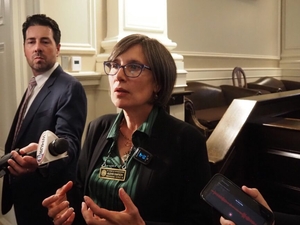
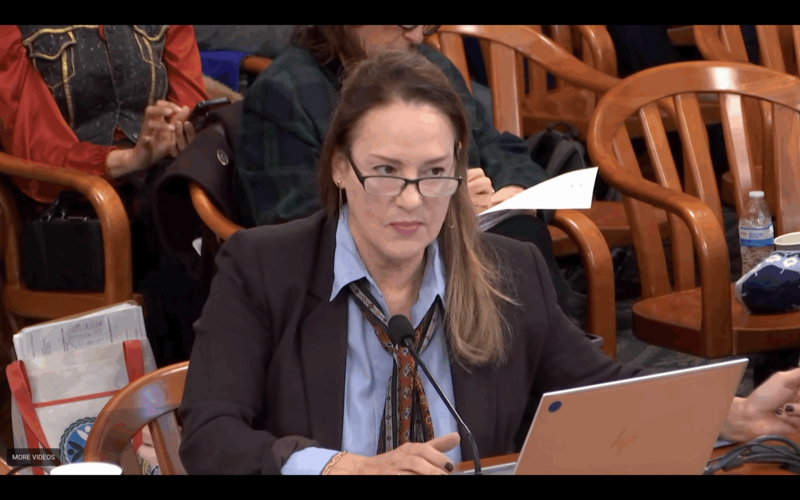
On Wednesday, the Michigan House Oversight Subcommittee on Corporate Subsidies and State Investments welcomed Christy Gillenwater, a retired senior management consultant specializing in mergers and venture capital, to discuss investments into these facilities, the implications data centers hold for could surveillance technology and the likelihood of the stock market bubble fueled by the artificial intelligence market bursting.
“What we have here is too much financialization in the market,” Gillenwater said, referring to a trend over the past 20 years where capital is invested simply to create more cash, rather than to produce anything valuable.
While breaking down the structure and the buildout of these projects, Gillenwater noted that data centers are often located in areas with abundant natural resources, energy grids with capacity and comparatively inexpensive rates, with tax exemptions also playing a role in generating profits on the financial side of this venture.
She explained that energy companies balance their economic interests in these hyperscale facilities on two factors: the likelihood that the company will fail to deliver on its financial obligations, and whether the costs to serve the facility can be spread across its customer base.
“Utilities are insisting that it will not, but it has yet to happen where a hyperscaler did not increase energy rates,” Gillenwater said.
Water use for these facilities is often minimized through careful wording, Gillenwater said, and backup power – like diesel generators – is generally not addressed in project proposals.
Additionally, data center developers are not required to detail every aspect of their project to the public.
“Communities are asked to approve, not comprehensive infrastructure systems, but a partial description that treats the most significant impacts as externalities,” Gillenwater said, noting that hyperscale centers have come into communities only for residents to find that the facilities impacted their infrastructure more than promised, leaving community members on the hook for those improvements.
Additionally, Gillenwater said the data centers of today are not equipped to produce artificial general intelligence, or artificial intelligence on-par with human intelligence, which has yet to be invented. However, they can house surveillance tools, Gillenwater said, warning that the unchecked growth of companies like Palantir could eliminate privacy from surveillance.
While concluding her testimony, Gillenwater warned that there will be an AI bubble in the stock market, pointing to an uptick in Wall Street investments into credit swaps.
“A credit default swap is a short sell, and that’s what you do if you think things are not going to do well in the future,” she said.
As far as what could happen in that case, Gillenwater said data centers could claim financial distress, which would lead to a flurry of mergers. There could be stranded assets, she explained, ranging from builds that aren’t completed to builds that have been completed that are abandoned and everything in between.
She warned that maintaining the tax breaks for data centers in the state would only harm the people of Michigan, advocating for citizen control over major infrastructure projects and to keep the value of the state’s land, water, and the next generation in mind.
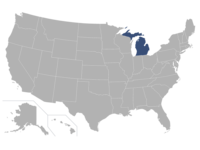
Lansing, MI