Republicans push stricter SNAP penalties beyond federal requirements
Feb 17, 2026 | 2:53 pm ET
Description
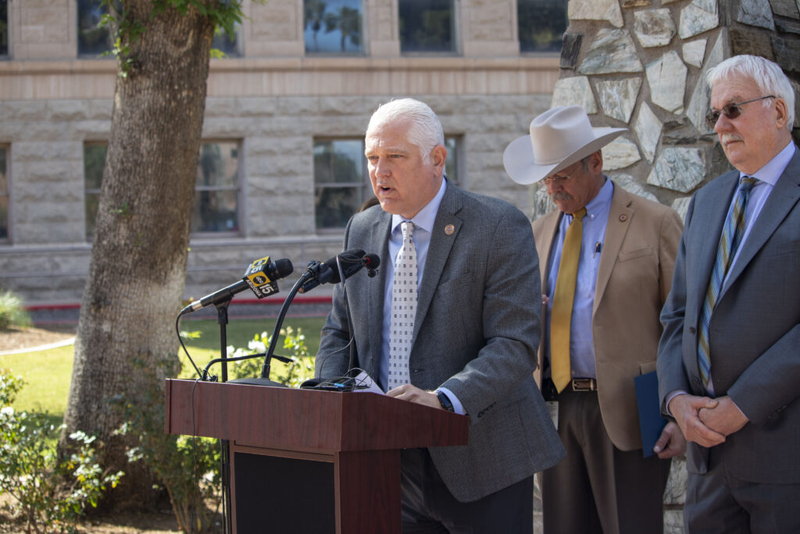
House Majority Leader Michael Carbone speaks at a Feb. 17, 2026, press conference touting GOP-backed bills to put harsher penalties on the state’s food assistance program. (Photo by Jerod MacDonald-Evoy/Arizona Mirror)
Republican lawmakers on Tuesday urged Gov. Katie Hobbs to sign a package of bills that would put harsher penalties on the state’s food assistance program due to changes made in President Donald Trump’s tax cut and spending package.
“This is not optional. Federal law mandates reform. This is the law of the land,” House Majority Leader Michael Carbone told reporters.
States that have higher rates of administrative errors in programs like the Supplemental Nutritional Assistance Program, commonly referred to as SNAP, have to contribute more money to the federal program.
States with an error rate over 6% — Arizona’s is at 8.8% and the national average is 10.9% — have to contribute state money to fund SNAP. If Arizona’s rate is still above 6% in 2028, the Arizona Department of Economic Security will have to cover about 5% of SNAP benefits, costing the state around $140 million.
Trump’s “One Big Beautiful Bill” also would require Arizona to cover 75% of administrative costs for SNAP instead of splitting the cost 50-50 with the feds.
The Joint Legislative Budget Committee estimated that the changes mean it will cost $33 million more to administer the program in 2027 and at least $139 million more in 2028.
But GOP lawmakers want to go further than what the federal government has mandated.
For instance, one bill, House Bill 2206, would require DES to get its SNAP payment error rate below 3% by 2030 or face financial penalties. And the bill from Rep. Nick Kupper, R-Surprise, would cut another 10% from DES’s budget if it fails to implement a corrective action plan to bring the payment error rate under 3%.
Republicans were unconcerned about whether that was even possible to do.
“I don’t see any administrative issues now, I don’t see any in the future,” Carbone said when asked by the Arizona Mirror if administrative issues and the speedy implementation of the legislation could impact error rates.
The error rates calculated by SNAP include over- and under-payments of benefits, which are largely due to administrative errors and incorrect application of eligibility rules. For instance, if a SNAP recipient has their work hours cut and doesn’t correctly report that information to DES, the food aid payment will be too low, constituting a payment error.
The impact of the government shutdown late last year, which shut down SNAP payments from October to November, coupled with requirements from the federal legislation, is also expected to impact error rates.
DES has also been facing a backlog due to staffing issues at the agency, which Republican leaders said they believed could be addressed with the purchase of artificial intelligence software.
“These bills are about SNAP, crackle and popping fraud in our government,” quipped Sen. John Kavanagh, R-Fountain Hills, referring to misleading fraud claims in Minnesota pushed by a conservative activist. Kavanagh added that Arizona doesn’t have that “level” of fraud.
A spokesperson for Gov. Katie Hobbs said her office does not comment on “pending legislation.” However, the governor has routinely vetoed legislation — like the GOP-backed SNAP bills — that does not receive bipartisan support.
Phoenix, AZ