Why is ICE seizing people’s phones and documents?
Feb 12, 2026 | 7:30 am ET
Description
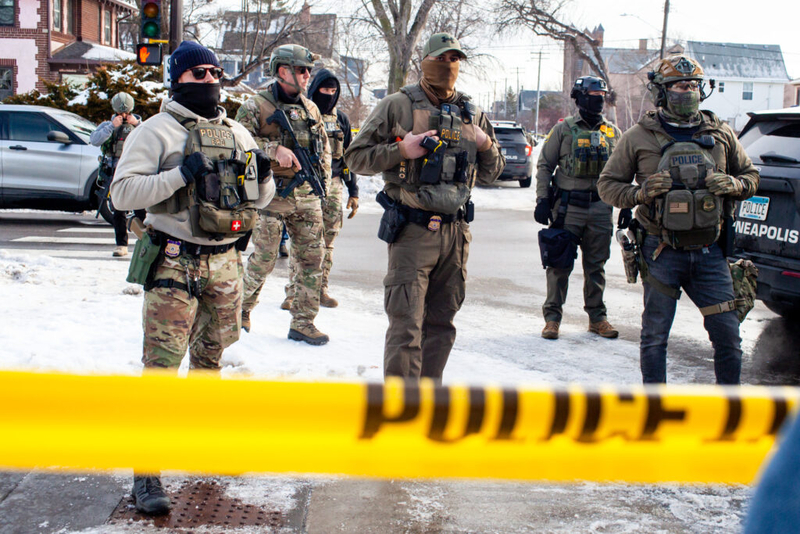
Federal agents patrol the street after an ICE agent shot and killed Renee Good Wednesday, Jan. 7, 2026 near Portland Avenue and 34th Street. (Photo by Nicole Neri/Minnesota Reformer)
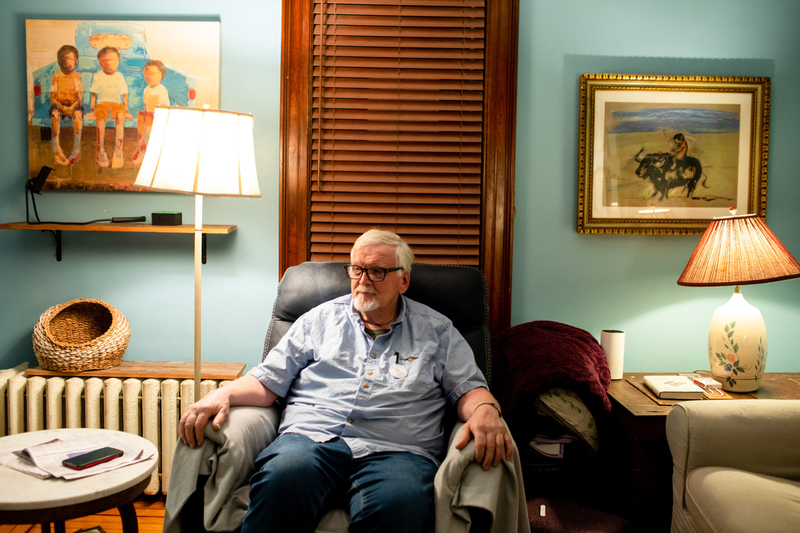
After the federal agents took the shackles off Gust Johnson’s ankles to release him from detainment, he asked for his phone back.
That would be staying at the Bishop Henry Whipple Federal Building, the agent told him, as part of their investigation into him assaulting a federal agent.
“I didn’t assault an officer. I got assaulted by three officers,” he replied.
The 76-year-old Marine Corps combat veteran and mostly retired nurse was still bleeding from his elbow and missing a hearing aid from being tackled by federal agents earlier that day, he said.
He had gone to the scene where federal agents had killed a second person in nearly as many weeks in south Minneapolis: Alex Pretti, an ICU nurse at the Minneapolis VA Medical Center where Johnson receives health care, though he didn’t know that at the time.
“He could have been a janitor from Timbuktu. It makes no difference,” Johnson said. “I was extremely angry, and I wanted to let them know I was angry.”
Johnson started shouting at one of the agents lined up blocking the street. He was about five feet away, and the agent sprayed him in the face. Johnson concedes he probably should have walked away at that point, but he turned around and started yelling again, getting sprayed two more times. His son was also sprayed in the face.
Johnson was tackled to the ground by at least three agents, handcuffed, and taken in a van with other demonstrators to Whipple — a brutalist white office building at Fort Snelling that’s been serving as headquarters of Operation Metro Surge since December, when President Trump began sending immigration agents to the state by the hundreds.
Johnson was released around 10 hours later. He walked out the front door into the night and made his way across the street, unsure how he was going to get home.
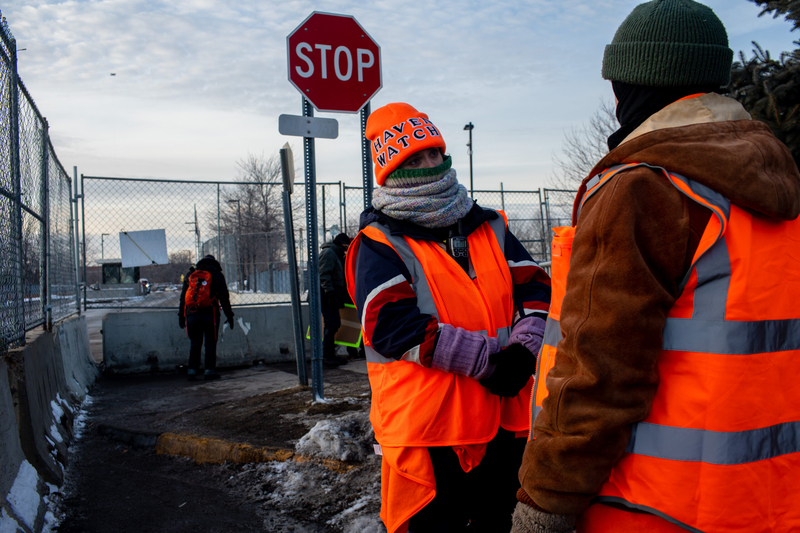
He was greeted by a group of volunteers who ushered him to a warm car with hot coffee and cocoa. They gave him a cheap cell phone to call his family, and then drove him the six miles home.
The volunteers were with a group called Haven Watch, which formed to help the steady stream of detainees coming out of Whipple.
Federal agents aren’t just seizing phones. They’re holding onto people’s driver’s licenses, cash and keys.
Immigrant detainees are regularly released without their work permits and other documents, attorneys say, even though federal judges have ruled they were illegally arrested in the first place.
“They’re just stealing people’s documents as another form of cruelty,” said Jennifer Scarborough, an immigration attorney based in Minnesota.
She said one of her clients was told by an ICE agent in Texas that he no longer had permission to work upon his release, which was not true. She had to seek a judge’s order to force the government to mail the man’s work permit back.
Replacing a work permit can cost over $500 and take the better part of a year to receive, she said.
Claire Glenn, who has represented about two dozen immigrants detained in recent weeks, said one of her clients had $114 in cash seized. Another client had $24 in cash taken, though it was returned to him as a check.
“This has been just adding constitutional insult to illegal detention injuries,” Glenn said.
Federal judges in Minnesota, increasingly incensed at ICE not following their orders, have started detailing that people must be released with all of their belongings and not be “left outside in dangerous cold.”
There doesn’t seem to be much rhyme or reason to who gets to keep their belongings, attorneys told the Reformer, except that immigrant detainees are more likely to have their documents held while protesters and observers lose their phones.
The Department of Homeland Security did not respond to questions about agents confiscating people’s belongings.
The seized phones, in particular, have alarmed civil rights attorneys because they contain so much personal information about their owners — photos, videos, text messages, phone numbers, bank records — and because most people aren’t facing any criminal charges.
“My suspicion is there are Fourth Amendment violations going on,” said Kevin Riach, a criminal defense and civil rights attorney, referring to the constitutional prohibition on unreasonable search and seizure.
“Because why would they need these phones? What are they doing with the phones? Why are they holding them for so long?”
Riach said it’s especially concerning given the many other ways federal agents have been tracking residents through license plate readers and facial recognition software. ICE agents have followed people home, taken pictures of their homes and told them they’re being put in a database.
ICE issued an internal memo last year asserting that agents don’t need a judicial warrant to use force to enter someone’s home, the Associated Press reported.
Federal agents aren’t legally allowed to unlock phones to snoop around without a warrant, although ports of entry are a notable exception. Attorneys who spoke to the Reformer said they haven’t heard of any warrants being issued for phones seized from observers and protesters. Less than 30 observers and protesters have even been charged with a crime, by Riach’s tally.
Johnson’s daughter, who can track his phone’s location, watched it move around the Whipple building the day he was detained. Eventually it stopped pinging, ostensibly because it ran out of battery. But days later, it popped back on. Someone seemed to have charged it, though why, is unclear.
Johnson’s attorney, Joshua Preston, noted that the federal government has expressed its interest in group chats on Signal, the popular encrypted messaging app residents use to track ICE activity and coordinate assistance efforts.
FBI Director Kash Patel announced in January an investigation into the Signal chats after a conservative influencer “infiltrated” them, saying chat members could be endangering law enforcement by sharing their locations and license plate numbers. First Amendment experts have expressed skepticism that anything would come of the investigation, apart from perhaps a desired chilling effect on legally protected speech.
For what it’s worth, Johnson never joined any of the Signal groups, and he marked his phone missing remotely and set it to wipe the data once it connected to a network.
It’s not just unlawful searches that people arrested by ICE may worry about. One teenager detained by ICE tracked his phone back to a vending machine for used electronics near a federal detention center, ProPublica reported.
There’s not an easy avenue to getting one’s phone back.
Grace, who was granted anonymity for fear of reprisals, had her iPhone 16 seized on Jan. 21 by ICE agents when they arrested her as she was tailing them in a northern suburb. The agents smashed in her car windows and took her to Whipple, where she was held for six hours or so.
As she was being released, an agent said her phone would be kept to extract evidence.
“I just looked at him, like, dumbfounded,” said Grace, who has not been charged with a crime.
She asked when she would get it back — and how — but they didn’t say.
She spent a day in a Kafkaesque phone tree, being directed to one federal office and then another and then back to the first, to try to get her phone back. She has marked the phone as lost and bought a new one, but didn’t choose to wipe the data — a lawyer advised her wiping the phone could possibly bring an obstruction charge.
Johnson got his phone back this week after his lawyer pressed the Department of Homeland Security with a group of other attorneys representing people detained at Whipple.
They were able to retrieve about a dozen, according to Riach. But an unknown number remain in custody.

Saint Paul, MN