Gubernatorial candidates emphasize K-12 funding, disagree on response to ICE in schools at MEA forum
Feb 06, 2026 | 3:23 pm ET
Description
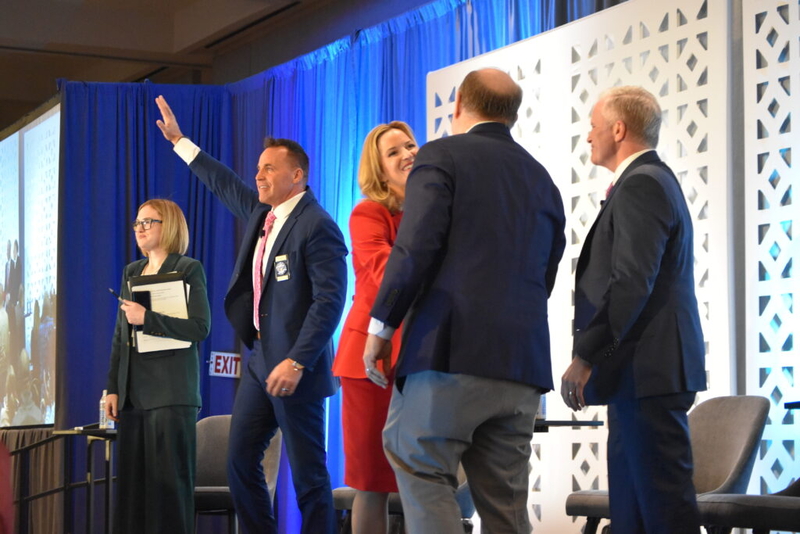
Democrats Genesee County Sheriff Chris Swanson and Secretary of State Jocelyn Benson, Republican former Attorney General Mike Cox and Independent former Detroit Mayor Mike Duggan conclude a forum hosted by the Michigan Education Association. At far left is Zoe Clark, Michigan Public's political director, who served as moderator. Feb. 6, 2026. | Photo by Katherine Dailey/Michigan Advance.
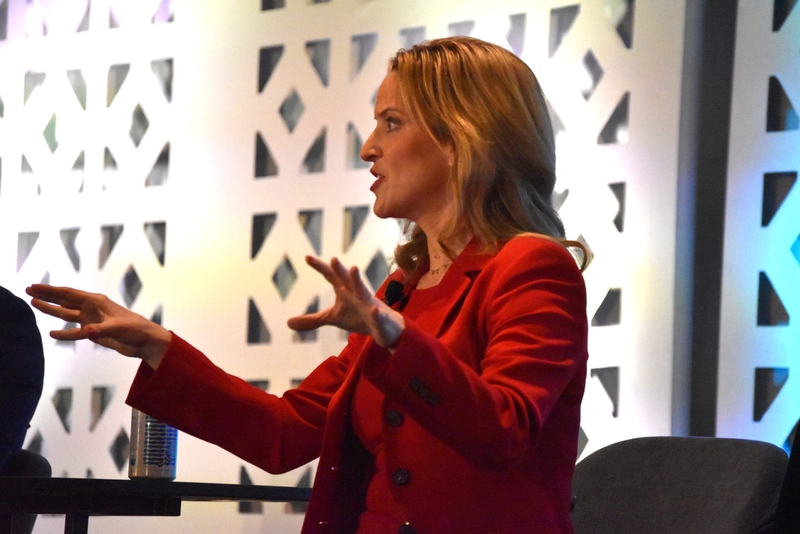
Four gubernatorial candidates — Secretary of State Jocelyn Benson and Genesee County Sheriff Chris Swanson, both Democrats, former Attorney General Mike Cox, a Republican and former Detroit Mayor Mike Duggan, an independent — presented their respective platforms for education in a forum hosted by the Michigan Education Association in Detroit on Friday.
All of the candidates, across party lines, emphasized a need for a better and more stable funding system for K-12 education in the state, though they did not all take the same approach on how to do so.
“The school aid fund has been used as a slush fund,” Swanson said.
He added that he would move to a two-year budget cycle for school funding to avoid annual instability. Swanson also called on his experience as a law enforcement officer to highlight the importance of education in combating incarceration and poor health outcomes.
“This is where it all starts. It’s you,” he said to the educators in the audience. “A governor has to lock in that K-12 budget, and don’t dip into it for other reasons, for paybacks when you need to borrow money. It’s not fair for you.”
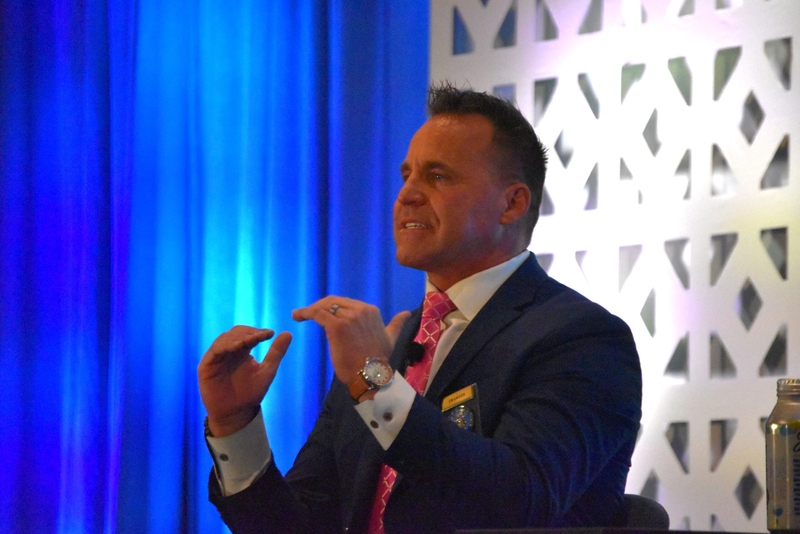
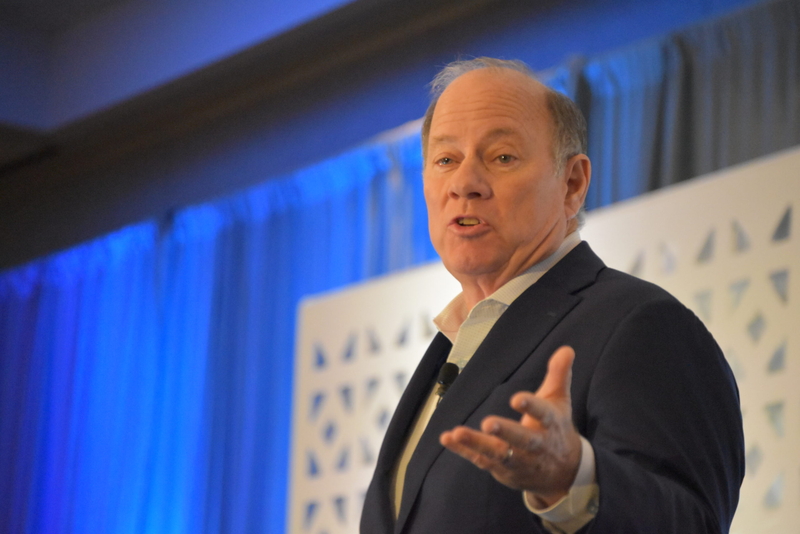
Duggan’s main push throughout the forum was similarly to prevent money from being siphoned out of the K-12 school aid budget for other priorities, including community colleges and higher education.
“When I say to you, I can manage the state budget, to freeze 2% out of the rest of the general fund, to restore our promise that the money goes to K-12, you don’t have to listen to the promise, I’ve done it at every place I’ve been,” he said, referring to his background as the mayor of Detroit and, before that, running the Detroit Medical Center.
Benson’s proposal on school funding is different — she has advocated for moving away from a fixed per-pupil spending amount and instead shifting to a weighted funding model based on the needs of a given district.
“What is needed in a school in Alpena is different than what is needed in the school in Muskegon, is different than what’s needed in Detroit, is different than what’s needed in the UP,” she said.
She also put the onus of the issue of school funding on decisions made when Republicans were in control of the government.
“It’s combined with the fact that we have defunded our schools at a higher rate than any other state for three decades now, and the small amount of work that Democrats have done recently to restore some of that funding, is far from what’s needed to actually get to where we need to be,” she told reporters after the forum.
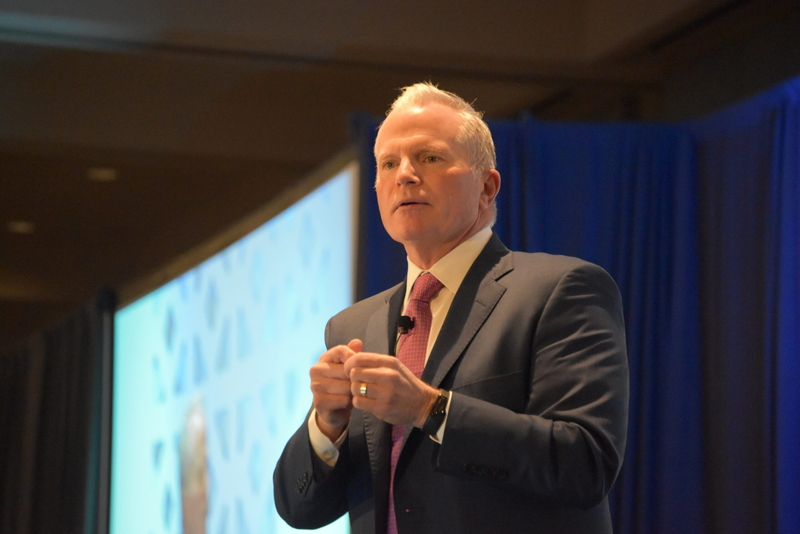
Cox, on the other hand, seemed much less willing to give more funding to education — though he agreed that funding set aside for K-12 education should not be re-allocated to higher education institutions.
“If spending were the only thing that determined educational outcomes, Michigan would be at the top of the world,” he said. “Indiana is spending less. They have fourth grade reading sixth in the country. Mississippi is spending less. They have fourth grade reading ninth in the country.”
Cox also distinguished himself from the rest of the candidates on stage by being the only one not to commit to maintaining free breakfast and lunch for students, a policy that was opposed by House Republican leadership in the most recent budget negotiations but was included in the final budget. He said instead that he would disqualify students with affluent parents, though he did not clarify where he would draw that line.
Cox embraces lone Republican role at MEA forum
Cox was the only Republican candidate present at the forum, though organizers said all major candidates for governor had been invited to participate.
When asked after the event what he thought that said about his primary competitors, Cox said that it shows that he’s braver than his peers. He also acknowledged during the forum that he’s unlikely to get the endorsement of the MEA — the organization hasn’t endorsed a Republican for governor in decades.
“If you want to be governor of Michigan and you’re afraid to talk to MEA members, what the hell are you doing running for governor if you’re that thin skinned?” Cox said. “If people want to, if those union members out there want to boo me or laugh, that’s okay.”
And the crowd did react strongly to some of Cox’s statements — attendees at the forum laughed at his estimates of teacher salaries, when he said that a 20-year MEA teacher likely makes around $90,000 in a year and close to $150,000 when including benefits, and audibly reacted when he said that ICE is not an issue in Michigan classrooms and called Trump’s immigration policies a “straw man.”
Candidates clash over partisan responsibility for education policy
Throughout the forum, Cox deflected blame for educational issues onto Democrats, especially Gov. Gretchen Whitmer, and tied her policies directly to all three of the other candidates on stage — though Duggan is running as an independent, he was a Democrat for his entire 12-year term as Detroit’s mayor.
“What does Donald Trump have to do with your salaries? What does Donald Trump have to do with student performance in your classrooms?” he said. “Not much, not much at all. The governor matters a whole lot more. So if you have a beef, your real beef is with the current governor.”
Duggan, who throughout the campaign has tried to position himself as outside of partisan fighting, didn’t want to be tied to the Democrats at all.
“Do you want the legislators deciding whether Algebra 2 or art should be in the school?” he asked the crowd, reiterating a point that he made throughout the forum that curricula should be determined by educators, not by legislators.
“The Republicans and Democrats have switched your curriculums every couple years. They’ve switched your measurements every couple of years,” he said, adding that the delay in passing the school aid budget for Fiscal Year 2026 — which is by law supposed to be passed by July 1, but did not pass until early October 2025 — was caused by the same partisan disagreements that he is trying to distance himself from.
But that drew criticism about Duggan’s previous partisan ties from Cox, who said, “Mike’s pitching after 40 years of being a Democrat, supporting Jennifer Granholm, when she did divert funds outside the school aid fund because he was getting money, increased funds for the DMC,” referencing Duggan’s time leading the Detroit Medical Center.
Immigration enforcement in schools emerges as flashpoint
Duggan’s statements on ICE also drew criticism, this time from the Michigan Democratic Party, after he said under his leadership, Detroit had “done everything we can to protect our residents from ICE,” saying that Detroit police do not enforce federal law, though he emphasized that Detroit is not a sanctuary city.
“Once again Mike Duggan is lying, as he did nothing to protect Detroiters from Trump’s out-of-control ICE agents terrorizing high schoolers and residents,” Michigan Democratic Party spokesperson Derrick Honeyman said in a press release, referencing Duggan’s statements days after Trump’s inauguration in which he said that the city will continue to work with federal agencies, including ICE, as well as his recent hesitance to respond to questions related to federal immigration enforcement.
Swanson said when asked about ICE response that he would support limitations on where ICE was able to take action.
“Schools are off limits. Churches, synagogues, mosques, and hospitals,” he said. “There’s a humanity part.”
Throughout the panel, Benson referenced her experience growing up as the child of two special education teachers, as well as her time as the dean of the Wayne State University Law School, as driving her focus on education. But when discussing how she would respond to ICE enforcement in schools in Michigan, she called on her time as the Secretary of State to say that she has been “unafraid to stand up to any bully.”
“The next governor of Michigan must demonstrate that they will live the moral courage that I have as secretary of state to protect the young people, the educators, every resident of every community in the state, no matter what type of tactic the bully in the White House tries to bring to our communities,” she said.
Lansing, MI