Iowa would tax pipeline-transported carbon dioxide under proposed bill
Feb 04, 2026 | 3:36 pm ET
Description
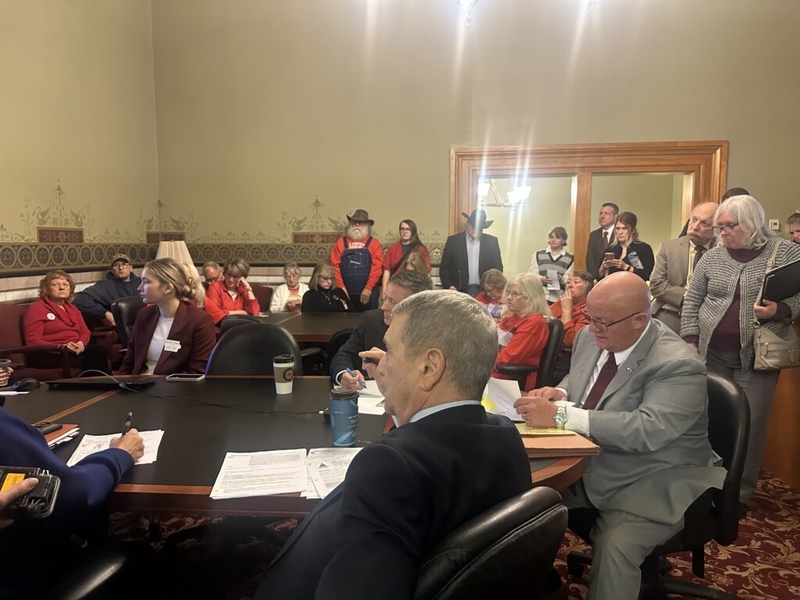
A Senate subcommittee advanced legislation Feb. 4, 2026 to tax carbon dioxide transported via pipeline in Iowa. (Photo by Cami Koons/Iowa Capital Dispatch)
A Senate subcommittee advanced a bill Wednesday that would create a severance tax on carbon dioxide that is transported through pipelines in Iowa.
Senate File 2069 would tax CO2 transported through the state at different rates if the liquefied gas is destined for enhanced oil recovery or another purpose.
Carbon dioxide bound for enhanced oil recovery – when the gas is pumped into the ground near oil fields to help improve oil well efficiency – would be taxed at a rate of $1 per metric ton of liquified carbon dioxide.
All other carbon dioxide transported within or out of the state via pipeline would be taxed at a rate of $2.50 per metric ton under the bill.
The Summit Carbon Solutions pipeline, a carbon sequestration project proposed in Iowa, would have the capacity to transport 18 million tons of CO2 per year, according to a spokesperson.
Lawmakers on the subcommittee questioned why the bill specified a different rate for CO2 used for enhanced oil recovery and how much the tax would generate.
Landowners, as well as the Sierra Club Iowa Chapter were undecided on the bill, but testified that it was a “distraction” from the property rights issues at hand. The bill comes a week after senators overhauled a House-passed bill to ban the use of eminent domain for carbon sequestration pipelines.
Jess Mazour, the conservation program associate with Sierra Club Iowa Chapter, said while the bill “doesn’t address” the issue of property rights, it is also flawed because of the two tax rates and the destination of the generated tax revenue.
Under the bill, revenue from the tax would go to the state’s taxpayer relief fund.
Mazour argued the tax revenue should go to the state general fund, or to the counties where the pipeline would be situated.
Jake Ketzner, lobbying on behalf of Summit Carbon Solutions, said the company is against the bill because it would increase the “cost of doing business,” and the cost of the “service we will provide our customers.”
The pipeline would connect to ethanol plants in Iowa and transport the CO2 that is generated from the production of ethanol, to be sequestered underground.
“We’d rather see ethanol plant producers paying farmers more for their corn instead of paying for a new tax to government,” Ketzner said.
Ketzner mentioned a newly enacted law from 2025 that created a tax credit for the production of sustainable aviation fuel in Iowa and said the passed along cost of the tax from SF 2069 would “erase the value” of the state sustainable aviation fuel tax credit.
Sen. Tony Bisignano, D-Des Moines, opposed the bill and said it was “premature” given that the pipeline is not yet built.
“We need to deal with the fundamental bill of property rights and eminent domain,” Bisignano said. “And once that happens, the air starts to clear and we can start to pin down all the ancillary things that come with something like this.”
Sen. Jason Schultz, R-Schleswig, and Sen. Dan Dawson, R-Council Bluffs, who chaired the subcommittee, also questioned the differential tax rates in the bill but were in favor of moving the bill along.
Dawson said as a “broaden the base and lower the rates” type of person, he had a “high interest” in the bill as it could help bring revenue from the projects to all Iowans.
“The state of Iowa has invested substantially in the ethanol industry … and we can’t just exempt things up front, let a bunch of revenue generate, and then all the monies that we spent on these things, nothing is ever returned back to the taxpayer,” Dawson said.
Dawson also touched on the notion of “public use” which has been central to the property rights debate of whether or not the pipeline should be able to use eminent domain.
“You can’t just say it’s a public benefit and then have a declaration made by the IUC for eminent domain and the public doesn’t benefit,” Dawson said.
The bill moves next to the full Senate Ways and Means Committee.
Des Moines, IA